
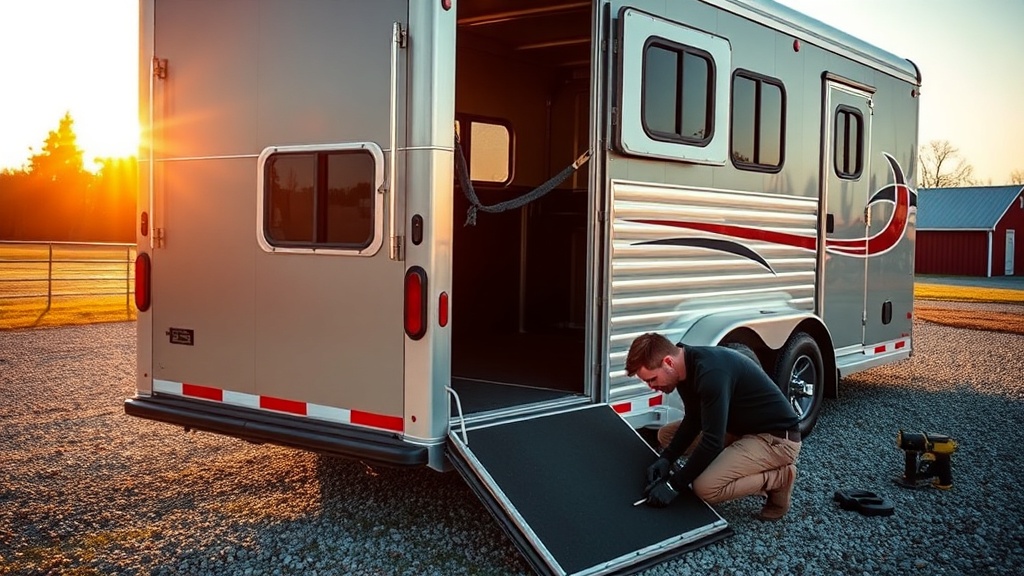
Sundowner SunLite Maintenance: Floor Checks and Lubrication
Whether you use your Sundowner SunLite for weekend trail rides or cross-country hauls, routine floor inspections and hitch lubrication are the two items that directly affect safety and longevity. A compromised floor or a dry, squeaking hitch can strand you at a showground or worse, cause a brake failure on the road. Here’s the practical maintenance checklist every SunLite owner should follow.
How Often Should I Check the Floor of My Sundowner SunLite?
The Sundowner SunLite uses a pressure-treated plywood floor over aluminum cross members. Under typical use—loading and unloading horses with moderate moisture—you should perform a visual inspection every 30 days and a deep “tapping” test every 90 days. For trailers stored outdoors in wet climates, bump that to every 60 days. The fastest early warning sign is soft, spongy areas near the ramp hinges or around the wheel wells, where water tends to pool.
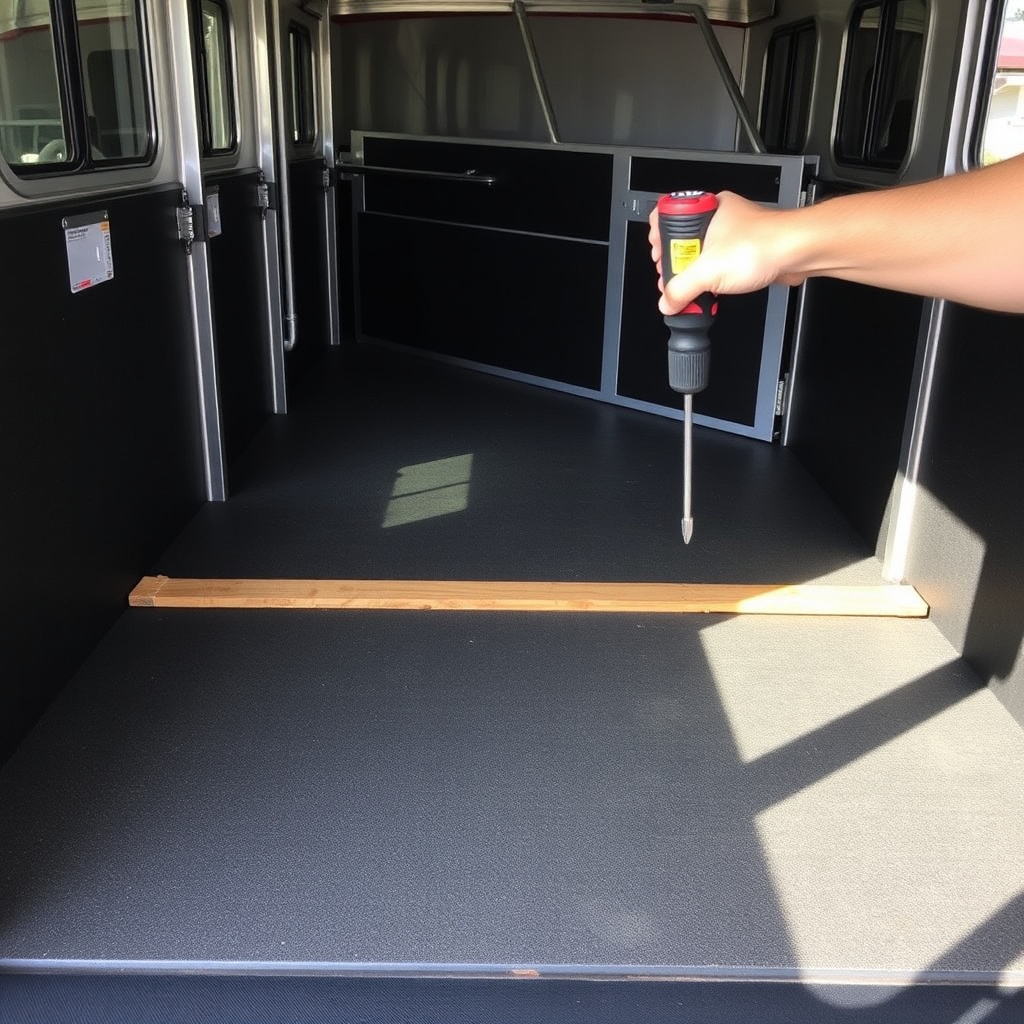
To check, scrape away any mat residue or debris and tap the floor with a heavy screwdriver or ball-peen hammer. A solid, tight thud means the wood is still sound. A hollow sound or a tool that sinks in indicates rot or delamination. If you catch it early, you can patch the affected area with a marine-grade epoxy and replace only the damaged section. Left too long, you’re looking at a $600–$1,200 full floor replacement depending on your region.
Pro tip: Remove the rubber mats every spring to let the floor dry fully. Even pressure-treated plywood can trap moisture underneath.
What Lubrication Points Does the Sundowner SunLite Hitch Need?
The SunLite comes with a Bulldog or similar coupler. You have three critical lube points on the hitch: the coupler ball socket, the latch mechanism (where the ball-lock engages), and the pivot points on the A-frame where the safety chains attach. For the ball socket, a thin film of lithium grease applied every fourth tow is enough. Over-greasing attracts road grime that accelerates wear.
For the coupler latch, use a spray-on dry lubricant like WD-40 Specialist Silicone. It doesn’t collect dirt the way all-purpose grease does. Apply a short burst to the latch pawl and the release handle’s hinge, then cycle the latch five times to work it in. Do this monthly during towing season. If you tow in heavy rain or road salt conditions, increase frequency to biweekly.
One recurring issue unique to the SunLite: the ball-lock mechanism can stick if not used for a few weeks. A quick lubrication before the first tow of the season prevents that embarrassing moment when you can’t connect at the ramp.
How Do I Inspect the SunLite’s Floor Supports and Frame?
The aluminum I-beam cross members under the floor support the weight of horses and cargo. Over time, electrolysis can occur between the steel fasteners and the aluminum beam. This shows up as white, powdery residue on the beam’s flange. Use a flashlight and mirror to inspect these points every six months, focusing on the area directly above the axle hangers.
If you see heavy pitting or a beam that has begun to sag, you need immediate welding repair. In contrast, surface oxidation (a chalky white film) is cosmetic and can be cleaned with a wire brush and coated with an aluminum protectant like CRC Corrosion Inhibitor. The Sundowner SunLite floor cross members are rated for roughly 1,200 pounds per square foot static load, so a single 1,200-lb horse plus tack stays well within spec. Two draft horses close together? You want those beams perfect.
Is There a Severity Guide for SunLite Floor Issues?
| Usually Not Urgent | Needs Attention Soon |
|---|---|
| Tiny surface crack in the rubber mat (mat replacement can wait) | Soft spot larger than a quarter (screwdriver sinks 1/8 inch or more) |
| Small chips in the plywood edge (possible to fill with wood putty) | Rotted wood around ramp hinges (floor may fail during loading) |
| Cosmetic aluminum oxidation on cross members (wire brush and spray) | Visible sag in a cross member beam (immediate structural concern) |
| Loose floor screw from one corner (tighten with T-star bit) | Spongy floor beneath a water bucket area (indicates moisture has soaked in) |
Use this table as a quick triage. The items on the right should be addressed within a week. If you detect two or more “Needs Attention Soon” items, schedule a professional inspection—labor costs around $75–$150 per hour for trailer repair.
What About Lubricating the SunLite’s Jack and Door Hinges?
Overlooked but critical: the jack and door hinges. The SunLite’s swing-out jack leg has a telescoping tube that can seize if not lubricated. Spray a thin silicone lubricant into the leg’s sliding area each month, then operate the jack through its full range. A stuck jack when you’re parked on a sloped campground is a genuine safety hazard.
Door hinges on the tack compartment and the horse doors should get a squirt of dry lube every 90 days. Use a rag to wipe away excess. The SunLite’s aluminum hinges are powder-coated, but that coating can chip at stress points, leading to corrosion if salt spray gets in. While you’re at it, check the door alignment. A door that doesn’t close flush usually means a hinge pin has shifted. A few drops of lubricant plus a careful tap with a hammer can realign it.
For a deeper look at the SunLite’s living and storage areas, read the Sundowner SunLite Tack and Storage: Saddle Racks and Vents article.
How Should I Seal the SunLite’s Floor Joints?
The floor-to-wall junction inside the trailer is a common water entry point. Over time, the flexible sealant (often a polyurethane or silicone bead) can crack or separate. Use a utility knife to cut away old sealant, then clean the area with isopropyl alcohol. Apply a marine-grade sealant such as 3M 5200 or Sikaflex 295 UV. Let it cure for 24 hours before the trailer gets wet or horses are loaded. This simple hour-long job can prevent floor rot around the edges—the most expensive type of floor failure. Expect to pay about $25 for a tube of quality sealant.
If you notice the ramp seal is also failing, the same sealant works. But first check the rubber gasket on the rear door. A torn gasket can let water run directly onto the ramp floor, bypassing the sealant entirely. Replace the gasket for around $40–$60 from Sundowner’s parts department.
What Owners Say About SunLite Floor and Lubrication Maintenance
“My 2019 SunLite had a soft spot at the front left corner—one of the cross beams had a small crack from an overloaded tack box. I caught it early because I did the tapping test every two months. A local trailer shop welded the beam for $120. Totally painless.” — Jordan T., Arizona
“The hitch ball socket got bone-dry last spring. I couldn’t get the coupler to click onto the ball. Sprayed some lithium grease and cycled the latch five times. Now it’s smooth as butter. That tip saved me from missing a show.” — Mariana G., Florida
“Don’t forget the jack leg! Mine froze after winter storage. I had to use a torch to free it. Now I keep a can of silicone spray in the tack compartment. Also read the article on Sundowner SunLite Horse Compartment: Padding and Kick Mat—it mentions the floor mats too.” — Rob K., Colorado
“I replaced my floor last year after ignoring a spongy spot for six months. That was $900. Now I do the tapping test every 90 days like clockwork.” — Ellen S., Texas
Frequently Asked Questions About Sundowner SunLite Maintenance
Q1: What is the best lubricant for my SunLite hitch?
A: For the ball socket, use lithium grease (paste). For the latch mechanism, use a silicone-based dry lubricant spray—it won’t attract grit.
Q2: How do I tell if my SunLite floor is failing?
A: Tap the floor with a tool. A hollow sound or a tool that sinks in means rot. Also look for warping, discoloration, or softness beneath the mats.
Q3: Can I use motor oil on the door hinges?
A: Not recommended. Motor oil attracts dust and can gum up over time. Silicone spray is better and won’t stain your tack.
Q4: How often should I replace the floor sealant?
A: Check the sealant bead every six months. If it’s cracked, missing, or pulling away from the wall, reapply. Most owners do this annually.
Q5: Is it safe to pressure-wash the interior floor?
A: Yes, but use low pressure (under 1,500 psi) and a wide fan tip. High pressure can force water into floor joints and speed up rot. Let the floor dry thoroughly before replacing mats.
Q6: Do I need to grease the brake actuator on the coupler?
A: No. The electric brake actuator is sealed. Only lubricate the ball socket and latch. Greasing the actuator can cause brake failure.