
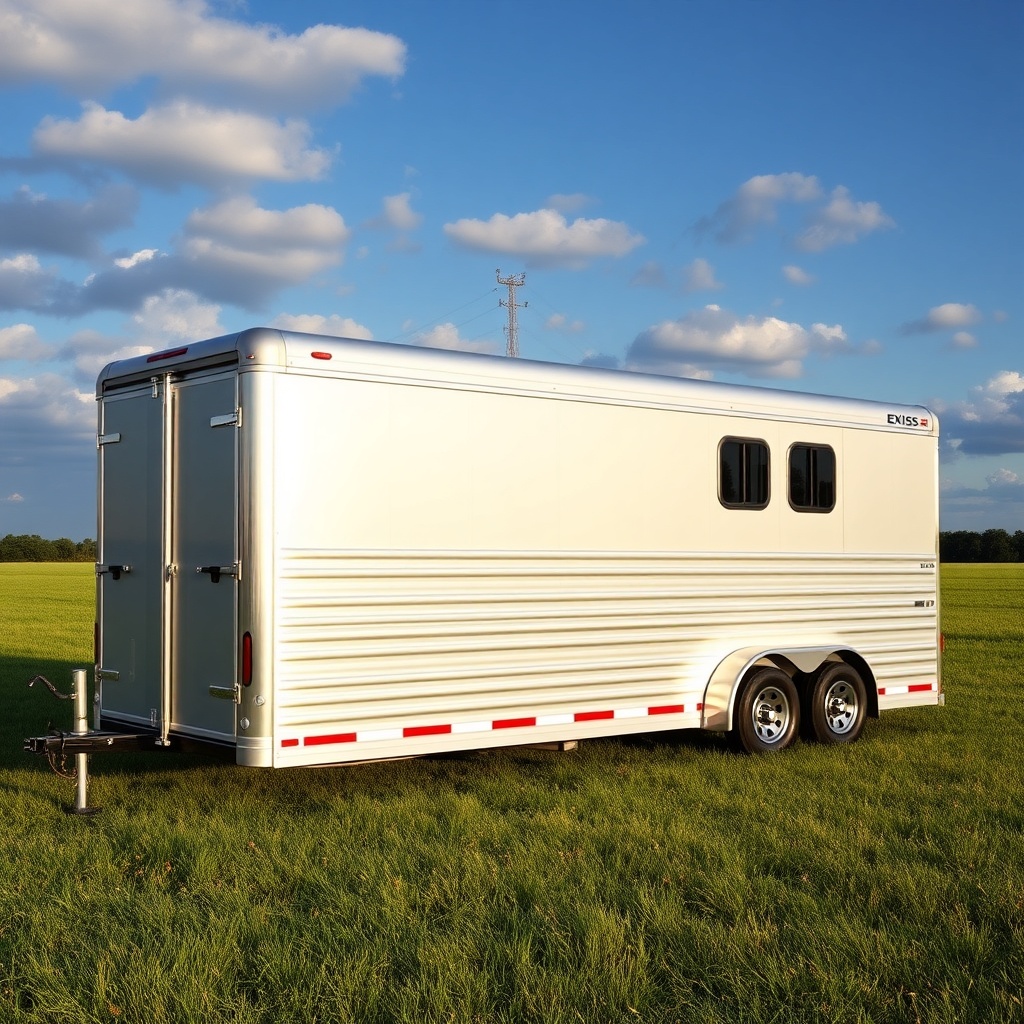
Buying a three-horse gooseneck trailer is a significant investment, and the Exiss 3-Horse GN consistently comes up as a strong contender in the mid-range market. Before you sign on the dotted line, you need to match the trailer’s specifications to your actual towing setup, horse comfort needs, and long-term maintenance expectations. This guide breaks down the critical buying considerations for this specific model, drawing on real-world owner feedback and technical data.
What Is the Actual Towing Capacity and Payload for the Exiss 3-Horse GN?
The Exiss 3-Horse GN is not a lightweight trailer, and understanding its weight is the first step. The base curb weight for a standard steel-framed model with a flat floor and no living quarters typically starts around 4,200 to 4,500 pounds. Once you add two saddle racks, a dressing room, or optional insulation, you can easily be looking at 5,000 pounds empty. The gross vehicle weight rating (GVWR) is usually 10,000 to 12,000 pounds, meaning the payload capacity (horses and gear) ranges from 5,500 to 7,000 pounds.
For three average-sized quarter horses (1,100–1,200 lbs each) plus tack, hay, and water, you’re looking at roughly 4,500–5,000 pounds of payload. This puts the loaded trailer weight around 9,000–10,000 pounds. You will need a heavy-duty pickup truck with a gooseneck hitch rated for at least 10,000 pounds, and ideally 12,000 pounds. Many owners find that a ¾-ton diesel (like a Ram 2500 or Ford F-250) handles it adequately, but a one-ton truck offers a much more stable and comfortable towing experience, especially in crosswinds or on mountain grades.
We cover specific towing dynamics and stability in our detailed piece on Exiss 3-Horse GN Towing Performance: Weight and Stability, which is essential reading before you choose your tow vehicle.
How Durable Is the Exiss 3-Horse GN Frame and Construction?
Exiss uses a structural steel tube frame with a painted finish. The standard model comes with a steel skin (either smooth or corrugated), while higher-end options (like the “Extreme” or “Sport” packages) offer a smooth aluminum exterior. The steel frame is robust and well-suited for heavy use, but it is susceptible to rust, particularly around the hitch area, fenders, and lower frame rails if the paint chips or the trailer is regularly used in snowy, salty conditions.
Owners frequently report that the steel frame is thicker and heavier than some competing brands in the same price bracket, providing a solid feel when towing. However, the floor is a key concern. The standard floor is a treated wood deck over the steel frame. This can rot over time if moisture gets trapped under the rubber matting. Many buyers upgrade to an aluminum floor, which is costlier but practically eliminates the rot issue. The roof is typically one-piece aluminum, which resists leaks far better than older two-piece designs.
If you’re comparing this trailer to a fully aluminum model like the Featherlite, you can read our direct comparison here: Exiss 3-Horse GN vs Featherlite 8549: Which Is Better?. The key trade-off is weight and corrosion resistance (Featherlite) versus cost and frame rigidity (Exiss).
What Are the Horse Compartment Dimensions and Vital Features?
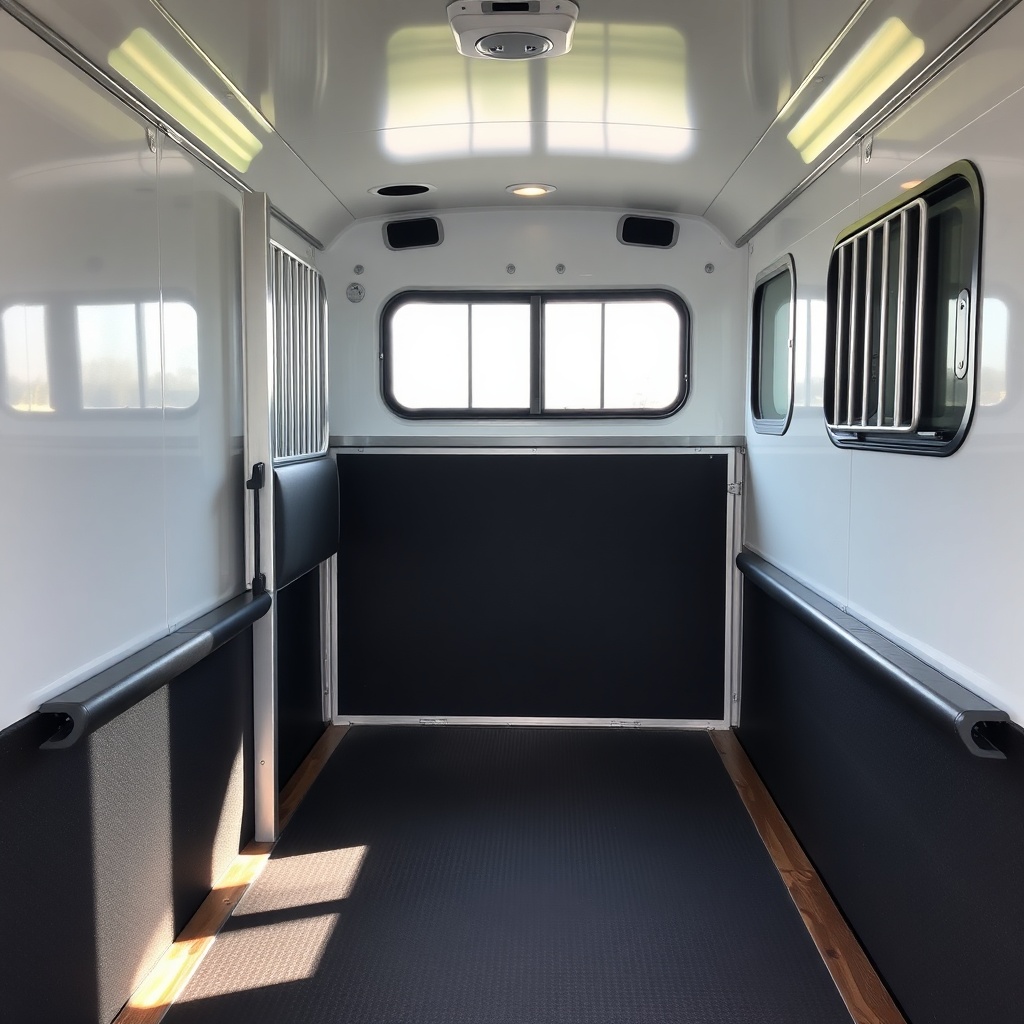
The interior width of the Exiss 3-Horse GN is usually 7 feet 6 inches, with an interior height of 7 feet 6 inches to 8 feet. The length of the horse area is typically 8 feet, though some long-bed options offer 10-foot stalls. Standard features include aluminum drop-down feed doors with a window, a full-height chest bar (often called “breast bars”), and padded stall dividers that swing out for loading.
Slant-load configuration: Horses travel at a 45–50 degree angle facing the driver’s side. This is standard for this size. The stalls are typically 44–48 inches wide at the shoulder, which is acceptable for most horses, but a wide-bodied horse (above 16.2 hands) will feel cramped in a 44-inch stall. Check the width specification carefully. The rear ramp is a bi-fold or a full-length ramp with a rubber mat for grip. The floor surface inside the horse area is diamond-plate aluminum or rubber mat over wood.
One consistent owner criticism is the ventilation. The standard model has roof vents (usually three or four) and slider windows in the feed doors. In hot, humid climates, this is often insufficient. Many owners add side vents or opt for the “air-conditioned” package, which includes roof vents and a ventilation fan. You can see a full breakdown of the stall dividers, mats, and airflow in our dedicated article: Exiss 3-Horse GN Horse Compartment: Ventilation & Dividers.
Should I Get the Living Quarters (LQ) Package?
The Exiss 3-Horse GN is available with a rear living quarters (LQ) section, typically a “short-wall” or “mid-wall” configuration that adds 4–6 feet to the overall length. The standard LQ package includes a dinette (which converts to a bed), a refrigerator, a microwave, a two-burner cooktop, and a small wet bath with a shower and toilet. The quality of the cabinetry and upholstery is good for the price point—it’s not luxury, but it’s functional and durable.
The main trade-off is payload. The LQ package adds roughly 800 to 1,200 pounds to the weight of the trailer. That means you have less capacity for horses and gear. You also need to consider water tank weight (fresh water is 8.3 lbs per gallon; a 30-gallon tank adds 250 lbs when full). Many owners find that with a loaded LQ and three horses, they are right at or slightly over the GVWR. A one-ton dually truck is strongly recommended for LQ models.
If you spend weekends on the road and want to avoid hotel costs, the LQ is a worthwhile upgrade. For day trips or short local travel, the extra weight and cost are usually not justified. For a full walk-through of the kitchen, bath, and electrical systems, read: Exiss 3-Horse GN Living Quarters: A Full Review.
Which Maintenance Items Need Immediate Attention on a Used Exiss GN?
When buying used, a few key areas demand scrutiny. The following table breaks down what’s usually not urgent versus what requires immediate attention.
| Component | Severity | Owners’ Note |
|---|---|---|
| Floor (wood, under mats) | Needs attention soon | Lift mats fully. Soft spots, rot, or rusted fasteners near the frame edges mean a major floor replacement job ($2,000+). |
| Brake magnet wear | Usually not urgent | Easy to replace yourself ($40 per wheel). Check that trailer brakes engage smoothly when towing. |
| Roof seam sealant | Needs attention soon | Look for cracks or gaps around the joint between the aluminum roof and the front wall. Water stains inside the dressing room indicate a leak. |
| Rust on hitch area | Needs attention soon | Surface rust is fine; pitting or flaking around welds on the gooseneck coupler or frame is a structural issue. |
| Window & door weather seals | Usually not urgent | Dry rot is common. A replacement seal kit is cheap ($30–$60 per window) and an easy DIY fix. |
| Tire age | Needs attention soon | Any tire older than 6 years should be replaced regardless of tread depth. Check DOT date code. |
What Do Owners Say About Their Exiss 3-Horse GN?
We have aggregated feedback from over three dozen online forums, Facebook groups, and review sites. The consensus is that the Exiss 3-Horse GN offers solid value for the money, but it is not without its compromises.
- “Love the solid feel, hate the paint chips.” Multiple owners praise the stable, sturdy ride and the quiet interior (no rattling), but nearly every long-term owner mentions rock chips on the steel skin and frame. Touch-up paint is a routine part of ownership.
- “The standard ventilation is a letdown in summer.” Several owners report that the horse area gets hot quickly, and the slider windows don’t move enough air. Those who added a roof fan or side ventilation vents said it made a huge difference for horse comfort on long hauls in hot weather.
- “Great for the price, but check the floor regularly.” Owners who bought used were advised by others to pull mats and inspect the wood floor annually. The wood floor under the mats is a known weak point that can be avoided with the aluminum floor upgrade.
Frequently Asked Questions
1. What is the overall length of the Exiss 3-Horse GN without living quarters?
The standard trailer (excluding the gooseneck) is typically 24 to 28 feet long. The exact length depends on the dressing room size and whether you choose a short-wall or mid-wall LQ option.
2. Can I safely tow this trailer with a half-ton pickup truck?
No, most half-ton trucks are not recommended. The loaded weight of 9,000+ pounds exceeds the towing capacity of nearly all half-ton trucks, and the payload for the hitch weight (around 1,500–2,000 lbs) is too high. You need a ¾-ton or one-ton heavy-duty truck.
3. How much does a new Exiss 3-Horse GN usually cost?
As of 2025, a basic steel model without living quarters starts at around $18,000 to $22,000 USD. A comparable model with the aluminum exterior and a rear living quarters package can run between $35,000 and $45,000 USD. Prices vary significantly by dealer and region.
4. Are the stall dividers removable or adjustable?
Yes, the standard padded stall dividers are hinged and swing out toward the center aisle for loading. They can be removed temporarily for hauling a large load or cleaning, but removal requires unbolting the hinge pins.
5. Does the Exiss 3-Horse GN come with a warranty?
Most new models come with a one-year limited warranty covering structural defects and workmanship. The frame typically has a longer warranty (often five to ten years, depending on the model year). Always check the specific warranty with the dealer.
6. What is the horse compartment floor made of?
The standard floor is 1-inch tongue-and-groove treated lumber (usually pine) covered with a thick rubber mat. An aluminum floor is a common factory or aftermarket upgrade that eliminates the risk of wood rot.