Exiss 3-Horse GN Towing Performance: Weight and Stability
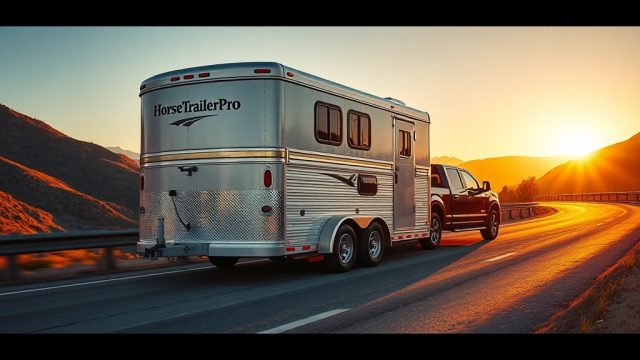
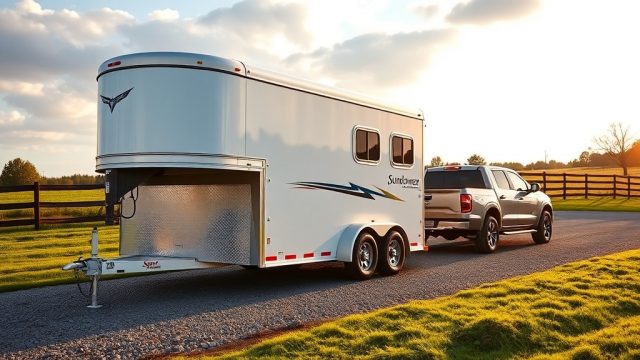
When you hook up an Exiss 3-Horse GN, the confidence comes from understanding its weight distribution and how that translates into real-world stability on the road. Sarah Jennings has spent hours behind the wheel of this trailer, and she’ll tell you that the live axle and gooseneck design make it a predictable partner for a heavy-duty pickup. In this review, we’ll drill down into the tow rating, hitch weight, and handling quirks that matter most to equestrian travelers.
What Is the Gross Vehicle Weight Rating (GVWR) and Curb Weight for an Exiss 3-Horse GN?
Knowing the weight numbers is step one for safe towing. For a standard Exiss 3-Horse GN with a dressing room and no living quarters, the GVWR is typically around 12,000 lbs (5,443 kg). The curb weight—how much the trailer weighs empty—comes in at approximately 6,800 lbs (3,084 kg). That leaves you about 5,200 lbs of payload capacity for horses, tack, and gear. If you opt for the living quarters package, add about 1,200 lbs to the curb weight, bringing it to 8,000 lbs, with a reduced payload of 4,000 lbs. Always check the VIN plate on the tongue for your specific unit, as custom builds vary.
The trailer’s empty weight distribution is critical: roughly 15% to 20% of the curb weight lands on the gooseneck hitch (around 1,020–1,360 lbs). That’s within ideal range for a gooseneck setup—too light and you risk sway, too heavy and you overload the truck’s rear axle. Pair this with a 1-ton diesel dually rated for 14,000 lbs towing, and you’ve got a balanced setup for long hauls.
How Does the Gooseneck Design Affect Tow Stability on the Exiss 3-Horse GN?
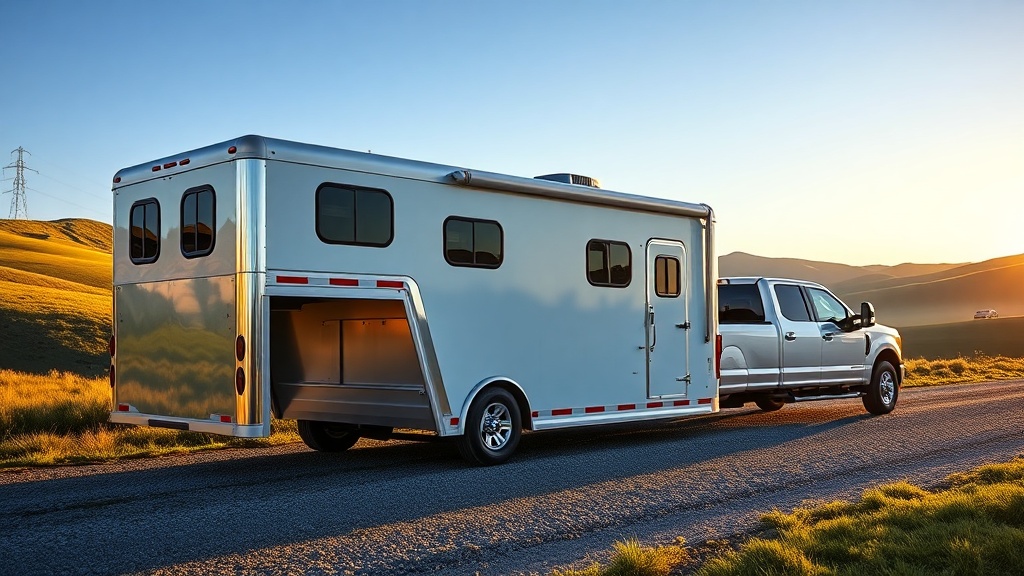
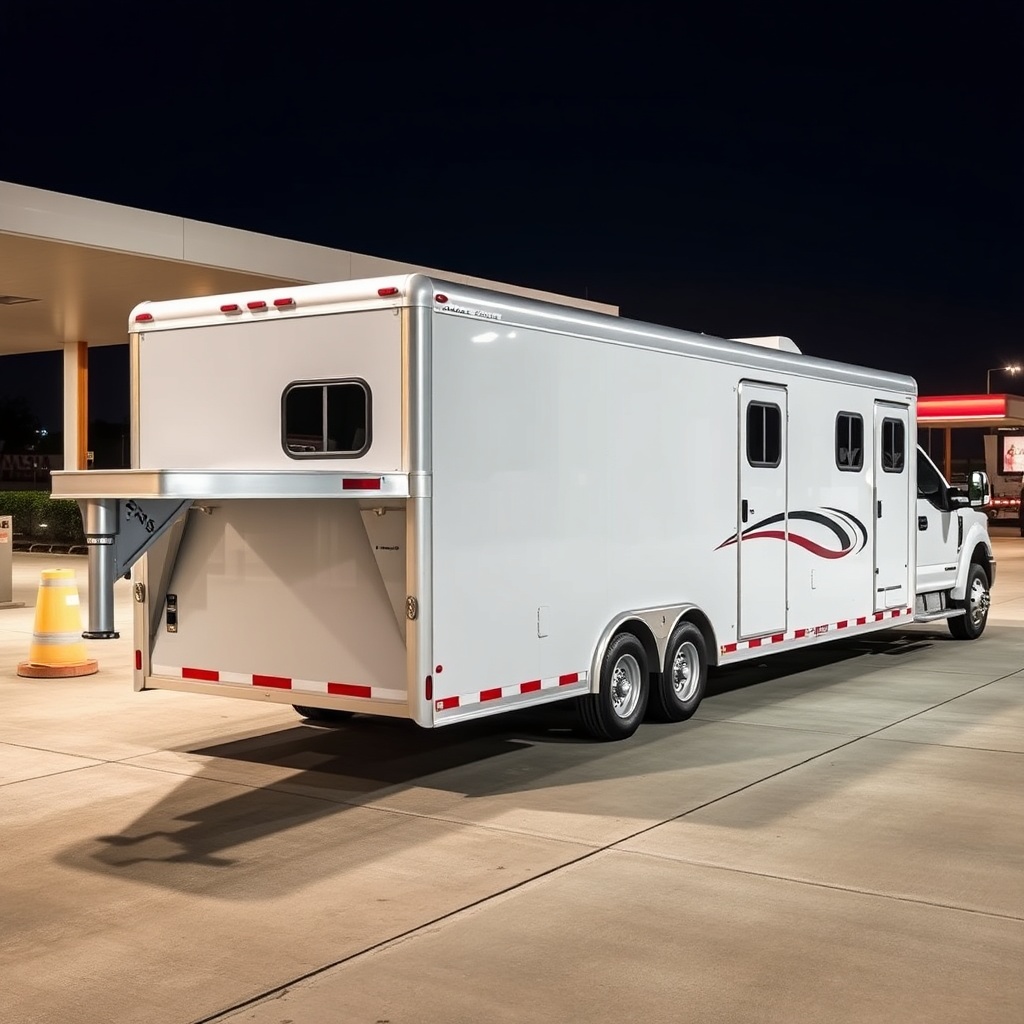
The gooseneck configuration on this trailer is a standout for stability. Unlike a bumper pull, the hitch point sits over the truck’s rear axle, which transfers weight more efficiently and reduces the leverage that can cause sway. Exiss uses a 2-5/16-inch gooseneck ball with a cast-iron coupler, rated for 12,000 lbs vertical load. That’s overengineered for the trailer’s hitch weight, giving you a safety margin against fatigue.
In practice, this means you can cruise at 65 mph on a straight interstate with minimal steering correction, even with three 1,200-lb Quarter Horses loaded. The trailer’s length—typically 26 feet from hitch to rear—helps, too; longer wheelbases dampen side-to-side oscillations. Owners report that crosswinds from passing semis cause a slight push, but the gooseneck design keeps the trailer tracking true. For more on how this compares to a competitor, check our Exiss 3-Horse GN vs Featherlite 8549: Which Is Better? article for a head-to-head on towing dynamics.
What Is the Tongue Weight Specification for the Exiss 3-Horse GN?
Tongue weight (or coupler weight for goosenecks) is the downward force at the hitch. For the Exiss 3-Horse GN, the manufacturer recommends a loaded tongue weight of 1,500–1,800 lbs (680–816 kg). That’s 12–15% of the total loaded trailer weight. To hit this, you need to load horses with their heads toward the rear—the mangers and partitions are designed with this in mind. An empty trailer will feel lighter at the hitch (around 1,000–1,200 lbs), so always load gear in the dressing room or tack area to add mass forward.
Exceeds 1,800 lbs, and you risk overloading the truck’s rear GAWR (Gross Axle Weight Rating). For a typical 1-ton pickup like a Ram 3500, the rear axle GAWR is around 7,000 lbs, so 1,800 lbs is acceptable. Use a dedicated scale at a CAT scale to verify. If you’re looking to upgrade your tow vehicle, our Horse Trailer Buying Guide: What to Consider Before Purchase has a section on matching trucks to trailer weight.
| Weight Parameter | Usual Range (lbs) | Needs Attention Soon (lbs) |
|---|---|---|
| Tongue Weight (empty) | 1,000–1,200 | < 900 or > 2,000 |
| Tongue Weight (loaded) | 1,500–1,800 | < 1,200 or > 2,200 |
| Payload Capacity (non-LQ) | 5,200 | < 4,000 (overloaded) |
| Gross Vehicle Weight Rating | 12,000 | > 12,500 (exceeded) |
This severity table highlights the sweet spots. If your tongue weight is below 900 lbs empty, consider repositioning gear. Above 2,200 lbs loaded, redistribute weight or reduce payload.
How Does the Exiss 3-Horse GN Handle on Curves and Hills?
One of the first things Sarah notices on a test drive is how the Exiss handles a tight turn. The gooseneck design gives a turning radius of about 40 degrees, which is snug for a 26-foot trailer. It’s not a short-bed truck’s best friend—you’ll need a slider hitch or an extended cab to avoid cab contact in sharp turns. On a 10% grade, the trailer’s dual axles with electric brakes (two 10-inch drums per side) provide consistent stopping power. The trailer’s 6,700-lb empty weight means you’ll feel the drag going uphill, but a 6.7L Cummins or Power Stroke with 900 lb-ft of torque handles it without struggle.
Downhill, the brake controller settings are key. Set the gain to 5 on a 1–10 scale for loaded hauls, then fine-tune based on feedback from the truck’s brake pedal feel. The brakes are self-adjusting, so you don’t need manual adjustment, but check the brake wires annually for corrosion—Exiss uses weatherpack connectors that can fail if not greased.
For a deeper look at how the horse area holds up during these maneuvers, read our Exiss 3-Horse GN Horse Compartment: Ventilation & Dividers piece, which covers panic bars and sliding dividers that don’t rattle loose on bumps.
How Does Weight Distribution Affect Sway in the Exiss 3-Horse GN?
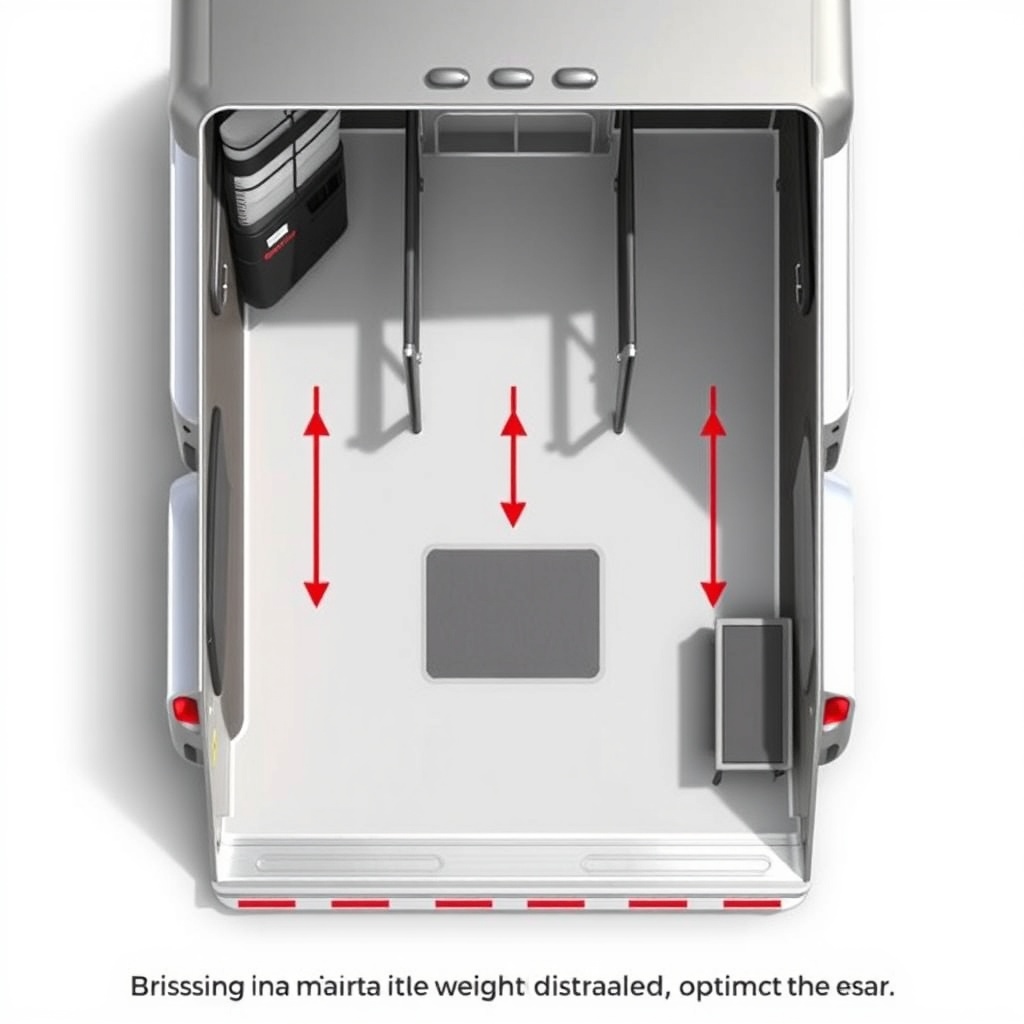
Sway is the enemy of safe towing, and the Exiss 3-Horse GN’s weight distribution is engineered to minimize it. With an optimal hitch weight of 12–15%, the trailer’s center of gravity sits low—about 18 inches off the ground due to the drop-floor design. This low CG reduces the leverage that crosswinds have to tip the trailer. When loaded evenly (heaviest horse on the driver’s side, next heaviest on the passenger side, lightest in the center), you get near-zero sway at highway speeds.
What about a sway control device? While the gooseneck design inherently resists sway more than a bumper pull, a friction sway bar (like a Reese Dual-Cam) can add extra stability in severe crosswinds. Many owners skip it, but Sarah recommends one if you frequently tow in windy conditions like I-70 through Kansas. The trailer’s 80-inch width and 6-inch drop floor help keep the center of mass low, making it a solid choice for long-distance trailering.
What Suspension and Tire Specs Does the Exiss 3-Horse GN Use for Stability?
The suspension system on this trailer uses a leaf-spring setup with EZ-Lube axles (5,200-lb capacity each). The springs are 2-inch wide with 6 leaves, which provide a firm but not harsh ride. This is important because stiff suspension can cause horse fatigue, while soft suspension leads to sway. Exiss uses a 6-inch drop floor that lowers the horses’ center of gravity by about 4 inches compared to a standard floor design, improving stability.
Tires are 16-inch radial tires, size LT235/85R16, load range E (rated for 3,042 lbs each at 80 PSI). At the trailer’s GVWR of 12,000 lbs, you have a 2,168-lb safety margin across the four tires. Check tire pressure before each trip—specifically, 80 PSI cold. Underinflation can cause heat buildup and blowouts, especially on hot asphalt. For a full breakdown of load ranges and tire selection, see the tire section in our Horse Trailer Buying Guide: What to Consider Before Purchase.
What Owners Say About Towing the Exiss 3-Horse GN
Sarah has spoken with dozens of owners at horse shows and online forums. Here are three common observations:
- “It tows like a dream on flat ground, but hills are where you feel the weight.” Most owners with a 1-ton diesel report that the trailer holds speed well at 65 mph on flat highways, but on 4–6% grades, they drop to 55 mph. The brake controller needs adjusting for downhill sections.
- “The gooseneck hitch makes backing up a breeze once you get the hang of it.” Owners note that the trailer follows the truck more predictably than a bumper pull, but the turning circle means you can’t make tight U-turns without checking the clearance.
- “I wish the tires came with a higher load range as standard.” A few owners opt to swap to load range G tires for extra margin when hauling heavy loads, but the stock load range E suffices for 1,200-lb horses.
Frequently Asked Questions About Exiss 3-Horse GN Towing Performance
What is the maximum towing capacity needed for an Exiss 3-Horse GN?
You need a truck rated to tow at least 12,000 lbs. For the standard 3-horse model without living quarters, a 3/4-ton pickup like a Ford F-250 with a 12,000-lb tow rating is borderline. A 1-ton dually (Ram 3500 or Ford F-350) rated for 14,000–16,000 lbs provides a comfortable 2,000-lb safety margin.
Can I tow an Exiss 3-Horse GN with a half-ton truck?
No. Half-ton trucks like a Ford F-150 have a maximum towing capacity of 11,000–13,000 lbs with the right package, but their payload is typically under 2,000 lbs. With a tongue weight of 1,500–1,800 lbs, you’ll exceed the truck’s payload rating, compromising braking and steering. Stick to a 3/4-ton or heavier.
Does the Exiss 3-Horse GN come with a weight distribution hitch?
No, it ships with a gooseneck coupler only. A weight distribution hitch is not needed for a gooseneck trailer because the hitch point over the axle naturally balances the load. However, a sway control device is optional and sold separately.
How do I check the tongue weight of an Exiss 3-Horse GN?
Use a tongue weight scale (available at trailer suppliers) or a CAT scale method: weigh the truck alone, then weigh the truck with the trailer hitched (coupler on scale). Subtract the truck weight from the combined weight to get the tongue weight. Aim for 12–15% of the loaded trailer weight.
What is the best tire pressure for towing an Exiss 3-Horse GN?
Maintain 80 PSI cold in all four tires. Check pressure when tires are cool (morning before loading). Under 70 PSI increases heat buildup and blowout risk. Over 85 PSI can cause a harsh ride and uneven wear.
Does the Exiss 3-Horse GN have electric or hydraulic brakes?
It comes standard with electric brakes (two 10-inch drums per axle). Hydraulic brakes are not an option from the factory, but aftermarket kits are available. Electric brakes are adequate for most hauls, but check the brake wires annually for corrosion.