Sundowner SunLite Tack and Storage: Saddle Racks and Vents
When you’re hauling high-end show saddles or bulky western rigs in a Sundowner SunLite, the storage setup can make or break the trip. Knowing where to put the tack—and how well it breathes—matters as much as the pavement beneath. This review dives into the SunLite’s saddle rack system, vent placement, and common trouble spots owners see after a few seasons.
How Many Saddle Racks Does the Sundowner SunLite Include Standard?
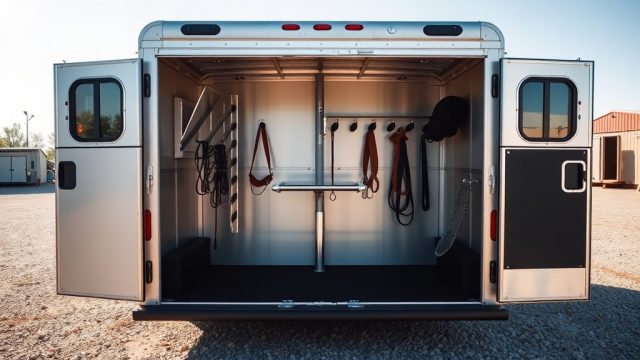
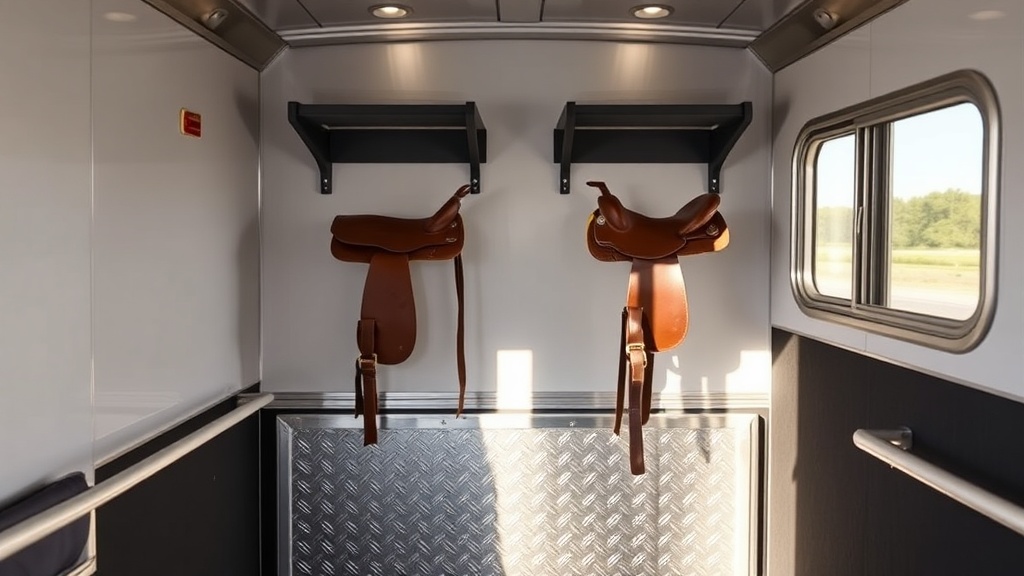
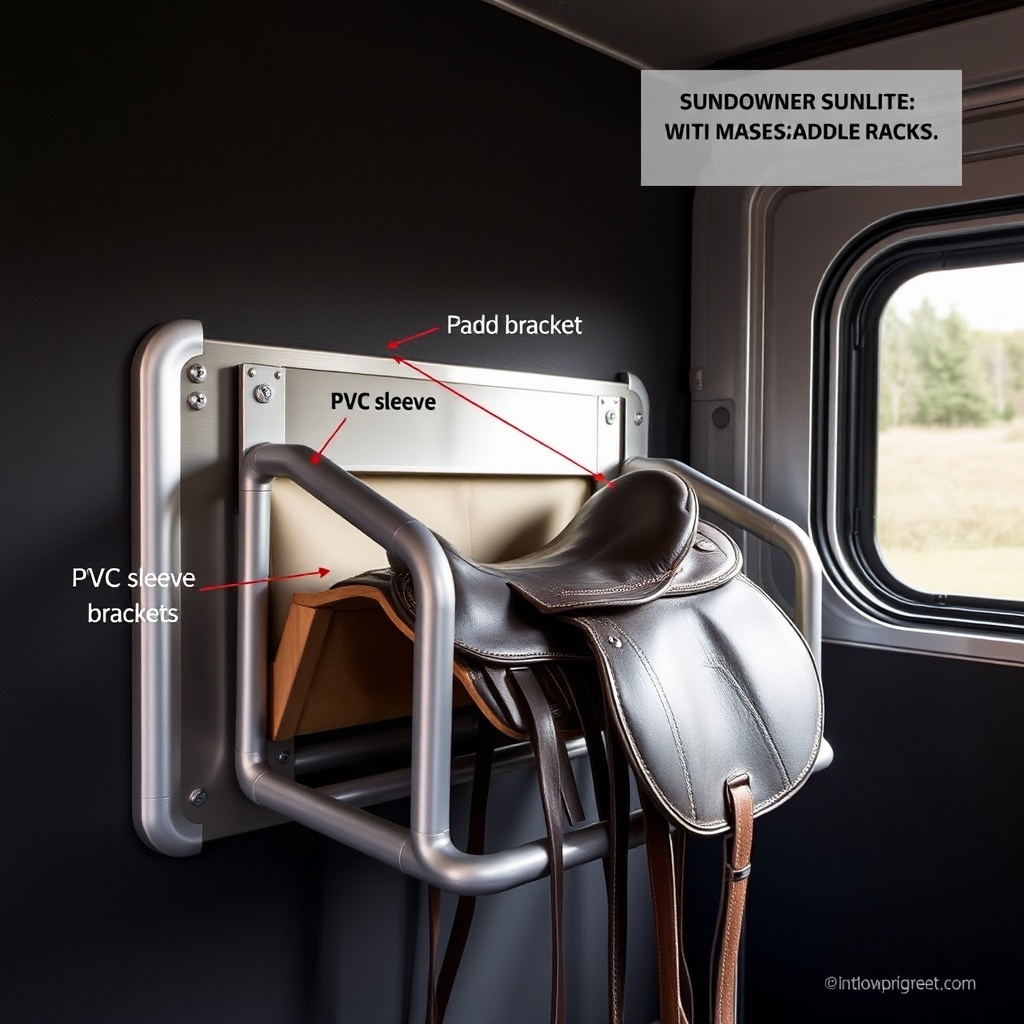
The Sundowner SunLite typically arrives from the factory with two integrated saddle racks in the dressing room area. These are not the cheap folding bar type; they’re formed aluminum channel racks with a padded PVC sleeve that cradles the gullet without pinching. The standard spacing accommodates English and close-contact saddles, but full QH bars with a 7-inch gullet fit snugly—just measure your fork height before you load. The mounts bolt through the wall studs (not just the skin), so even a heavy roping saddle won’t pull them loose in transit.
If you need more than two, Sundowner offers a dresser-mounted rack as a dealer-installed accessory that nests above the storage drawers. It’s a $150–$200 CAD add-on, and you can fit three saddles total without sacrificing floor space. Some owners retrofit a third rack on the opposite wall, but drilling into the SunLite’s fiberglass composite skin requires stainless steel rivets and a backing plate to avoid cracking.
The rack’s 8-inch spacing from the wall leaves just enough room for a breast collar draped over the horn. Wide western saddles with 15-inch seats should face the tailgate; reversing them into the rack can push the horn into the wall padding. You’ll also want to check the screw tension every 12 months—road vibration works them loose, and a sudden bump on a washboard road can send a $4,000 saddle to the floor.
Are the Tack Storage Compartments Weathertight and Secure?
The SunLite’s tack compartment sits beneath the front manger area, accessible from a forward door or from inside the horse compartment via a small hatch. The door uses a rotary latch with a rubber bulb seal—not the cheaper compression foam that flattens after two years. In heavy rain, you’ll see trace moisture if the seal gets misaligned, but most units stay bone dry if you grease the latch strike twice per season.
Inside, the compartment is sealed with aluminum diamond plate on the floor and a center divider wall that keeps saddle pads and bridles separate. Neither side is lockable from the factory, but you can install a barrel bolt from the horse side to prevent curious horses from opening the hatch—a common mod if you haul a stud. The interior depth is 18 inches, enough for stacked saddle pads, a spare girth, and a small first-aid kit, but the opening width is only 24 inches, so large western saddle bags won’t slide in without folding them.
The latch itself is corrosion-resistant, but owners who haul near the coast report surface rust on the steel spring after three years. A shot of dry silicone lube (never WD-40, which attracts dust) fixes the stickiness. If you’re loading heavy tack in the compartment daily, the hinge screws sometimes pull from the aluminum panel; red Loctite on the installation prevents this.
Where Are the Vents Located, and Do They Provide Enough Airflow?
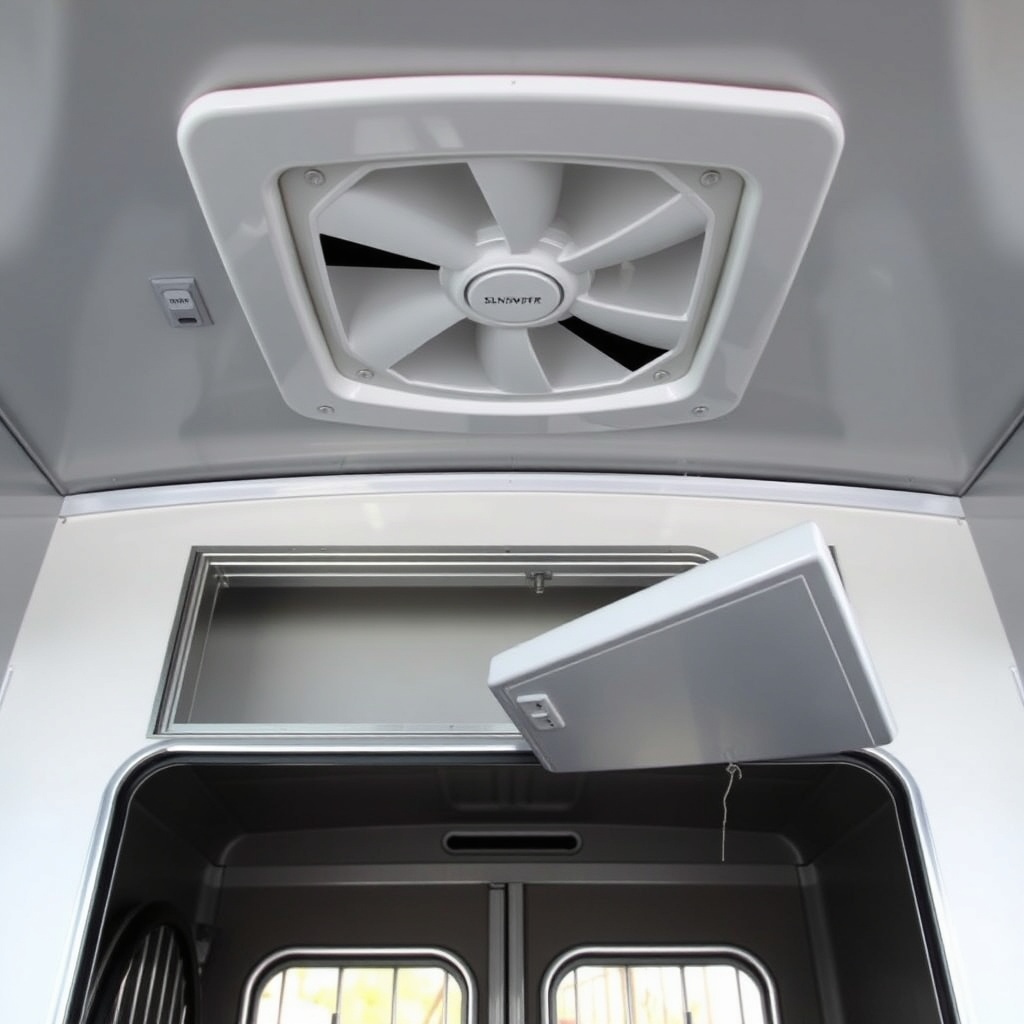
The Sundowner SunLite comes with two types of ventilation: a roof vent (12 x 12 inches) with a 12-volt fan over the horse compartment, and side vents at the wither line in each stall. The side vents are toggle-operated windows that open about 4 inches on a friction hinge. They don’t have screens from the factory, which means wasps and mud daubers can build nests inside if you park for weeks in summer. A standard screen kit from an RV dealer ($20 USD) can be trimmed and screwed over the opening.
In practice, the roof fan pulls air well enough to clear ammonia fumes on a sunny 85°F day, but the side vents are small relative to the trailer’s 7-foot interior height. You’ll get cross-breeze only if both side vents are open and the trailer is pointed into the wind. If you’re towing on a hot interstate at 65 mph, the negative pressure inside the trailer can pull dust in through the side vents; a thin filter (like a furnace pre-filter) cut to size and taped behind the vent frame helps.
Owners who haul in the Deep South often add a second 12-volt roof vent (installed above the dressing room) for around $300 USD aftermarket. The SunLite’s roof is composite, so cutting a new vent hole is possible, but you need a bezel seal to match the roof contour—the stock roof has a slight crown. If you don’t, water channels can run into the ceiling insulation.
Can You Add a Saddle Storage Rack to the Existing Tack Compartment?
Yes, but the tack compartment is only 36 inches tall inside, so full-height saddle racks won’t fit. A horizontal rack mounted to the back wall using two aluminum channels works if you cut the rack arms to 18 inches. Sundowner does not sell a dedicated rack for this space, but a universal fiberglass saddle rack trimmed at the base can sit on the floor and be bolted into the diamond plate. The clearance is tight—a 16-inch saddle with a 12-inch pommel height leaves only 24 inches of headroom for your trailer’s roof.
The better option for extra storage is the bridle hooks that come standard on the interior door panel. They’re rubber-coated steel, and they hold four bridles per hook. If you hang heavy bits, the screw mounts can bend the door’s aluminum skin; reinforcing with a 1/4-inch plywood backing plate on the outside of the door prevents sagging. Several owners on horse trailer forums replace the factory sheet metal screws with #10 stainless bolts and nylock nuts for a permanent fix.
If your setup requires storing martingales and breast collars, a simple PVC rack (sold at most feed stores for $40 USD) can be mounted on the sidewall of the dressing room with self-tapping screws into the aluminum studs. The SunLite’s walls have a stud on every 16 inches, so you have solid attachment points—just avoid the fiberglass skin between studs, as it won’t hold a screw under vibration.
| Care/Task | Severity | Notes for SunLite Owners |
|---|---|---|
| Loose saddle rack screws | Usually not urgent | Tighten every 12 months; Loctite on threads prevents vibration loosening. |
| Side vent seal cracked | Needs attention soon | Water ingress can rot interior wall panels; replace seal with Dicor self-leveling lap sealant. |
| Tack compartment bulb seal misaligned | Usually not urgent | Adjust latch plate 1/8-inch; light moisture only in extreme rain. |
| Roof fan motor noise or wobble | Needs attention soon | Worn fan bearings cause vibration; replace with same 12V dimension fan (avoid cheap off-brands). |
| Hinges on tack door pulling out | Needs attention soon | Steel hinges strip aluminum panel holes; install with #10 stainless bolts and nylock nuts. |
| Dust entering via side vents on highway | Usually not urgent | Add furnace filter cut to size; not structural, but keeps tack clean. |
What Are the Common Wear Points on SunLite Vent and Rack Systems?
After three to five seasons, the side vent friction hinges lose their grip in hot weather if left open against direct sun. The nylon bushing dries out, and the vent slams shut on a bumpy road. A dab of white lithium grease on the hinge pin rebuilds the friction temporarily, but eventually the hinge needs replacement. The part number is a generic RV vent hinge (Trekker or similar brand for $12 USD each) and takes 15 minutes per side to swap—just pop out the clevis pin and slide the new hinge in.
The saddle rack’s PVC sleeves also crack in sub-zero C temperatures if the trailer is stored in an unheated barn. The PVC becomes brittle and splits along the mold seam. Sundowner sells replacement sleeves for $25 CAD each, and you can install them by slipping off the old sleeve over the end of the rack. If the aluminum channel itself bends (rare but happens if you drop a heavy saddle onto it), the entire rack must be unbolted and straightened on a bench vise—do not hammer it in place or you’ll dent the wall.
The tack compartment’s latch mechanism eventually binds if you skip the annual greasing. The rotary latch has a sealed bearing, but the pawl rod corrodes where it passes through the aluminum panel. A pass through with a gunsmith’s silicone cloth or marine grease every two years stops the stickiness. If you hear a “pop” when closing the door, the pawl is misaligned and can slip fully open over bumps—adjust the strike plate height with a washer.
For roof vent care, the 12V fan motor draws about 3 amps and runs quietly for a couple years, but the OEM motor bushings can dry out. A sign is a chirp when you first turn it on on a hot day. A squirt of electric motor oil through the bearing port solves this, but many owners just replace the entire fan assembly at the five-year mark—cost is about $100 USD for a direct-fit replacement with a better motor.
What Owners Say
After browsing forums and social media groups, owners have a few recurring points about the SunLite’s tack storage and vents:
- “I wish the tack door had a better latch—I’ve had it pop open once on a rough road. I now bungee it shut when I’m on a gravel haul.”
- “The roof fan is decent, but it’s noisy above low speed. I replaced it with a fan-tastic fan at year three, much quieter.”
- “The saddle racks hold my 35-pounder just fine, but the PVC sleeves get stiff in the winter and don’t grip the gullet as well. I spray them with silicone polish.”
- “I added a screen to the side vents because the wasps built a nest in one overnight at a campground. Now I never skip the screen.”
If you’re digging deeper into the SunLite, don’t miss our Sundowner SunLite Horse Compartment: Padding and Kick Mat review for a look at stalls and mats, and check out Sundowner SunLite Maintenance: Floor Checks and Lubrication for upkeep schedules that save you money.
Frequently Asked Questions
Will a full western saddle with a 6-inch gullet fit the standard SunLite saddle rack?
Not all—the rack’s padded channel is designed for gullets up to 5.5 inches. Wide western saddles with 6-inch or larger gullets may seat too high. Test fit before loading.
Can I install a roof vent in the dressing room myself?
Yes, if you’re comfortable cutting a 14 x 14 inch hole through the fiberglass composite roof. Use a jigsaw with a fine-tooth blade and seal around the new vent with Dicor. Not recommended if the trailer is still under warranty.
How often do the saddle rack bolts need retightening?
Check them every six months or 10,000 miles, whichever comes first. A torque wrench set to 35 in-lbs prevents overtightening and stripping the wall stud.
Do the side vents let in water if I open them in light rain?
The vent design includes a drip rail on the top edge, so light rain won’t enter at speeds below 40 mph. In a downpour, you’ll see mist come through the gap. Best to close them before rain.
Is the tack compartment lockable from outside?
Not from the factory. A padlock can be added through the existing latch hole, but you’ll need to drill a small clearance on the striker plate—simple 15-minute job.
What size air filter fits the side vents?
Each side vent opening is roughly 24 x 6 inches. A standard furnace filter cut to 23.5 x 5.5 inches with scissors fits snugly behind the interior vent flange. Change it every summer.