For horse owners who spend extended time on the road, the living quarters in a HorseTrailerPro trailer must balance comfort with reliable power management. Generator compatibility is a frequent concern, as improper setup can lead to system failures or unsafe conditions. This article examines key factors for integrating generators with HorseTrailerPro living quarters, focusing on power loads, wiring, and practical owner insights.
What are the generator power requirements for HorseTrailerPro living quarters?
HorseTrailerPro living quarters are designed with a 50-amp electrical system, supporting up to 12,000 watts of peak load. The standard power distribution panel includes two 120-volt legs, each rated for 50 amps. For generator compatibility, a minimum output of 5,500 continuous watts is recommended for basic operation of lights, a furnace fan, and small appliances. Owners running air conditioning units—typically 13,500 to 15,000 BTU—should plan for a generator delivering at least 7,000 continuous watts, with a surge rating of 9,000 watts to handle startup loads.
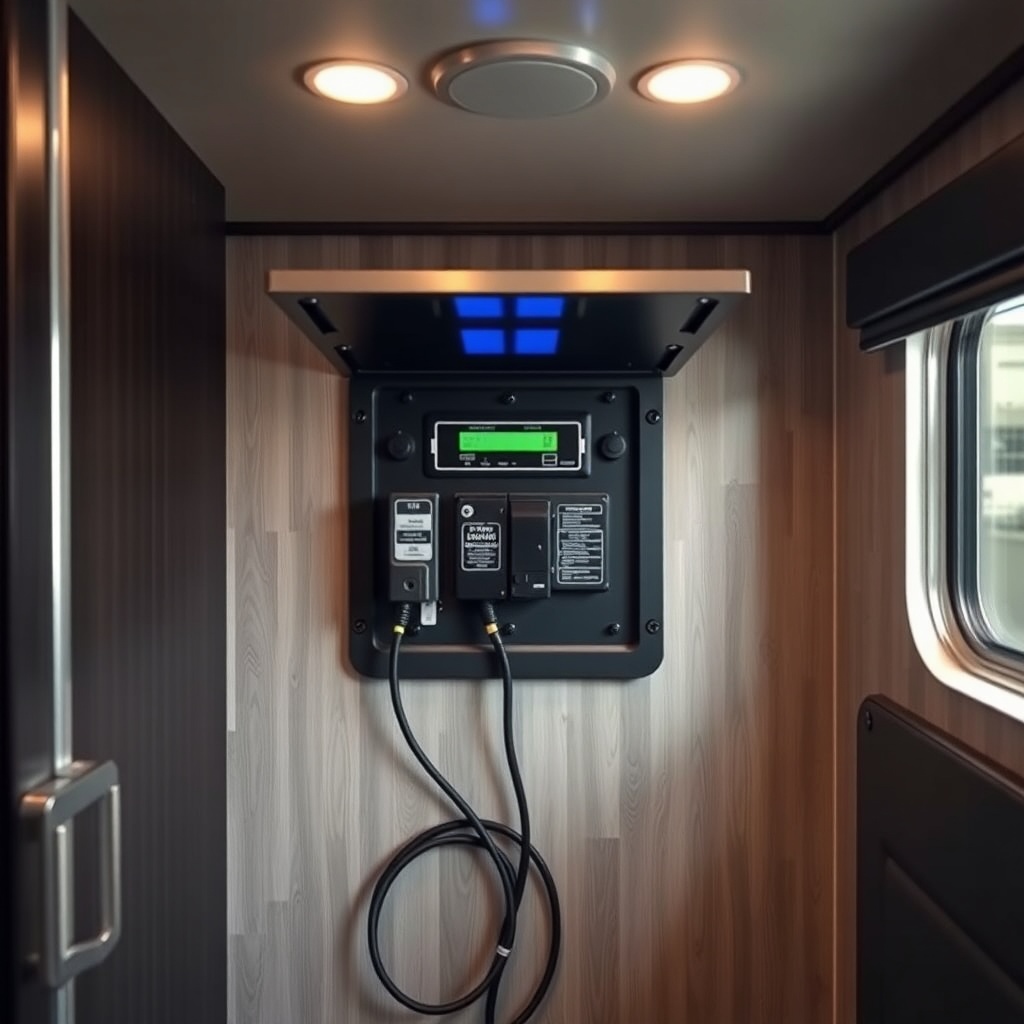
Key considerations include the inverter-charger (often a 2,000-watt pure sine wave unit) and the transfer switch. HorseTrailerPro uses a manual transfer switch by default, but upgrading to an automatic switch is common. The generator must provide stable voltage (within 10% of 120 volts) to protect sensitive electronics like the refrigerator controller and thermostat.
How do HorseTrailerPro’s wiring specifications affect generator selection?
The living quarters wiring in HorseTrailerPro trailers uses primarily 12-gauge copper for general circuits and 10-gauge for the air conditioner and microwave dedicated lines. This configuration works with most generators, but owners must verify the generator’s output receptacle matches the trailer’s input. HorseTrailerPro equips the 50-amp system with a NEMA 14-50P inlet, requiring a generator with a matching NEMA 14-50R outlet. Many portable generators offer only 30-amp (NEMA TT-30R) or 120-volt (NEMA 5-20R) outputs, necessitating an adapter cord—which can limit available power to 30 amps (3,600 watts).
To maintain full capability, select a generator with a 50-amp, 240-volt outlet. Dual-fuel models running on propane or gasoline are popular for extended use. The generator’s total harmonic distortion (THD) should be below 5% to avoid damaging the inverter-charger. HorseTrailerPro’s system is not designed for modified sine wave power from old generators.
For more on the electrical system foundation, see HorseTrailerPro Living Quarters: Electrical System and Generator Compatibility.
What is the best generator size for HorseTrailerPro with air conditioning?
For HorseTrailerPro living quarters with one 15,000 BTU air conditioner, a generator producing 7,500 continuous watts with a 9,500-watt surge is the de facto standard. This handles the air conditioner’s inrush current of about 35 amps (4,200 watts) plus a 2,000-watt load from water heater, refrigerator, and lights. The table below compares common generator sizes for different configurations.
| Living Quarters Load | Continuous Watts | Surge Watts | Typical Fuel Type | Approximate Price (USD) |
|---|---|---|---|---|
| Basic (lights, furnace, fridge, water pump) | 3,500–4,000 | 5,000 | Gasoline | $1,200–$1,800 |
| Single 15k BTU AC plus basic | 7,500 | 9,500 | Dual-fuel (gas/propane) | $2,500–$3,500 |
| Two 13.5k BTU ACs plus full amenities | 12,000 | 15,000 | Diesel (built-in unit) | $4,500–$6,500 |
| All-electric (electric stove, instant water heater) | 15,000 | 20,000 | Diesel or large propane | $7,000–$9,000 |
Owners frequently report that a 7,500-watt generator runs a single air conditioner and standard appliances without issue, but adding a microwave (1,500 watts) requires careful load management. For dual AC setups, a 12,000-watt generator or two smaller units paralleled may be necessary.
How do owners manage power loads and fuel efficiency in HorseTrailerPro?
Power management in HorseTrailerPro living quarters often involves prioritizing circuits. Many owners install a secondary sub-panel for non-essential loads (e.g., entertainment, extra outlets) to shed load when generator capacity is limited. The air conditioner compressor cycling can cause voltage drops, so using a soft-start kit (about $300 USD) reduces startup current by up to 50%, allowing a 5,500-watt generator to run a 15k BTU AC.
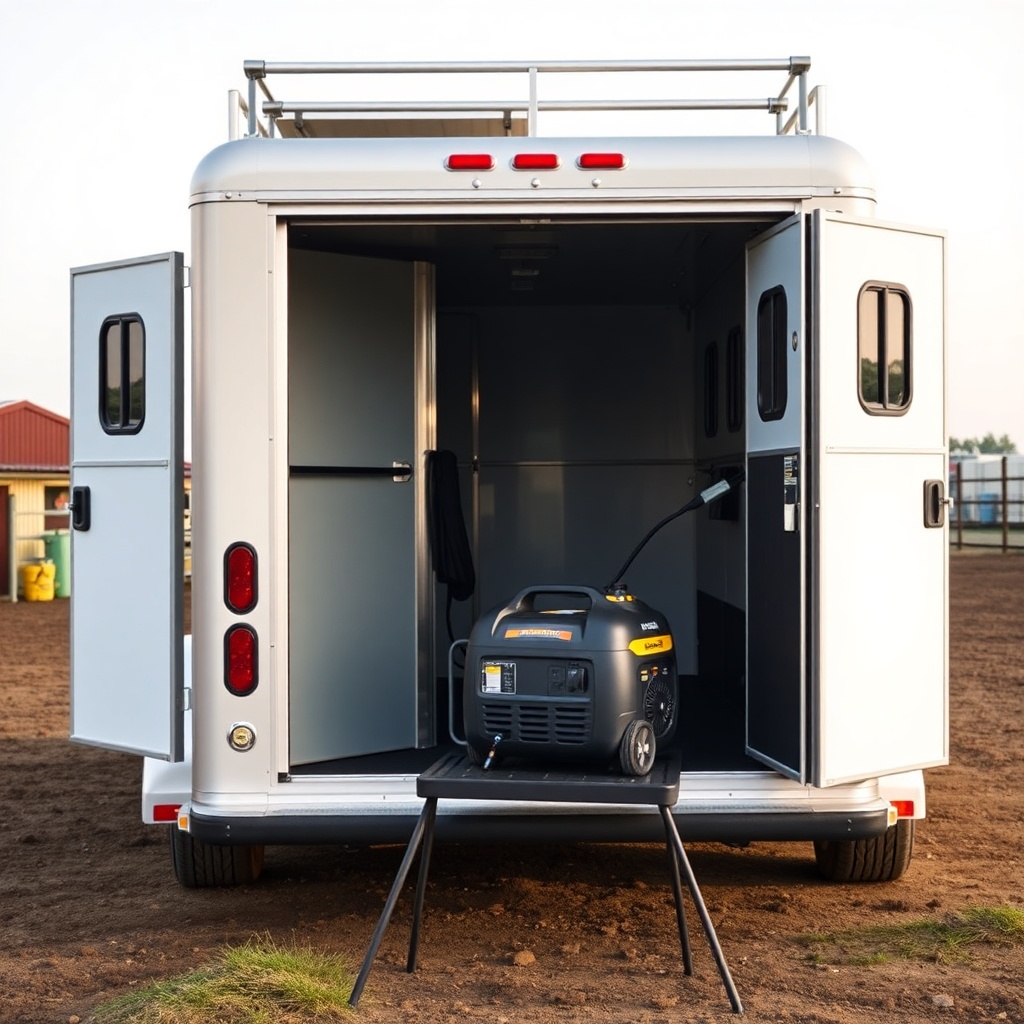
Fuel efficiency varies: gasoline generators typically consume 0.75–1.2 gallons per hour at half load, while propane models use about 1.2 litres per hour per kilowatt. HorseTrailerPro trailers have a generator compartment capable of housing a built-in unit, but many owners prefer portable generators due to lower cost and easier maintenance. Running a generator for 8 hours a night (common for horse shows) can consume 6–10 gallons of fuel, so a 12-gallon tank is a practical minimum for overnight autonomy.
Those interested in towing stability during long trips should read HorseTrailerPro vs Exiss 3-Horse GN: Towing and Handling Comparison for insights on how generator weight affects tongue load.
What are the risks of using an undersized generator with HorseTrailerPro?
An undersized generator can cause several problems in HorseTrailerPro living quarters. The inverter-charger may fail to charge batteries correctly, leading to reduced battery life. Air conditioner compressors can overheat and trip internal overloads, or worse, cause a burnt start capacitor (repair cost: $150–$300 USD). Voltage sags below 105 volts can damage the refrigerator control board and the microwave’s transformer.
In severe cases, the transfer switch may arc, creating a fire risk. HorseTrailerPro’s electrical system includes a main breaker that will trip if overloaded, but repeated nuisance tripping is inconvenient and indicates inadequate generator output. Owners should avoid “RV-ready” generators labeled only for 30-amp RV systems—these often lack the surge capacity for HorseTrailerPro’s larger AC units.
What do owners say about generator setup in HorseTrailerPro living quarters?
Owner feedback on HorseTrailerPro’s generator compatibility is largely positive when the right specifications are met. On discussion forums, many praise the factory wiring’s 50-amp backbone, noting that retrofitting a 30-amp system would be costly. One owner wrote: “I installed a 7,500-watt dual-fuel generator with an automatic transfer switch. The AC starts without dimming lights even with the refrigerator on. Great system.”
Common complaints involve the location of the generator compartment in older models. Some owners report that the compartment is too close to the living quarters’ exhaust fan, drawing in fumes. A typical fix involves adding a rubber seal and repositioning the generator 6 inches away. Others note that the standard manual transfer switch can be confusing for new users; upgrading to an auto transfer switch (about $450 USD plus installation) is a frequent recommendation. For comprehensive padding and divider details, see HorseTrailerPro Horse Compartment: Padding and Divider Review.
Frequently Asked Questions
1. Can I use a 30-amp generator with my HorseTrailerPro living quarters?
Yes, but only with an adapter cord (NEMA L14-30P to 14-50R) and limited to 3,600 watts. You cannot run the air conditioner and water heater simultaneously.
2. Does HorseTrailerPro include a built-in generator?
No, they sell trailers with a generator prep package that includes a compartment, transfer switch, and exhaust vent. The generator is owner-supplied.
3. What is the recommended generator fuel type for HorseTrailerPro?
Dual-fuel (gasoline and propane) is most versatile. Diesel is best for heavy loads but requires a built-in generator. Propane alone is clean but less energy-dense.
4. How can I reduce generator noise near the living quarters?
Install a sound-dampening box (about $200 USD) or place the generator 15–20 feet away using a 50-amp extension cord. The compartment insulation helps, but adding mass-loaded vinyl further reduces noise.
5. Will a generator damage the inverter-charger in HorseTrailerPro?
Only if the generator output has high THD (above 5%) or poor voltage regulation. Pure sine wave generators are safe; older modified sine wave models can cause inverter failure.
6. Do I need a soft start for the AC with a 7,500-watt generator?
Not usually, but it’s recommended if you plan to run multiple AC units or other heavy loads. Soft start reduces stress on both the generator and the AC compressor.