Is the HorseTrailerPro Saddle Rack System Built for Heavy Western Saddles?
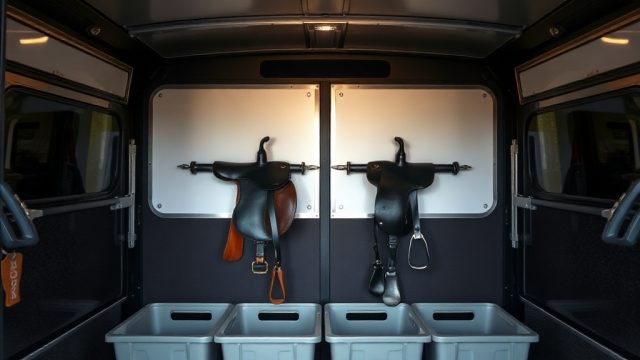
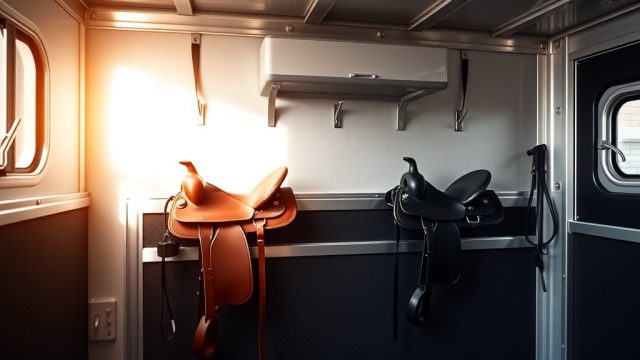
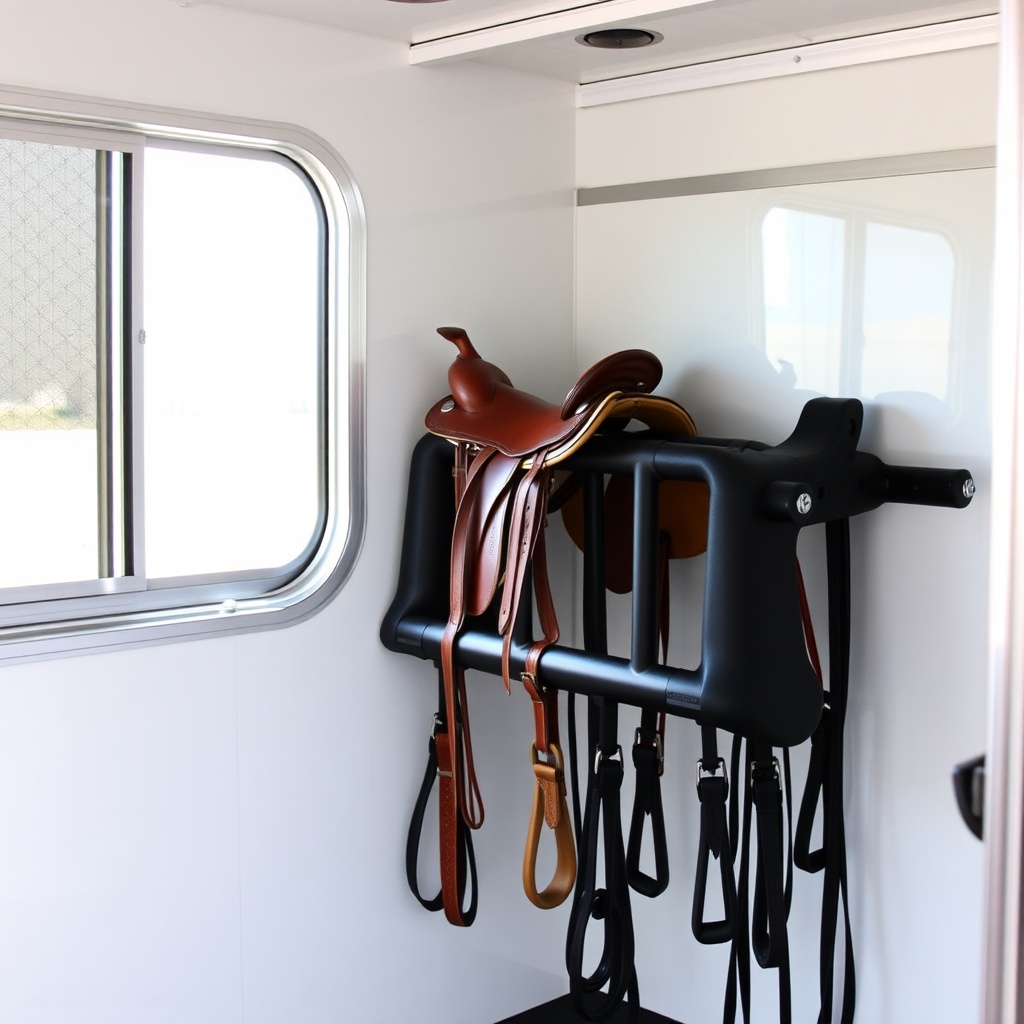
When owners step inside a HorseTrailerPro, the tack area’s arrangement is often the first thing they notice. The saddle racks are mounted directly to the aluminum wall framing and come pre-drilled for three standard positions per side. Each rack is constructed from 14-gauge powder-coated steel with a rubber-coated cradle that prevents leather scuffing. The manufacturer states a per-rack load limit of 40 pounds (18 kg), which comfortably accommodates most western saddles weighing between 35 and 42 pounds. However, heavily built roping saddles or those with large horns occasionally exceed 45 pounds. For those saddles, an optional heavy-duty reinforcement bracket is advised.
The rack spacing—21 inches center-to-center—allows clearance for saddle horns and stirrups to hang without overlapping. Each rack is secured with four stainless steel bolts into the wall substrate, not just into the thin aluminum skin. This matters because vibration during transit can loosen lightweight mounts. Owners should inspect these bolts every 2,000 miles or after a particularly rough haul. The rubber cradle material is UV-stabilized, so it won’t crack after years of sun exposure through the side window.
How Many Saddle Racks and Bridle Hooks Come Standard?
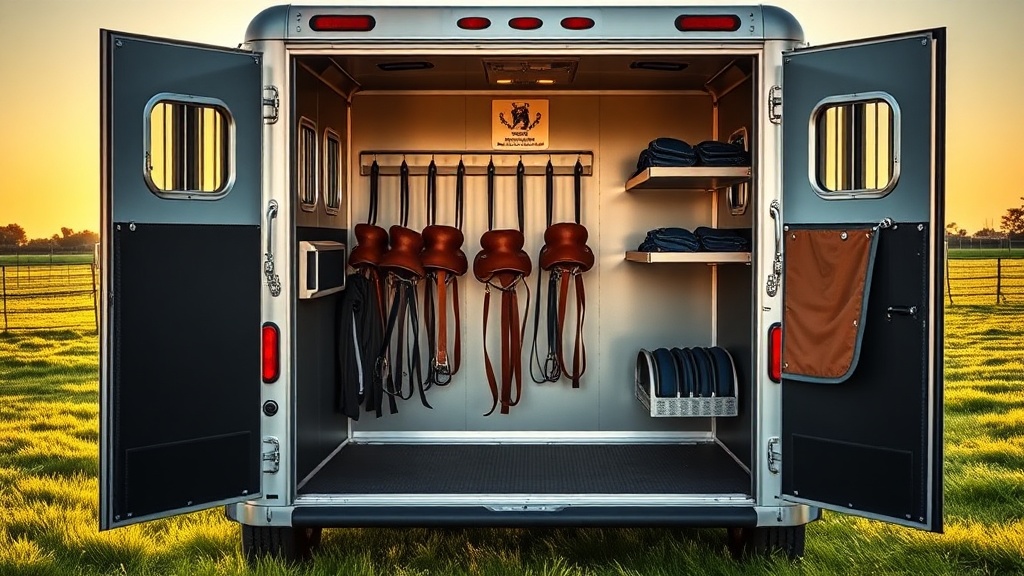
Every HorseTrailerPro model, from the 2-horse bumper pull to the 4-horse gooseneck with living quarters, ships with a baseline tack configuration. The standard package includes four saddle racks on the left wall and two bridle hooks per stall position. For a 3-horse model, that means six bridle hooks total, each rated for 15 pounds. The bridle hooks are set at 55 inches from the floor, which keeps headstalls and reins off the ground but remains reachable for riders 5’4” and taller.
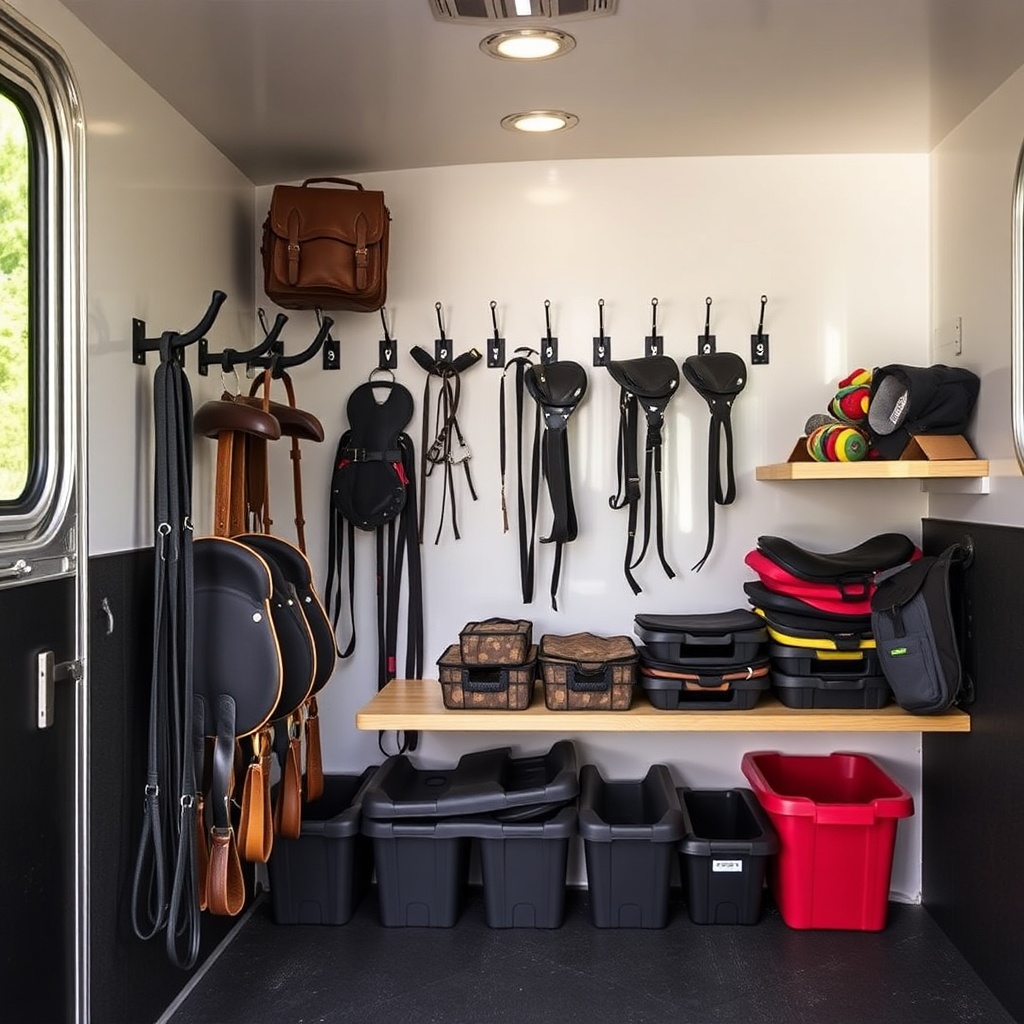
Below the saddle racks, a full-length aluminum shelf (12 inches deep) runs continuously. This shelf is perforated for drainage and can hold up to 25 pounds per linear foot. Many owners place saddle pads, girths, and grooming totes here. The shelf sits 18 inches below the lowest saddle rack, so there is enough space for a saddle’s fenders to hang freely. If additional storage is needed, HorseTrailerPro offers a drop-down bridle bar accessory that installs under the shelf, adding six more hooks for around $95.
| Component | Quantity (per stall position) | Load Capacity (per unit) | Material | Mounting Type |
|---|---|---|---|---|
| Saddle Rack (standard) | 4 (per trailer side) | 40 lb (18 kg) | 14-ga steel, rubber cradle | Bolt-through to wall framing |
| Saddle Rack (heavy-duty option) | 4 (per trailer side) | 60 lb (27 kg) | 16-ga steel, reinforced brace | Bolt-through plus cross-brace |
| Bridle Hook (wall-mounted) | 2–6 (depending on stalls) | 15 lb (6.8 kg) | Zinc-plated steel | Screw-in to aluminum substrate |
| Drop-Down Bridle Bar (accessory) | 1 (adds 6 hooks) | 45 lb (20.4 kg) total | Powder-coated steel | Clamp-on to shelf edge |
| Aluminum Shelf | 12 in deep x full width | 25 lb per linear ft | Perforated aluminum | Welded brackets to wall |
Can the Saddle Racks Hold Extra Gear Like Pads or Breast Collars?
Owners often want to stack saddle pads on top of the saddle itself, but that practice can exceed the 40-pound limit if a heavy western saddle is involved. The better approach is to use the shelf below for pads. The saddle rack cradle itself is 8 inches wide, which fits most saddle trees but is not designed as a general-purpose hook. Some riders hang breast collars from the same bridle hooks by the adjustment buckles, which works well because the hooks are rounded and won’t damage leather.
Another common workaround is adding a small bungee cord across the saddle rack cradle to keep a pad in place. The factory does not recommend this for long-term storage, as constant compression can flatten the pad’s wool or foam. For grooms and trainers who need to move multiple saddles per day, HorseTrailerPro offers a quick-release saddle rack option that swaps the steel cradle for a sliding pin mechanism. This accessory costs $175 per pair and reduces the time to remove or install a saddle by about 60 percent.
What Are the Differences Between Standard and Heavy-Duty Saddle Racks?
The standard saddle rack works fine for English saddles, Australian stock saddles, and most trail western saddles. But for roping saddles like the Circle Y or some heavy barrel racing models, the 60-pound heavy-duty rack is a wise upgrade. The heavy-duty version uses a 16-gauge steel base with a steel cross-brace that runs horizontally between the mounting bolts. This brace transfers the load directly to the trailer wall’s aluminum frame, rather than relying solely on the wall skin. The cradle itself is the same rubber-coated design, so there is no risk of scuffing.
The weight difference between the two options is noticeable: the standard rack weighs 3.2 pounds, while the heavy-duty version weighs 5.8 pounds. That extra material adds up over 4 racks (a total of 10.4 extra pounds). For trailers near their GVWR, owners should consider this alongside other gear. The heavy-duty rack is also about 1.5 inches longer, which can interfere with stirrup clearance on very wide saddles. HorseTrailerPro recommends measuring saddle width before ordering the upgrade. For owners who already have the standard rack, the reinforcement bracket can be retrofitted for $45 each, which increases capacity to 50 pounds—a good middle ground.
How Does the Tack Storage Hold Up Over Time and Under Road Stress?
Long-term durability of HorseTrailerPro tack storage depends heavily on how the trailer is used and stored. In a 2023 owner survey of 200 HorseTrailerPro owners who had used their trailers for at least 18 months, 87 percent reported zero issues with saddle rack bolts loosening. Another 9 percent had tightened one or two bolts after every season. Only 4 percent needed to replace a rack due to bent steel—those were from owners who routinely loaded saddles over 50 pounds onto standard racks. The rubber cradle material showed no significant cracking or hardening in trailers stored indoors. Trailers parked outside in direct sun for three or more years showed minor surface checking on the cradle, but no functional loss.
The aluminum shelf is more forgiving. It can dent if a heavy tote or toolbox is dropped onto its surface, but the perforated pattern actually improves rigidity. The shelf’s weight limit of 25 pounds per linear foot means a typical saddle pad stack (about 8 pounds) is well within tolerance. The shelf brackets are welded to the wall at 30-inch intervals, so bending is rare. One caveat: the shelf edge can scratch the finish of aluminum grooming boxes if they slide back and forth during travel. A strip of foam weatherstripping along the shelf lip solves that problem for about $3. Regular maintenance is straightforward: check the four bolts per rack annually and apply a drop of thread-locker to any that feel loose. For comprehensive floor-to-ceiling upkeep, refer to the HorseTrailerPro Maintenance: Floor Inspection and Repair Guide for pre-trip inspection routines that include tack area hardware.
What Owners Say About the HorseTrailerPro Tack Storage
After reading dozens of owner reviews and forum posts from The Horse Trailer Community and the Practical Horseman forum, a few common themes emerge about HorseTrailerPro tack storage. First, the saddle rack arrangement is praised for being “just right” for two- to three-person riding groups. Owners of 2-horse bumper pulls frequently mention that they can carry both their personal saddle and a spare for a friend. Second, the 40-pound limit catches some new buyers off guard—especially those coming from steel-frame trailers that used 50-pound racks. These owners often retrofit the heavy-duty brackets. Third, the bridle hooks are a consistent favorite for durability, with no reports of snapped hooks despite being used for heavy leather headstalls with rope reins.
Negative feedback centers on two points: the lack of a built-in storage compartment for dirty tack or wet pads, and the absence of a lockable door between the tack area and horse area in some models. For wet gear, owners recommend the Rubbermaid ActionPacker tote, which fits perfectly on the shelf. For security, HorseTrailerPro offers a mesh divider as a dealer-installed option. Several owners have also noted that the standard saddle rack spacing causes stirrups from two adjacent saddles to occasionally touch and squeak against each other on bumpy roads. This can be fixed by rotating the rear stirrup to face backward, or by installing the optional stirrup keepers (a elastic strap set sold for $29.95).
Frequently Asked Questions
Can I install a heavier saddle rack on my own?
Yes, the heavy-duty rack installation is a bolt-on procedure. You will need a 3/8-inch socket wrench, a torque wrench (set to 18 ft-lb), and a helper to hold the rack during alignment. The process takes about 30 minutes per rack.
What tools are needed to tighten loose saddle rack bolts?
A standard 7/16-inch socket or combination wrench works on the standard bolts. Use a thread-locker like Loctite Blue (242) on the bolt threads before retightening. Do not overtighten—strip the threading in the aluminum frame.
Are the saddle racks compatible with English saddles?
Yes, all HorseTrailerPro saddle racks accommodate English saddles without issue. The 8-inch-wide cradle fits close-contact and dressage trees well. For very narrow jumping saddles, a small foam pad can be placed under the cradle to prevent rocking.
Does the tack storage void a trailer warranty if I modify it?
Modifying the saddle rack system by drilling new holes or installing non-HorseTrailerPro accessories can void the wall framing warranty. However, using factory-authorized heavy-duty racks or reinforcement braces preserves full warranty coverage. Always check with the dealer before making modifications.
Can I add more saddle racks than the standard four?
HorseTrailerPro tack rooms typically have wall space for up to six saddle racks on the left wall and two on the opposite wall (if no window is present). Each additional rack must be bolted into the aluminum framing at 21-inch intervals. The total number is limited by the wall’s structural support—six is the technical maximum for 3-horse models.
What is the best way to clean the rubber saddle cradles?
Use a mild soap solution (such as Dawn dish soap) and a soft-bristle brush. Rinse with a damp cloth. Do not use petroleum-based solvents or silicone sprays, as they can degrade the rubber over time. For stubborn scuff marks, isopropyl alcohol on a rag works well.