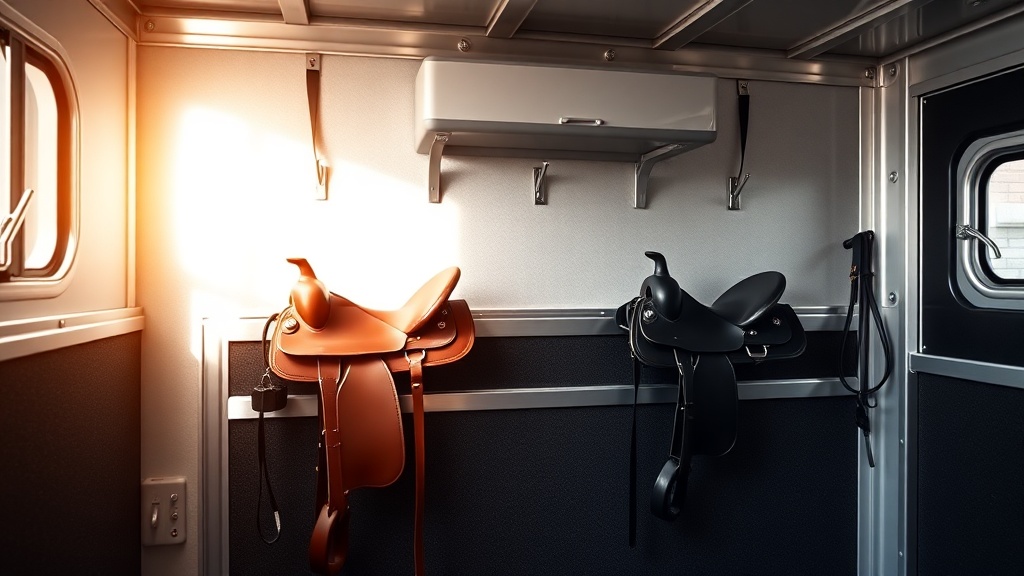
Why Does Proper Saddle Rack Installation Matter in a HorseTrailerPro?
For equestrians who haul their own horses, tack storage is not merely about convenience—it is about safety, longevity of equipment, and minimizing stress during travel. HorseTrailerPro trailers are engineered with thoughtful tack compartments, but the true value of these spaces emerges when owners install saddle racks correctly. A poorly installed saddle rack can lead to saddle slipping, damaged leather, or even structural stress on the trailer. This article provides a comprehensive guide to installing and adjusting saddle racks in HorseTrailerPro models, ensuring your saddles stay secure, ventilated, and accessible. We also share adjustability tips to accommodate various saddle sizes and riding disciplines, from English close-contact to Western roping saddles.
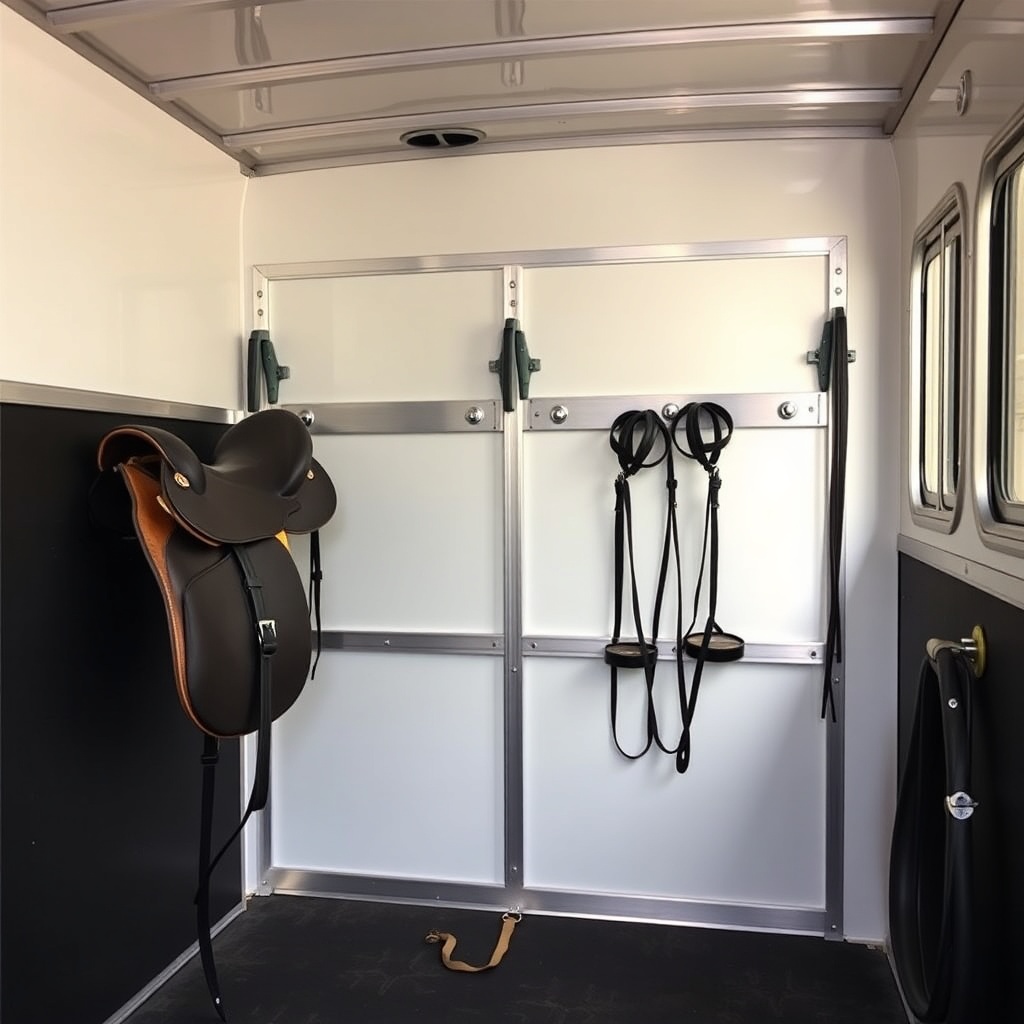
What Type of Saddle Racks Do HorseTrailerPro Trailers Use?
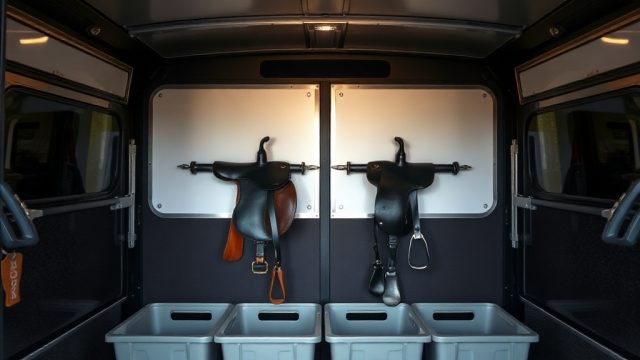
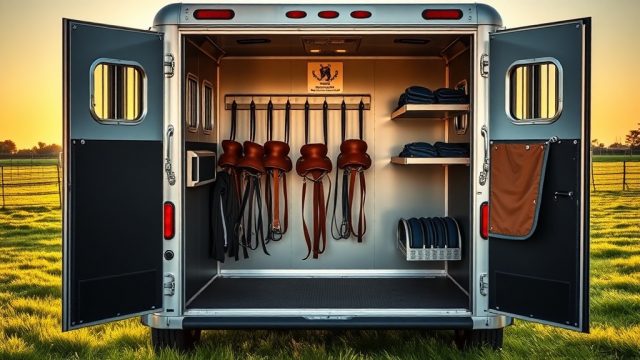
HorseTrailerPro typically equips its tack storage areas with heavy-duty, adjustable saddle racks made from powder-coated steel or aluminum. These racks are designed to accommodate saddles weighing up to 50 pounds (22.7 kg) each. Many models feature a swing-out or fold-down design, allowing owners to maximize vertical space when not in use. Depending on the floor plan—such as in the HorseTrailerPro Living Quarters: Audio System and Speaker Quality Review where the tack room is adjacent to the lounge—the racks can be mounted to stud walls or aluminum framing. Standard racks are padded with high-density foam or neoprene to protect saddle trees and flaps. However, aftermarket options include quick-release brackets and adjustable cantle hooks. To ensure compatibility, owners should check the trailer’s build year and the thickness of mounting surfaces (usually 1/2-inch or 3/4-inch plywood panels).
How Should Owners Install Saddle Racks in HorseTrailerPro Tack Rooms?
Installation requires a methodical approach to avoid damaging the trailer’s interior panels or compromising structural integrity. Here are the key steps: First, measure the tack compartment’s width and height. HorseTrailerPro tack rooms typically have between 48 and 72 inches of width (121.9 to 182.9 cm). For a standard two-saddle rack setup, spacing should be at least 12 inches (30.5 cm) between the top of one rack and the bottom of the next. Use a stud finder to locate wooden or aluminum studs behind the wall panels. If the tack room uses aluminum framing, drill pilot holes with a sharp drill bit (size #10 for screw threads up to 1/2 inch). Avoid relying solely on drywall anchors in a horse trailer—vibration during towing can loosen them. Instead, secure each rack with at least four #14 self-tapping screws into studs. For added strength, consider using a mounting plate or backing plate (available from HorseTrailerPro dealers) that distributes weight across a wider area. Torque screws to about 15–20 foot-pounds. After mounting, apply a thin layer of silicone sealant around screw heads to prevent moisture ingress if the tack room connects to a living area such as those described in the HorseTrailerPro Living Quarters: Water System and Plumbing Review.
What Are the Adjustability Features for Different Saddle Sizes?
HorseTrailerPro offers several adjustability mechanisms to optimize saddle fit and prevent pressure points. The most common are sliding saddles rests, pivoting hooks, and multi-height brackets. Below is a comparison table of typical adjustability options available for HorseTrailerPro saddle racks.
| Adjustability Feature | Range | Best For | Tool Required |
|---|---|---|---|
| Sliding pad width | 5 to 10 inches (12.7 to 25.4 cm) | English or close-contact saddles | Allen key (5/16-inch) |
| Pivoting horn hook | 0 to 45 degrees | Western saddles with horns | Phillips screwdriver |
| Height-adjustable brackets | 5 positions, 2-inch increments | Tall or wide saddles | Socket wrench (3/8-inch drive) |
| Quick-release pin | Single action | Fold-down for storage | None |
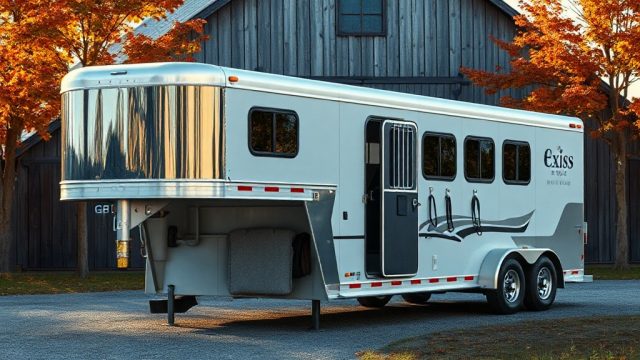
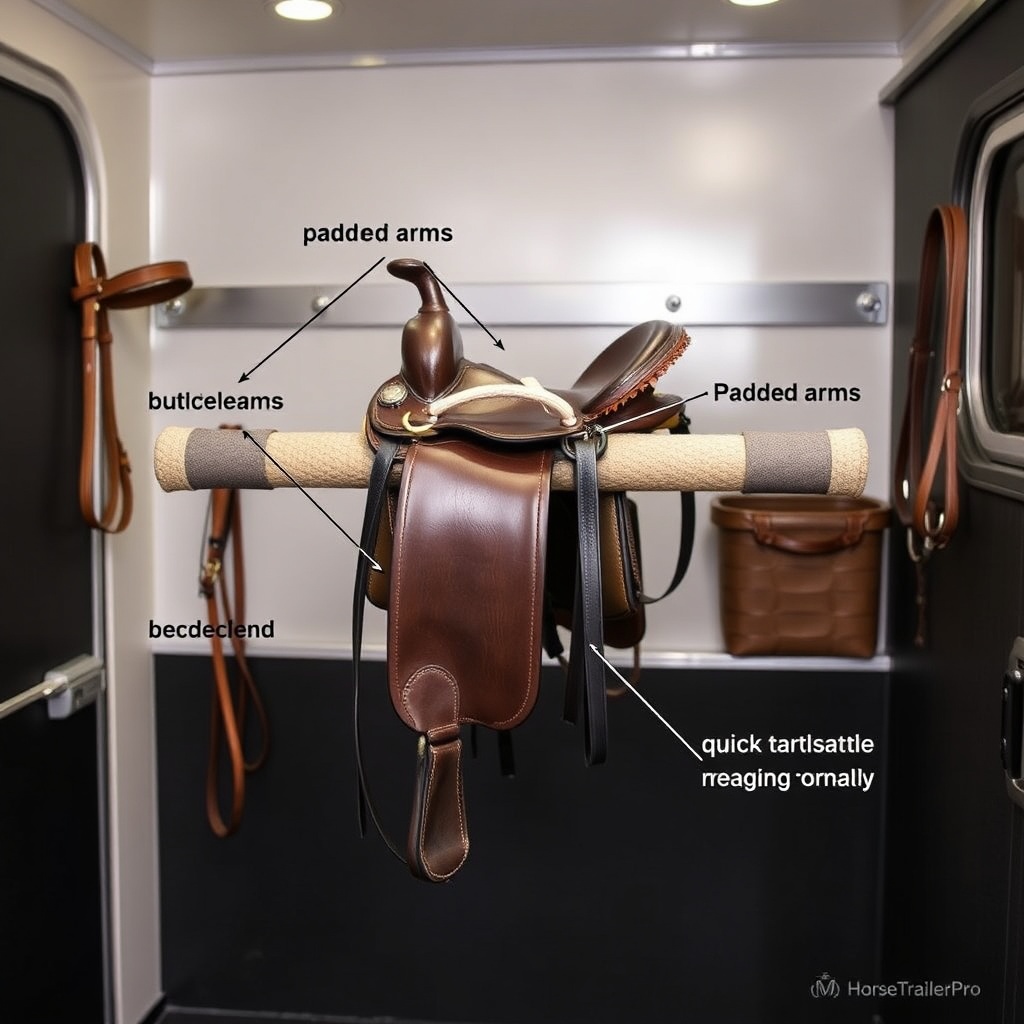
When adjusting a rack for a heavier saddle (e.g., a 40-pound Western saddle), ensure the tilt angle is neutral or slightly backward (1 to 2 degrees) to prevent the saddle from sliding forward during transit. For English saddles, the pad should grip the skirt evenly without compressing the flocking. Most HorseTrailerPro racks allow for a 1-inch vertical adjustment via slotted holes. Some owners also add foam pipe insulation over the rack arms for extra padding. If you haul multiple disciplines, consider a HorseTrailerPro vs Exiss 3-Horse GN: Tack Storage Comparison to see how adjustability stacks up against competitors.
How to Ensure Proper Ventilation Around Saddles in the Tack Room?
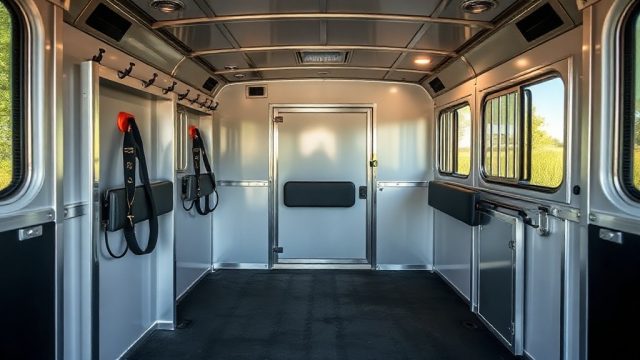
Proper airflow is crucial to prevent mildew and leather cracking, especially after sweaty rides. HorseTrailerPro tack rooms are equipped with roof vents and side windows, but saddle racks can obstruct airflow. To optimize ventilation, install racks at least 2 inches (5 cm) away from walls and ceiling panels. If the tack room shares a wall with the living quarters (common in larger models reviewed in the HorseTrailerPro Horse Compartment: Airflow and Ventilation Review), ensure the air gap between saddles and vent openings is not blocked. You can also add a small 12-volt circulation fan on a timer to move air during storage. When mounting, keep the rack’s backplate flush to the wall to minimize dust collection. Avoid over-stacking saddles—two per rack is optimal for air circulation. For leather care, use ventilated saddle covers that allow moisture to evaporate while protecting from dust.
What Do Owners Say About HorseTrailerPro Saddle Rack Installation?
Feedback from the HorseTrailerPro community reveals consistent patterns. Many owners praise the factory-installed racks for being “sturdy and well-padded,” particularly in 2022 and later models. A frequent comment from equine enthusiasts who upgraded to a HorseTrailerPro is that the pre-drilled holes align well with standard stud patterns. However, some owners report that the stock racks are best suited for Western saddles and may require adaptation for balanced English saddles. One owner of a 2023 two-horse HorseTrailerPro noted, “I added a third rack in the dressing room, and the mounting process was straightforward. The panels are solid, and self-tapping screws held perfectly. I did need to buy a backing plate for extra weight distribution because I haul a heavy roping saddle.” Another owner shared, “I love the quick-release pins on my fold-down racks. They save space when I am not trailering, and the foam padding hasn’t marred my leather after a year of use.” Negative feedback centers on the limited adjustability of older models (pre-2020), where racks are either horizontal or fixed at a single angle. Owners recommend swapping those out for adjustable models available through the HorseTrailerPro parts catalog. Overall, the consensus is that installation is DIY-friendly for moderately skilled individuals, but a professional installation is recommended if you are uncertain about stud locations or wiring in the tack room walls.
How Does Weight Distribution Impact Saddle Rack Mounting?
A properly installed saddle rack is part of a larger weight-distribution strategy in your HorseTrailerPro. Saddles placed near the trailer’s tongue can affect tongue weight and overall towing dynamics. As a rule, distribute heavy items (like Western saddles) evenly across the tack compartment, avoiding clustering them on one side. The HorseTrailerPro Towing Handling: Trailer Balance and Weight Distribution Tips article emphasizes that the tack room should not exceed 15% of the trailer’s total cargo capacity. For a typical HorseTrailerPro three-horse model, the combined saddle weight (two to four saddles) is around 80–160 pounds (36–72 kg). Mount each rack to a stud for structural integrity. Use a torque wrench to prevent over-tightening, which can strip threads in aluminum framing. Additionally, consider the center of gravity: place heavier saddles lower to the floor and lighter ones higher. If your trailer has a rear tack room, be aware that the rear axle is the fulcrum. Overloading the rear can cause trailer sway. Finally, secure all tack locker doors with positive-latch mechanisms to prevent sudden openings. Many owners also install a security camera in the tack room for peace of mind, as detailed in the HorseTrailerPro Horse Compartment: Security Camera Systems for Monitoring Horses review.
Frequently Asked Questions
Q: Can I install a saddle rack on a wall that has uneven paneling?
A: Yes, but you may need to use shims (plastic or wooden) to create a level mounting surface. Ensure that the shims are placed evenly to avoid pressure points that could deform the rack arm. Use screws long enough to penetrate into the stud behind the paneling.
Q: What is the maximum weight capacity of a HorseTrailerPro saddle rack?
A: Most factory racks are rated for 50 pounds (22.7 kg) per saddle, but confirm the exact rating by checking the owner’s manual or contact your dealer. For heavier saddles, use heavy-duty rack kits sold by HorseTrailerPro that can support up to 70 pounds (31.8 kg).
Q: Do I need special tools to adjust the rack angle?
A: No. Most HorseTrailerPro racks feature tool-free angle adjustment via a spring-loaded pin or a thumb-turn knob. For pre-2020 models, a 3/8-inch combination wrench may be needed.
Q: Will the saddle rack damage my saddle if the padding wears out?
A: Replace the foam or neoprene pads every 12–18 months, depending on use. Pads are available as replacement parts from HorseTrailerPro dealers. Inspect the arms for rust and replace if cracked. Using a saddle cover adds extra protection.
Q: How do I prevent saddle racks from rattling while towing?
A: Apply a small strip of adhesive-backed weatherstripping (1/8-inch thick) between the rack arm and the saddle tree. Also, tighten all fasteners to the recommended torque. A rubber washer under the bolt head can dampen vibrations.
Q: Can I use the same mounting holes to switch from a saddle rack to a bridle hook?
A: Yes, but ensure the new bracket has the same bolt pattern. Most HorseTrailerPro accessories use a common 2-inch by 4-inch rectangular pattern. If changing frequently, consider a modular track system that allows interchangeable hooks and racks.