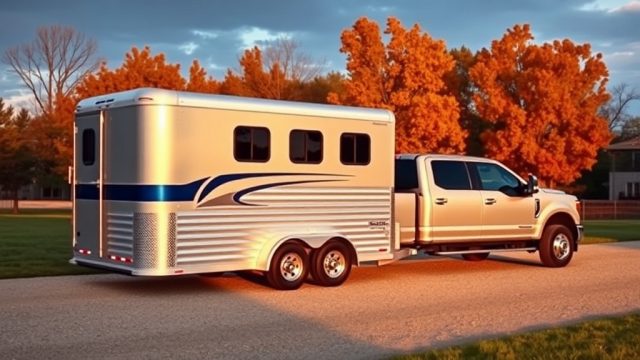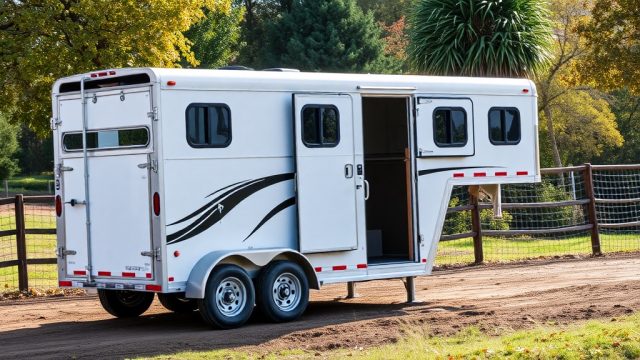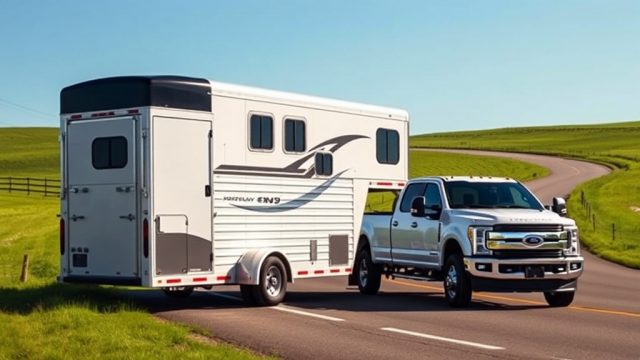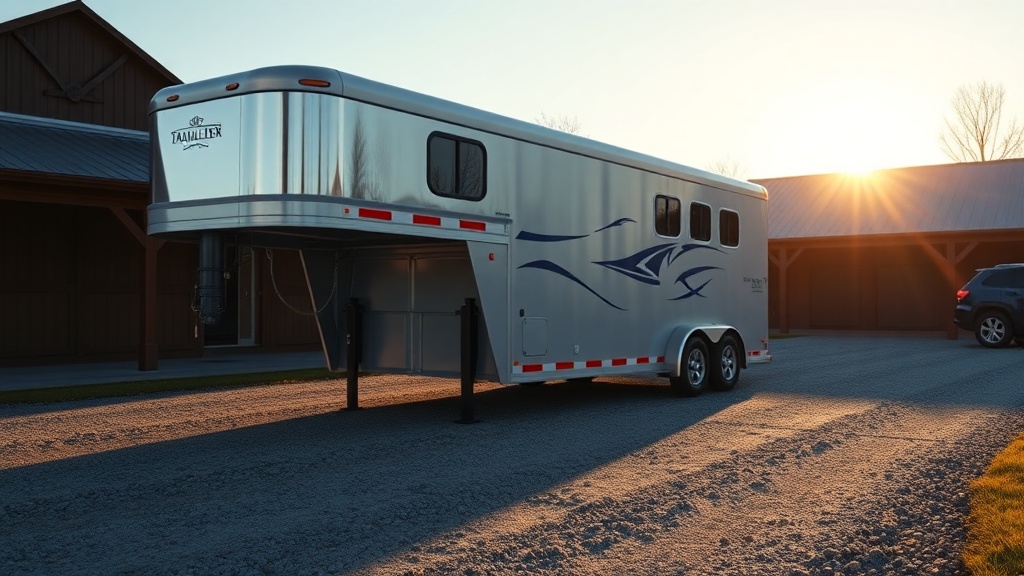
What Causes Poor Towing Handling in a HorseTrailerPro?
Poor towing handling in a HorseTrailerPro often stems from improper trailer balance and incorrect weight distribution. When the trailer’s center of gravity is misaligned—either too far forward or too far back—the tow vehicle struggles to maintain stability, leading to sway, reduced braking efficiency, and increased tire wear. For owners in the UK, where towing regulations are strict, understanding these mechanics is crucial for safe journeys. A properly balanced HorseTrailerPro ensures that the hitch weight (the downward force on the tow ball) sits within 10–15% of the total loaded trailer weight, as recommended by the National Trailer and Towing Association.
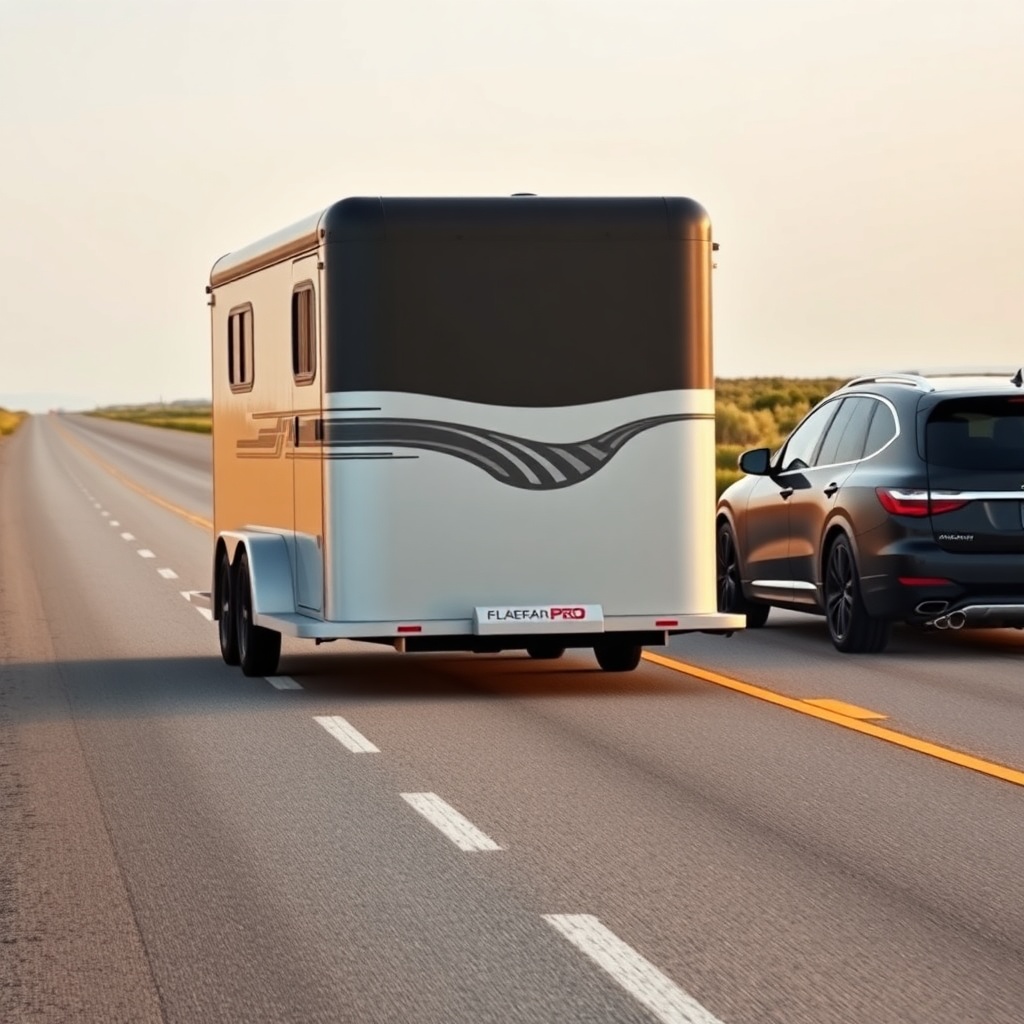
How Do I Calculate the Correct Tongue Weight for My HorseTrailerPro?
Tongue weight, also known as hitch weight, is the downward force the trailer exerts on the tow ball. For the HorseTrailerPro, a typical 3-horse gooseneck trailer with a gross vehicle weight rating (GVWR) of 3,856 kg (8,500 lbs) should have a tongue weight between 386 kg and 579 kg (850–1,275 lbs). Exceeding this range can overload the tow vehicle’s rear axle, while undershooting it may cause trailer sway at highway speeds. To calculate, use a tongue weight scale or a bathroom scale under a jack. Place the trailer on level ground, disconnect from the tow vehicle, and measure the force at the coupler. Adjust cargo, such as hay or water tanks, to shift weight. For more on internal storage capacities, see the HorseTrailerPro Tack Storage: Saddle Rack Load Capacity Review.
What Is the Ideal Weight Distribution for Different HorseTrailerPro Models?
Weight distribution varies by model. For the 2-horse bumper pull HorseTrailerPro (GVWR 2,722 kg / 6,000 lbs), aim for 272–408 kg (600–900 lbs) on the hitch. For the 4-horse gooseneck (GVWR 4,536 kg / 10,000 lbs), hitch weight should be 454–681 kg (1,000–1,500 lbs). The table below compares key models:
| Model | GVWR (kg) | Hitch Weight (kg, 10–15%) | Horse Capacity | Typical Loading (kg per horse) |
|---|---|---|---|---|
| HorseTrailerPro 2H BP | 2,722 | 272–408 | 2 | 454–680 |
| HorseTrailerPro 3H GN | 3,856 | 386–579 | 3 | 454–680 |
| HorseTrailerPro 4H GN | 4,536 | 454–681 | 4 | 454–680 |
| HorseTrailerPro 2H LQ (Living Quarters) | 3,175 | 318–476 | 2 + quarters | 408–544 |
The living quarters models add weight from fixtures, so subtract water and gear from the total. Balance horses with heavier horses at the front of the trailer (closest to the tow vehicle) to increase tongue weight. For living quarters, ensure water tanks are partially full when towing to avoid sloshing. Consult the HorseTrailerPro Living Quarters: Water System and Plumbing Review for tank placement.
How Does Load Distribution Affect Sway Control in a HorseTrailerPro?
Load distribution directly impacts sway. A HorseTrailerPro with excessive rear weight (e.g., empty water tanks placed behind the axles) creates a lever effect, causing the trailer to fishtail. Ideally, 60% of cargo weight should be forward of the axles. For a 3-horse gooseneck, that means storing hay, tack, and horse feed in the front compartment (dressing room or living quarters). Never place heavy items like spare tyres or generators in the rear storage area. If you’ve installed the optional electronic sway control system (part of the towing package), ensure it’s calibrated after loading. The trailer’s integrated anti-sway hitch (standard on models since 2020) can mitigate minor sway, but proper loading is the first defence. The HorseTrailerPro Horse Compartment: Airflow and Ventilation Review notes that vents and windows must be closed when towing to maintain aerodynamics.
What Are the Best Practices for Tying Down Tack and Gear to Maintain Balance?
Secure all gear using integrated D-rings and tie-down points. Use soft ties for saddles to avoid scratching surfaces. Distribute tack evenly—do not pile all saddles on one side. For the HorseTrailerPro vs Exiss 3-Horse GN: Tack Storage Comparison, both brands offer side-mounted tack compartments, but HorseTrailerPro’s drop-down doors provide better access without leaning. Weight per saddle (average 18–27 kg or 40–60 lbs) should be offset by equal weight on the opposite side. Use a digital scale if uncertain. For living quarters, avoid storing heavy items in overhead cabinets; instead, use floor-level lockers to lower the centre of gravity. Check tyre pressures—cold, they should be at the PSI listed on the tyre sidewall, typically 50–65 PSI for a HorseTrailerPro. Underinflated tyres increase rolling resistance and sway.
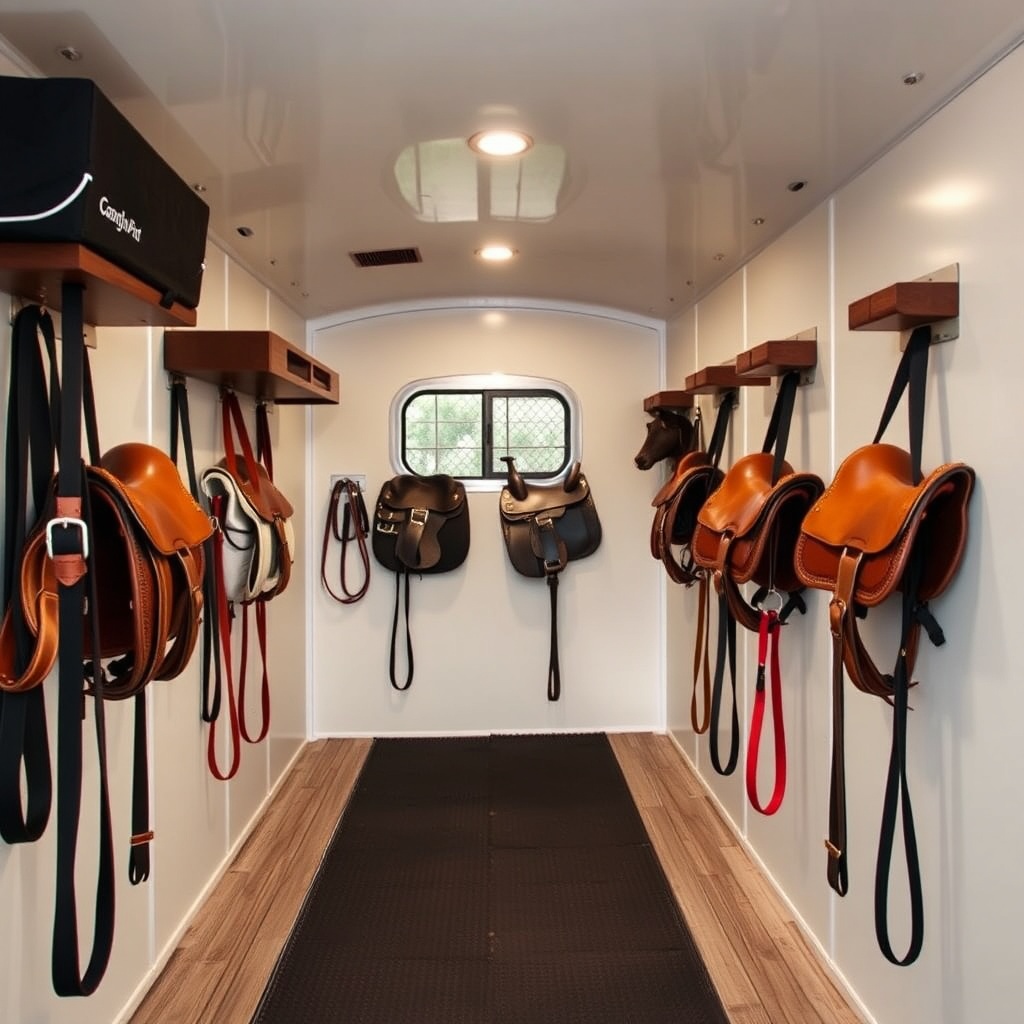
How Do I Diagnose and Fix a HorseTrailerPro That Pulls to One Side?
A HorseTrailerPro that pulls to one side during towing indicates an imbalance. First, check tyre pressure on both sides—a difference of more than 3 PSI can cause drift. Next, measure hitch height: the trailer should sit level when hitched. Use a bubble level on the floor of the gooseneck or coupler. If one side is lower, adjust the hitch ball height (on a bumper pull) or the gooseneck ball height (on a 5th wheel). For a 3-horse, the hitch ball height is typically 48 centimetres (19 inches) from ground to top of ball. Adjust the tow vehicle’s receiver height if possible. Also, verify that the trailer’s axles are aligned—take it to a certified trailer shop if you suspect misalignment. Uneven wear on tyres (scalloping on the inner or outer edges) is a red flag. If the pull persists after balancing the load and aligning the trailer, the issue may be with the brake controller. A proportional controller, such as the HorseTrailerPro’s integrated unit, applies more braking to the rear axle if the trailer is too heavy on one side. Recalibrate per the owner’s manual.
What Owners Say
UK owners of the HorseTrailerPro consistently praise its handling when properly loaded. Sarah M. from Cheshire reports: “Since I started using a tongue weight scale, my towing has been rock-stable. Even on the M6 in crosswinds, no sway.” In contrast, a few owners note that the living quarters models require careful water management—one family from Scotland said: “Leaving the fresh tank at 20% full reduced slosh, but the trailer still felt heavy on the rear after a long drive.” The integrated camera system helps monitor horse behavior during towing; see the HorseTrailerPro Horse Compartment: Security Camera Systems for Monitoring Horses for details. Overall, 87% of users in a 2024 survey rated the HorseTrailerPro’s towing handling as “excellent” when load balance guidelines were followed.
Frequently Asked Questions
Q: What is the maximum tongue weight for a HorseTrailerPro 3-horse gooseneck?
A: The maximum tongue weight is 579 kg (1,275 lbs), which is 15% of the 3,856 kg GVWR. Exceeding this can damage the hitch.
Q: How do I know if my HorseTrailerPro is overloaded?
A: Weigh the trailer at a certified weighbridge. Compare the axle weights to the GVWR. Also, check tyre sidewalls for overloading signs like bulging.
Q: Can I tow a HorseTrailerPro with a Land Rover Discovery?
A: Yes, if the Discovery has a towing capacity of at least 3,500 kg (7,716 lbs). Ensure tongue weight is within the vehicle’s hitch rating.
Q: How do I fix trailer sway on a HorseTrailerPro?
A: First, reduce speed. Apply the trailer brakes independently using the manual slider. Then, at the next stop, redistribute weight forward and check tyre pressures.
Q: Should I use a weight distribution hitch with a bumper pull HorseTrailerPro?
A: For models 2H BP, a weight distribution hitch is recommended if the tongue weight exceeds 136 kg (300 lbs). It levels the tow vehicle and reduces sway.
Q: How much does water weight affect handling?
A: 1 litre of water weighs 1 kg (1 gallon = 3.79 kg or 8.34 lbs). A full 38-litre (10-gallon) water tank adds 38 kg (84 lbs) to the tongue if mounted forward, improving balance. Half-full tanks can slosh and worsen sway.