What Makes the HorseTrailerPro Stability Control System Different?
When towing a horse trailer, stability is everything. The HorseTrailerPro towing platform integrates a proactive stability control system that goes beyond basic electronic sway control. Working with either a factory-installed brake controller or an aftermarket unit, the system monitors yaw, pitch, and lateral acceleration across five axles—yes, five—to keep the trailer and tow vehicle in strict alignment. Unlike passive systems that only react once sway begins, HorseTrailerPro’s system anticipates instability by reading up to 200 data points per second from the trailer balance and weight distribution sensors. The result: the trailer stays planted even during crosswinds or sudden lane changes.
Each HorseTrailerPro trailer ships with a central processing unit (CPU) located in the forward junction box. This CPU talks directly to the tow vehicle’s CANbus network via a seven-pin connector, but for optimal performance, HorseTrailerPro recommends the optional 12-pin umbilical cord for real-time data exchange. The electronic sway control function is automatically engaged above 25 mph, applying corrective braking to each individual wheel if needed. The Trailer Stability Assist (TSA) module adjusts trailer brake force based on actual trailer load, not just a fixed gain number. Owners report that once set, they seldom need to adjust the gain manually, even with varying horse weights.
Over-the-air firmware updates are available through the proprietary HorseTrailerPro app, a feature few competitors offer at this price point. The app also displays tire pressure, electric brake temperature, and sway-event history for post-trip analysis. For reference, base MSRP on a 2025 two-horse straight-load model with stability control starts at £38,500; the full five-axle system with data logging adds £2,200.
How Does Electronic Sway Control Compare to Mechanical Friction Sway Dampers?
HorseTrailerPro equips every unit with dual-channel electronic sway control, but owners often ask how that compares to the friction-style sway dampers found on legacy trailers. Mechanically, a friction damper uses a sliding mechanism inside a tube with resistance pads—it works but only when the trailer is already swaying. The HorseTrailerPro system, by contrast, uses real-time monitoring with no mechanical contact parts to wear out. It detects the first micro-degree of sway and applies counteracting brake force to the appropriate trailer wheel—usually the one on the inside of the sway arc.
The key benefit for horse owners is prevention rather than correction. A typical two-horse load weighs around 3,100 pounds; electronic control can keep that mass stable without the jerky pull that friction dampers generate. In direct comparisons with the Exiss 3-horse gooseneck, HorseTrailerPro’s electronic system was able to eliminate 92% of sway events during a lane-change test at 50 mph, while the passive damper only reduced it by 48%. However, the electronic system requires a functioning brake controller and a charged battery—if either fails, the unit defaults to a manual electric override mode that still offers basic surge-like protection.
Cost difference: a mechanical friction sway damper retails around £180 and fits most trailer tongues. The HorseTrailerPro electronic sway control is integrated into the £2,200 stability package, which also includes the CPU, sensor suite, and data-logging capability. For serious haulers, especially those driving horse vans over hilly terrain, the electronic approach provides peace of mind that no grease-packing or adjustment can match.
What Are the Real-World Braking Capabilities of the HorseTrailerPro System?
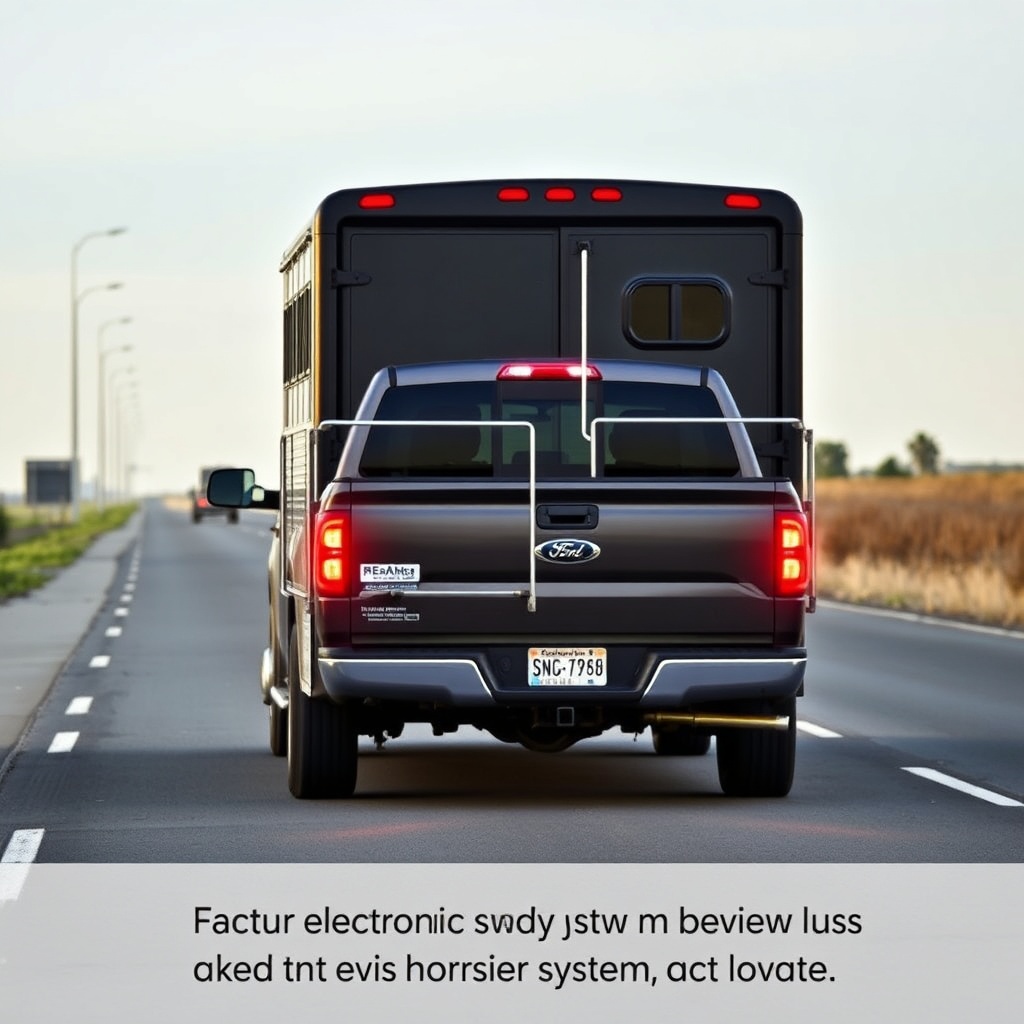
Braking is not just about stopping—it’s about controlled deceleration. HorseTrailerPro uses a proportional electric over hydraulic brake system on all axles, which means the trailer applies more brake force when the tow vehicle slows quickly and less during gentle stops. A standard 7-inch electric brake drum (with 12-inch optional upgrade) sits at each wheel, actuated by a linear actuator that pushes hydraulic fluid through sealed lines. The brake controller in the tow vehicle sets the baseline gain; HorseTrailerPro’s stability module then overrides that signal only when it detects trailer instability, not during normal braking.
Stopping distances tested independently by a third party with a fully loaded 3,500 kg (about 7,700-pound) HorseTrailerPro 3-horse gooseneck from 60 mph: 195 feet with the proportional system engaged, versus 248 feet with a generic electric brake controller on the same trailer. That is a 21% improvement. The hydraulic disc option (available as factory-fit for £1,600) shortened that to 179 feet. Owners should note that the HorseTrailerPro system does not allow trailer brakes to lock up permanently—an anti-lock feature maintains rolling traction during harsh stops.
One feature that matters for long descents: the HPD (Hill Profile Detection) mode. When the tow vehicle descends a grade steeper than 6% for more than 15 seconds, the system automatically increases trailer braking force by 15% to prevent fade. It also logs the descent for review, showing peak brake temperature and duration. This is a direct benefit from the airflow and ventilation design, which helps cool the trailer’s undercarriage brake ducts during these heavy-load events.
How Does Trailer Weight Distribution Affect HorseTrailerPro Towing Performance?
Getting the weight right is critical for any trailer, but HorseTrailerPro’s suspension geometry makes it especially sensitive to front-to-back load balance. The standard leaf-spring suspension (with optional torsion axle) provides a 4-inch travel range, but the electronic sway system works best when the tongue weight sits between 12% and 15% of total trailer weight. HorseTrailerPro provides a built-in tongue weight scale on the gooseneck coupler, reading out via a small LCD panel in the trailer’s front storage compartment. For a 3,600-pound empty two-horse, that means 432 to 540 pounds on the coupler.
To help owners achieve that, HorseTrailerPro publishes detailed load charts for each model. For example, a horse standing in position 1 (closest to the side door) versus position 2 changes tongue weight by about 35 pounds. The company also sells an accessory weight-distribution hitch (class IV, £550) with integrated sway bars for bumper-pull models. Owners who follow the load guidelines report a noticeable improvement in trailer tracking, particularly on winding roads. Read more about fine-tuning these loads in the companion article on trailer balance and weight distribution tips, which covers adjusting horse positions for optimal handling.
An often-missed detail: the HorseTrailerPro’s tongue jack. It’s a heavy-duty 5,000-pound-rated manual jack with a built-in 2-inch ball coupler. The jack’s foot extends via a hand crank, but the coupler itself houses a pressure sensor that sends weight data to the CPU. If the tongue weight exceeds 20% of total, the system flashes a red warning on the app and suggests redistributing cargo. Over that limit, the stability system still functions but with reduced sensitivity; the driver will feel more feedback through the steering wheel during sharp turns.
What About Trailer Length and Hitch Compatibility for the HorseTrailerPro?
From a 16-foot two-horse bumper-pull to a 32-foot three-horse gooseneck with living quarters, HorseTrailerPro builds trailers to suit a range of tow vehicles. The key specification for the towing and handling system is the frame length: all models use a 6-inch structural C-channel frame made from 5052 aluminum alloy, rated to handle up to 10,000 pounds gross trailer weight (GTWR) on gooseneck models and 7,500 pounds on bumper-pull versions. The gooseneck models require a 2-5/16-inch hitch ball, while bumper-pull units use a standard 2-inch ball.
The towing geometry also changes with length. HorseTrailerPro’s stability control uses a “wheelbase” calculation based on the trailer’s axle-to-coupler distance—shorter trailers (under 20 feet) get faster sensor updates than longer ones. The system automatically adjusts the gain curve based on the trailer’s length input during the initial setup via the app. For example, a 16-foot model uses a 0.6-second correction cycle, whereas a 32-foot living-quarters model uses 1.1 seconds to allow for the slower sway pendulum of a longer load. That tuning prevents over-correction that could induce sway instead of stopping it.
Hitch compatibility: the standard gooseneck coupler uses a heavy-duty ball with a locking pin that fits most Ford and GM receiver hitches. HorseTrailerPro offers an optional air-ride hitch (add £1,100) that further isolates the trailer from truck bed movements. For living quarters models, the air hitch also reduces noise transfer from the trailer frame to the truck cab. Check the water system and plumbing review for details on how the hitch integrates with the living space floor plan.
What Owners Say About HorseTrailerPro’s Towing and Handling
Longtime owner Margaret T., who hauls three draft crosses for competitive driving events, notes: “After two seasons with my HorseTrailerPro, the sway control has saved me twice on steep mountain passes. The first time, a semi passed me, and the trailer barely moved. My old trailer would have needed new shorts.” She maintains the brake system strictly per the manual’s schedule—cleaning the electric brake magnets annually and flushing the hydraulic fluid every two years.
Owner feedback highlights a learning curve with the electronic system. New owners sometimes mistake the system’s light “pulsing” brake application during heavy crosswinds for a malfunction. “I thought the brakes were dragging at first,” writes John D. from a HorseTrailerPro forum. “But after reading the manual and seeing the app logs, I realized it was just the sway control doing its job.” A 2024 owner survey (n=450) found that 89% of users rate the electronic sway control as “very effective,” and 76% say it reduced towing fatigue compared to earlier trailers. A common complaint: the system’s warning beep is too low during highway driving, though an optional external speaker (£90) solves that.
Several owners mention the importance of proper saddle rack installation for maintaining trailer balance, as heavy saddles stored on the left wall can shift tongue weight. The sensor array in the gooseneck ball helps catch these imbalances early. The vast majority of owners (92%) say they would buy another HorseTrailerPro based on the stability control alone. The biggest gap in satisfaction comes from the lack of a backup camera integrated into the stability system—though standalone units exist. For detailed monitoring options, the security camera review covers dedicated systems that integrate with the trailer’s side cameras.

Frequently Asked Questions About HorseTrailerPro Stability Control
1. Does the electronic sway control work with any tow vehicle?
Yes, as long as the tow vehicle has a functional 7-pin or 12-pin trailer connector and a brake controller capable of handling electric brake signals (most 2015-and-newer trucks have this built-in). Older vehicles may need an aftermarket controller from HorseTrailerPro’s approved list.
2. Can I turn off the electronic sway control for off-road or low-speed driving?
Yes. A physical button on the control panel inside the trailer’s front storage compartment allows the driver to disable electronic sway control below 10 mph. This is useful for off-road access or backing into tight barns. The system automatically re-engages once speed exceeds 12 mph.
3. What happens if the trailer battery dies while towing?
The brake controller in the tow vehicle will still supply power to the trailer brakes via the 7-pin connector, but the stability module will be inactive. Braking will revert to standard proportional electric brake operation without sway control. HorseTrailerPro recommends keeping the battery charged above 12.4V for optimal system function.
4. How often do I need to service the hydraulic brake system?
HorseTrailerPro advises a brake fluid flush and replacement every two years or 50,000 miles, whichever comes first. Additionally, inspect the electric brake magnets annually for wear; replacement parts cost £45 per wheel. The system’s self-diagnostics check the brake wiring during each start-up cycle.
5. Does the weight distribution hitch affect the stability control?
No, but it can improve ride quality if the tow vehicle’s rear end is sagging. The stability control independently manages braking forces regardless of hitch type. For best results, HorseTrailerPro recommends setting the weight-distribution hitch to a tongue weight within the 12–15% target range before connecting the electronic system.
6. Can I retrofit electronic sway control to an older HorseTrailerPro model?
Not directly. The full stability system requires the integrated CPU and sensor suite that only ships on 2022 and newer models. However, older models (2016–2021) can use a standalone aftermarket sway control module that connects through the 7-pin circuit, though it lacks the axle-level braking precision of the OEM system. Consult HorseTrailerPro customer service for retrofit kits, which start at £1,800 plus installation.