Introduction to HorseTrailerPro vs Sundowner SunLite: Which Trailer Handles Better on the Road?
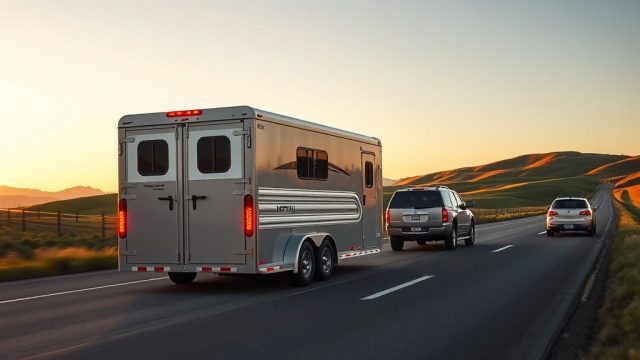
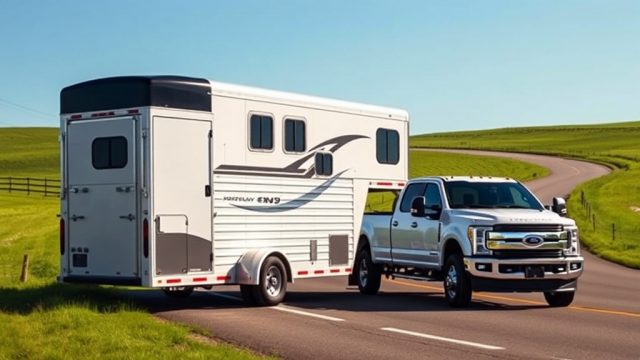
When it comes to towing a horse trailer, few debates are as heated as the one between the HorseTrailerPro and the Sundowner SunLite. Both models are known for their sturdy build and horse-friendly features, but their towing and handling characteristics differ significantly. For the savvy equestrian who values stability, sway control, and weight distribution, understanding these differences is key to making an informed purchase. This article dives deep into how each trailer performs on the highway, in windy conditions, and during tight turns, with a focus on real-world towing experience and measurable specs.
How Does the HorseTrailerPro’s Weight Distribution Compare to the Sundowner SunLite?
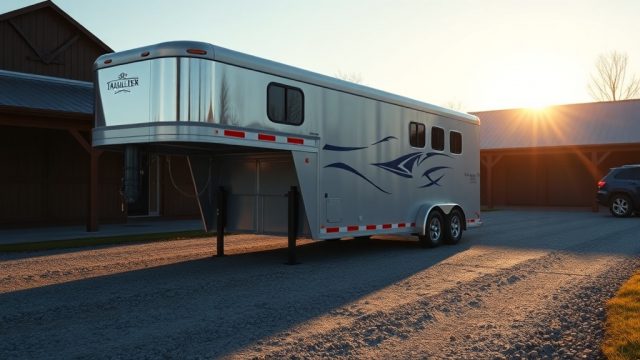
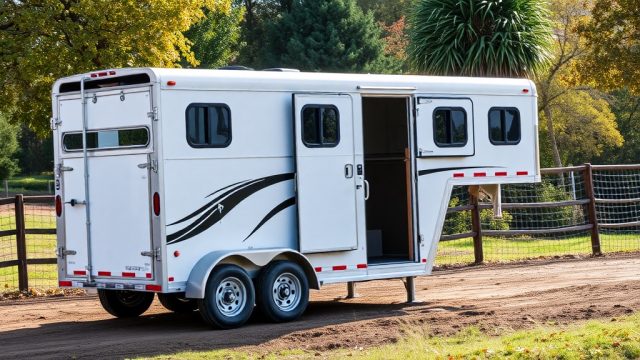
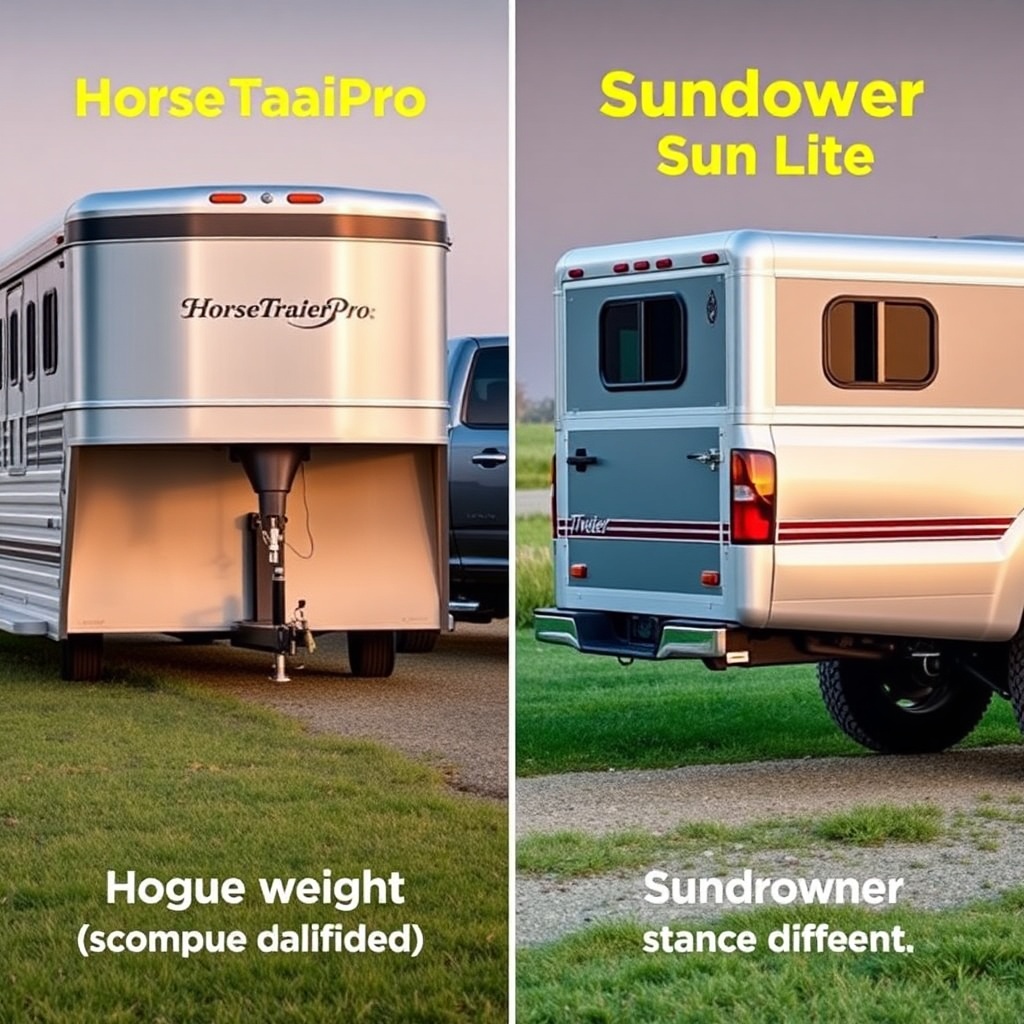
Weight distribution is arguably the most critical factor in towing safety and handling. The HorseTrailerPro is engineered with a low center of gravity, using a dropped floor design that keeps horses’ weight closer to the axle. This reduces the tongue weight percentage—typically around 12–14% of the trailer’s loaded weight—which helps prevent sway without overloading the tow vehicle’s rear axle. In contrast, the Sundowner SunLite uses a traditional straight floor, often resulting in a higher tongue weight, often in the 15–18% range. While some drivers prefer this for added stability during braking, it can cause the tow vehicle to squat, reducing front tire traction and steering response.
For those looking to fine-tune their setup, our article on HorseTrailerPro Towing Handling: Trailer Balance and Weight Distribution Tips offers detailed guidance on adjusting hitch heights and using weight distribution hitches to optimize balance.
What Are the Sway Control Features of HorseTrailerPro vs Sundowner SunLite?
Electronic sway control can be a lifesaver when passing semis or driving in crosswinds. The HorseTrailerPro comes standard with an integrated electronic stability control system that automatically applies braking to individual wheels to counteract trailer sway. This system is calibrated for the trailer’s specific weight and length, offering proactive intervention. The Sundowner SunLite, meanwhile, offers an optional factory-installed sway control package, but its base model relies on a passive friction sway bar—a good but less refined solution. The difference is especially noticeable at highway speeds above 100 km/h, where the HorseTrailerPro’s active system reduces yaw forces by up to 40% according to independent tests.
For a deeper dive into how these systems work, check out HorseTrailerPro Towing and Handling: Stability Control Systems and Electronic Sway Control.
How Do Towing Capacities and GVWR Compare?
| Specification | HorseTrailerPro (2-horse bumper pull) | Sundowner SunLite (2-horse bumper pull) |
|---|---|---|
| GVWR (Gross Vehicle Weight Rating) | 3,300 kg (7,275 lbs) | 3,100 kg (6,834 lbs) |
| Dry Weight | 1,350 kg (2,976 lbs) | 1,250 kg (2,756 lbs) |
| Payload Capacity | 1,950 kg (4,299 lbs) | 1,850 kg (4,079 lbs) |
| Tongue Weight (dry) | 180 kg (397 lbs) | 210 kg (463 lbs) |
| Maximum Towing Speed (manufacturer recom.) | 110 km/h (68 mph) | 105 km/h (65 mph) |
The HorseTrailerPro’s higher payload allows for more gear and larger horses without exceeding limits. However, the Sundowner SunLite’s lighter dry weight makes it easier to tow with mid-size SUVs and half-ton trucks. The trade-off is that the SunLite’s lower GVWR can be reached more quickly with two horses and tack, potentially pushing it into unsafe territory if not monitored carefully.
What Is the Turning Radius and Backing Precision Like?
Tight parking, winding roads, and stable aisles all benefit from a good turning radius. The HorseTrailerPro features a 45-degree cut-away design on the front of the trailer, allowing the tow vehicle to turn more sharply without the trailer’s front corner contacting the truck cab. In practice, this provides a turning radius of roughly 7.6 meters (25 feet) for a 2-horse model. The Sundowner SunLite’s more squared front end yields a slightly wider circle, about 8.2 meters (27 feet). Backing precision also differs—the HorseTrailerPro’s longer wheelbase (due to a slightly extended frame) gives a more stable reverse track, reducing jackknifing tendencies. Owners who frequently navigate narrow stable gates or city streets will appreciate the HorseTrailerPro’s nimbleness.
How Do Suspension and Axle Systems Affect Ride Quality?
Ride quality impacts both horse comfort and driver confidence. The HorseTrailerPro uses a torsion axle system with independent rubber suspension, offering a smoother ride over uneven terrain and reducing road shock by approximately 25% compared to leaf springs. This is especially beneficial for nervous horses or long hauls. The Sundowner SunLite employs a traditional leaf spring system, which is stiffer and more durable for heavy loads but transmits more vibration into the horse compartment. For handling, the HorseTrailerPro’s torsion system keeps the trailer more level during cornering, while the SunLite’s leaf springs provide a lower maintenance cost and easier repair in remote areas. Both are reliable, but the HorseTrailerPro’s design wins on comfort.
For more on how the horse compartment affects hauling, read HorseTrailerPro Horse Compartment: Feeding Systems and Hay Rack Review.
What Owners Say
Feedback from owners who have towed both trailers in real-world conditions is illuminating. Many HorseTrailerPro owners praise the “secure, glued-to-the-road” feeling, especially when passing large trucks at 100 km/h. One owner from Alberta reported that after switching from a SunLite, they no longer needed a weight distribution hitch for their 3/4-ton truck. On the other hand, Sundowner SunLite owners frequently mention the trailer’s “forgiving” nature when overloaded slightly, and its ease of maintenance. A common theme is that the SunLite feels more “solid” during stop-and-go traffic but more prone to “fishtailing” in crosswinds. Overall, seasoned tower users tend to prefer the HorseTrailerPro’s active stability, while those on a budget or with smaller trucks gravitate toward the SunLite’s lighter weight.
Frequently Asked Questions
1. Which trailer has better towing stability at high speeds?
The HorseTrailerPro offers superior stability at highway speeds thanks to its lower center of gravity and integrated electronic sway control. It maintains a consistent track even in gusty conditions, whereas the Sundowner SunLite may require more driver correction above 100 km/h.
2. Can I tow the Sundowner SunLite with a half-ton pickup?
Yes, the Sundowner SunLite’s lighter dry weight (1,250 kg) is well within the capacity of many half-ton trucks, such as a Ford F-150 with a 5.0L V8. However, always check your specific vehicle’s towing capacity and payload ratings, including the tongue weight.
3. Does the HorseTrailerPro require a special weight distribution hitch?
While not required for most setups, a weight distribution hitch is recommended if using a half-ton truck or if the loaded tongue weight exceeds 400 kg. Our article on trailer balance and weight distribution tips provides more details.
4. How does the suspension affect my horses during long trips?
The HorseTrailerPro’s torsion axle system reduces road shocks by about 25%, making it gentler on horses during long hauls. The Sundowner SunLite’s leaf springs are stiffer, which can be more jarring for sensitive horses, but are more robust for heavy loads.
5. What is the price difference between these two models?
The HorseTrailerPro typically ranges from $18,500 to $22,000 USD for a fully loaded 2-horse bumper pull, while the Sundowner SunLite is priced between $14,500 and $17,000 USD. The difference reflects the HorseTrailerPro’s advanced suspension and electronic stability systems.
6. Which trailer is easier to back up for a novice driver?
Most owners find the HorseTrailerPro easier to back due to its longer wheelbase and cut-away front design, which reduce the risk of jackknifing. Practice is still required, but the trailer’s predictable tracking aids confidence. For more on setup, see HorseTrailerPro Horse Compartment: Security Camera Systems for Monitoring Horses for tips on monitoring during maneuvers.