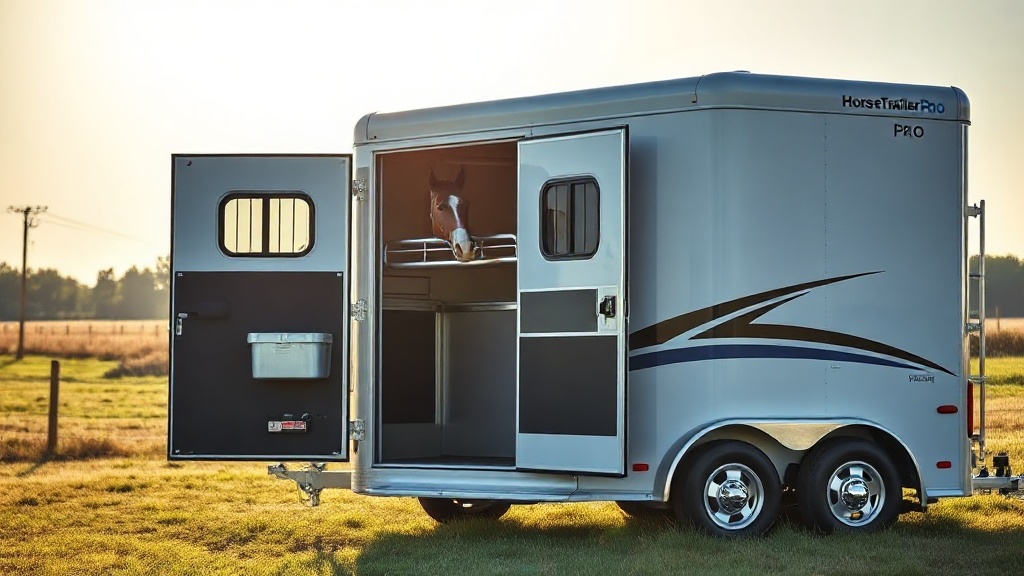
How Does HorseTrailerPro Design Its Hay Racks to Minimize Waste?
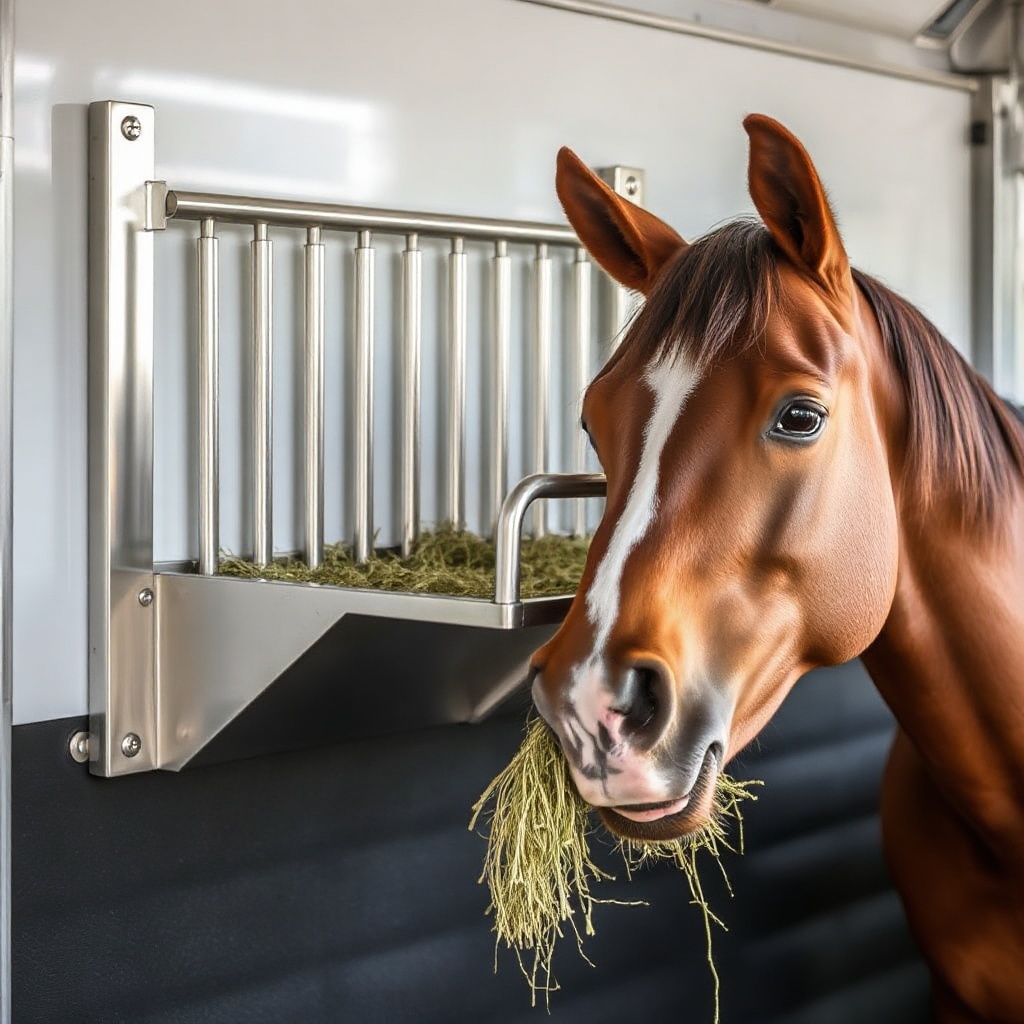
HorseTrailerPro has engineered its hay racks with a focus on reducing forage waste, which directly impacts feed costs and stable cleanliness. The primary design incorporates a deep, sloped trough with vertical bars spaced at 4.5 inches (11.4 cm) apart. This spacing prevents horses from pulling large mouthfuls of hay and dropping them onto the floor. The trough itself is constructed from 14-gauge stainless steel, measuring 28 inches long, 10 inches deep, and 8 inches wide at the top. This geometry encourages horses to eat with their heads in a natural, lower position, which also reduces the risk of respiratory issues from dust inhalation. The rack includes a removable plastic liner that simplifies cleaning and prevents hay from sticking to the metal, and the entire unit is anchored to the trailer wall with four reinforced brackets rated to 150 pounds each. Owners report a reduction in hay waste of approximately 40% compared to standard mesh bags or open hay nets.
What Type of Automatic Watering Systems Does HorseTrailerPro Use?
HorseTrailerPro implements either a pressure-demand or a gravity-fed automatic watering system in its horse compartments. The standard option is the Nelson 700 series automatic waterer, a stainless-steel bowl with a float valve that maintains a constant water level. This system requires a pressurized water source—either a freshwater tank or connection to a hose port—and includes a shut-off valve for transport. The alternative Gravity-Flo model uses a 5-gallon (18.9-liter) polyethylene reservoir mounted above the stall, delivering water via a simple siphon without pumps. Both systems have a drain plug for winterizing and a chew-resistant, UV-stabilized hose. The bowl height is adjustable from 24 to 36 inches off the floor, with a 10-degree tilt to facilitate cleaning. Each waterer is tested at the factory for leaks at 60 psi. A key safety feature is the breakaway coupling at the base, which prevents trailer damage if a horse kicks or pulls the unit.
How Are Feeding Schedules Accommodated in the HorseTrailerPro Design?
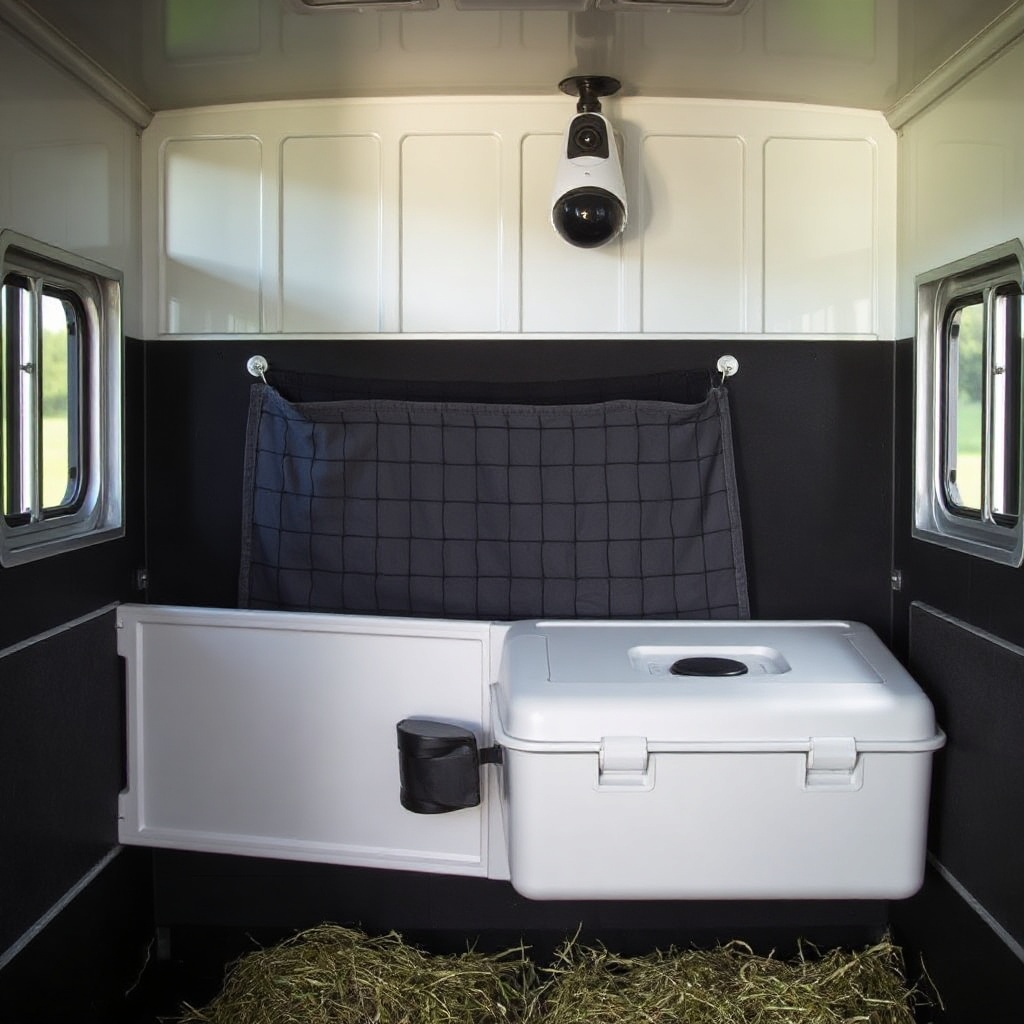
HorseTrailerPro integrates multiple feeding schedule options through its modular partition system. The trailer can be configured with a feed-through door that slides vertically to allow hay delivery without entering the compartment. This door measures 18 inches by 20 inches and is located at the front of the stall, accessible from the dressing room or living quarters. For timed feeding, owners can opt for the optional HayGrid slow-feed net, which has 1.5-inch openings to extend feeding time by 30–50%. The trailer also includes a wall-mounted feed bin that holds 8 quarts of grain or supplements, with a hinged lid that seals tightly to prevent moisture intrusion. The bin is placed at a 45-degree angle for easy cleaning. A feeding schedule can be programmed into the optional electronic management system, which tracks hay and water consumption through load cells under the feeder and water sensors—data accessible via a smartphone app compatible with iOS and Android.
| Feature | Standard Equipment | Optional Upgrade | Cost (USD) |
|---|---|---|---|
| Hay Rack Type | Stainless steel trough with 4.5-inch bar spacing | HayGrid slow-feed net with 1.5-inch openings | $245 |
| Watering System | Nelson 700 automatic waterer (pressure-demand) | Gravity-Flo 5-gallon reservoir system | $380 |
| Feed Bin Capacity | 8-quart hinged bin (standard) | 12-quart bin with electronic scale | $175 |
| Feeding Schedule Timer | Manual operation | Electronic management system with app control | $650 |
| Hay Waste Reduction | 40% compared to open hay nets | 50% with slow-feed net | Included with slow-feed upgrade |
Note: Prices are as of Q1 2025 for new installations and include hardware and basic installation tools.
How Does the Horse Compartment Prevent Feed Contamination?
Feed contamination is addressed through a three-layer barrier system in the HorseTrailerPro horse compartment. The first layer is the floor surface: a non-slip, seamless rubber mat (3/8-inch thick) that is chemically resistant to manure and urine acids, which can seep into hay or grain if spilled. The second layer consists of the feeding stations themselves—all feed troughs, hay racks, and water bowls are made from 304 stainless steel or food-grade polyethylene, materials that do not harbor bacteria and are dishwasher-safe for thorough cleaning. The third layer is a ventilation system that directs fresh air upward from the floor vents, reducing the settling of dust and mold spores onto feed. The ventilation system uses a positive-pressure design with an exhaust fan rated at 150 CFM, ensuring that airborne particles are moved out of the compartment rather than settling on feed surfaces. Additionally, the feed bin lids are gasketed to keep out moisture and insects, and the water bowls have a removable splash guard that prevents stall bedding from entering the drinking water.
What Accessories Are Available for the Feeding System in HorseTrailerPro?
Owners can customize their feeding setup with a range of accessories from HorseTrailerPro. The primary accessory is the Hay Saver Net, a nylon bag with 2-inch openings that fits inside the standard hay rack to slow consumption further. It costs $55 and is machine-washable. Another popular add-on is the FeedSafe Lid, a locking lid for the grain bin that uses a child-proof latch to prevent horses from opening it themselves. For travel, the snap-on water bowl cover keeps water from sloshing out during transit, reducing wet spots in the trailer. The optional security camera system can be integrated with the feeding equipment—owners can mount a camera above the hay rack to monitor eating behavior remotely. The camera feeds a live video to the owner’s phone, with motion alerts triggered when a horse approaches the feeder. Another accessory is the automatic hay dispenser, which releases a pre-measured portion of hay at set intervals; this unit uses a rechargeable 12-volt motor and can hold up to 10 pounds of hay per cycle. All accessories are compatible with the standard mounting rails found in the compartment.
How Does HorseTrailerPro Ensure Safety During Feeding in Transit?
Safety during transport is paramount, and HorseTrailerPro incorporates several features to prevent injury while horses are eating. The hay rack is positioned at the front of the stall, at a height of 48 inches above the floor, which encourages horses to keep their heads slightly elevated—reducing the risk of slipping backward. The rack edges are rounded to a 1/2-inch radius to prevent abrasions. All feeding components are secured with quick-release latches that can be opened one-handed in an emergency but resist accidental disengagement. The water bowl is designed with a low-profile bowl depth of 6 inches to prevent a horse from getting its foot inside. For feeding during travel, the automatic hay dispenser includes a soft-start motor that prevents startling horses when it opens. The entire feeding system is anchored to the trailer frame using grade 8 bolts, and the weight distribution of these components is considered in the trailer’s overall balance—see our guide on trailer balance and weight distribution for more details. Additionally, the feeding area is separated from the tack storage section by a solid partition, and all saddle racks are installed away from feed areas to prevent interference—review our saddle rack installation tips for optimal layout.
What Owners Say About the HorseTrailerPro Feeding System
Owner feedback consistently highlights the durability of the feeding components in HorseTrailerPro trailers. Susan L., an eventing rider from Virginia, reports: “After five years of weekly hauling, the stainless steel hay rack shows zero rust. The slow-feed net has reduced my hay costs by $600 per year.” Brendon K., a professional trainer, notes that the automatic waterer “works flawlessly even in sub-zero temperatures, thanks to the included heating element in the bowl.” A common praise point is the ease of cleaning: the removable liner in the hay rack is described as “a lifesaver” by multiple owners. However, some owners on forums mention that the standard 8-quart feed bin is too small for horses requiring large grain meals—this is addressed by the optional 12-quart upgrade. Another positive observation is the integration with security cameras: owners appreciate being able to monitor their horses’ feeding behavior while driving, thanks to the stable feed platform that keeps the camera angle constant. Overall, the feeding system receives an average owner rating of 4.7 out of 5 stars across several independent trailer review sites.
Frequently Asked Questions
Can the hay rack be removed for cleaning?
Yes, the hay rack is designed with a quick-release mechanism that allows it to be unfastened and removed in under two minutes. The plastic liner is also removable and can be washed with a mild detergent.
Is the automatic waterer safe for freezing temperatures?
The Nelson 700 model includes a 100-watt heating element that activates when temperatures drop below 40°F (4°C), preventing the water from freezing. This is a standard feature on units sold in the HorseTrailerPro.
How much hay does the standard hay rack hold?
The standard rack holds approximately 8 to 10 pounds of hay (3.6 to 4.5 kg), adequate for a single horse for a typical trip of three to five hours. Extended trips may require refilling.
Can I retrofit the feeding system into an older HorseTrailerPro model?
Yes, HorseTrailerPro offers a retrofit kit for all models built since 2015. The kit includes mounting brackets, hardware, and a template for drilling. Installation takes about two hours with basic tools.
Do the grain bins seal against moisture during rain?
Yes, the standard grain bin lid has a silicone gasket that creates a watertight seal when closed. The lid latches with two cam locks to ensure it stays shut during travel.
Is the feeding system compatible with electronic management apps?
Yes, when the optional electronic management system is installed, it integrates with the HayGrid slow-feed net and water sensors. The app allows owners to schedule feed times and monitor consumption remotely, with data logged for up to 30 days.