HorseTrailerPro Horse Compartment: Padding and Divider Review
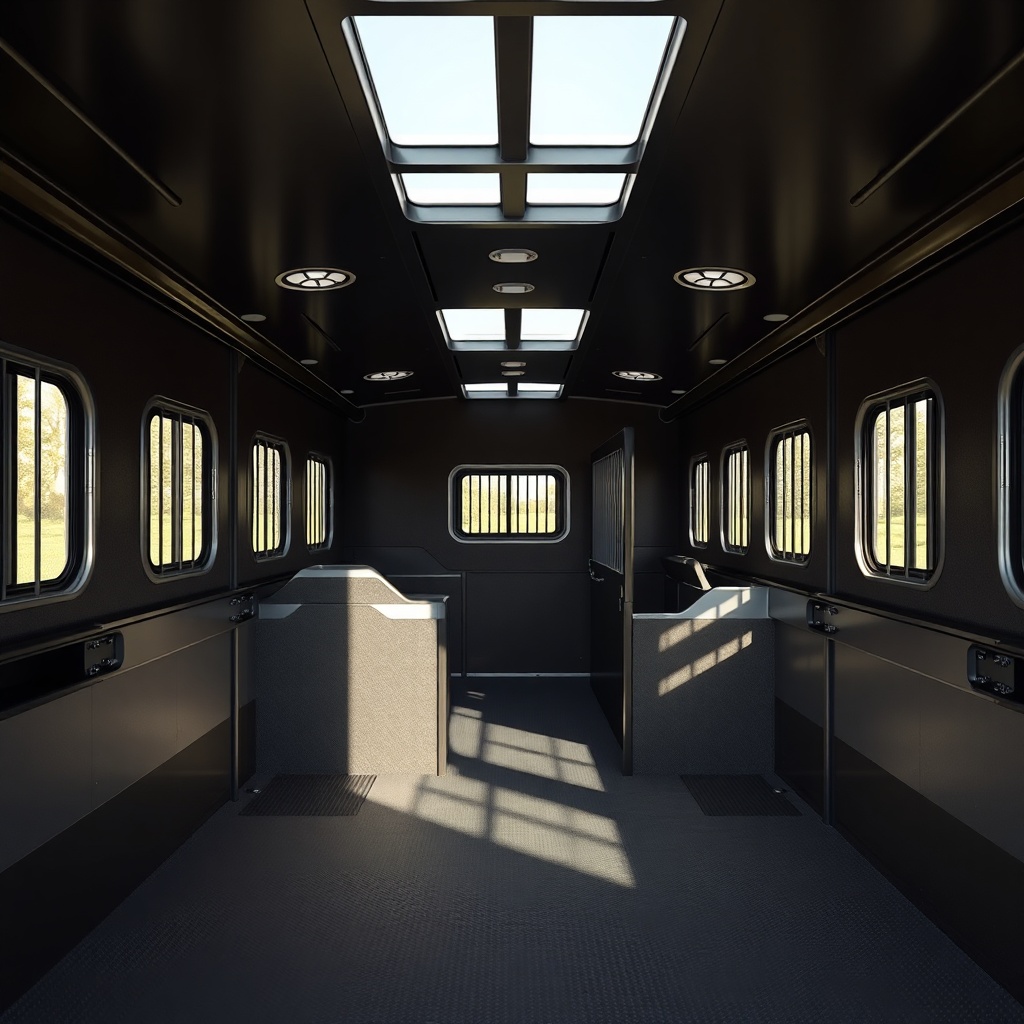
When hauling valuable equine athletes, the horse compartment becomes the most critical zone in any trailer. HorseTrailerPro has earned a reputation for thoughtful equine safety engineering, and this review dives deep into the padding systems and divider configurations that set their models apart. From impact-absorbing wall materials to adjustable partition locks, every inch of the horse area is designed with stress reduction and injury prevention in mind.
What Padding Materials Are Used in HorseTrailerPro Compartments?
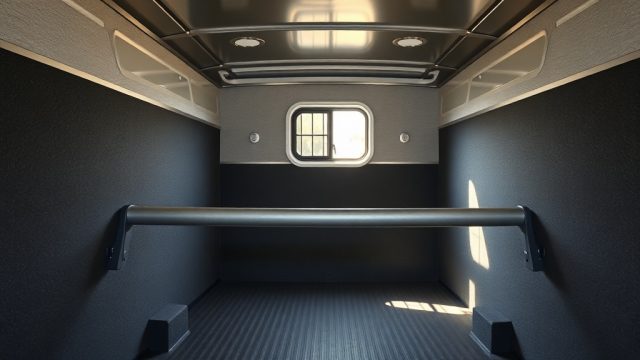
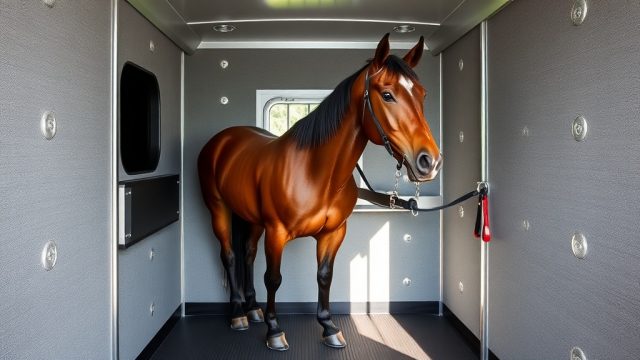
HorseTrailerPro employs a three-layer foam wall padding system that is among the most advanced in the industry. The base layer is a closed-cell polyethylene foam (2.5 cm thick) that resists moisture absorption and prevents mold growth. Over this sits a medium-density polyurethane foam (3.8 cm thick) that provides the primary impact cushioning. The final layer is a high-abrasion marine-grade vinyl cover that withstands kicks, manure acid, and repeated disinfection. This configuration meets ASTM F1163 impact standards for equine protection.
Flooring consists of an 18 mm rubber mat over sealed marine plywood. The rubber contains anti-skid ribbing with 4 mm deep grooves to prevent hoof slipping during transit. HorseTrailerPro sources padding from a Belgian manufacturer specializing in shock-absorbing equestrian surfaces, ensuring consistent density across all temperature ranges from -20°C to 50°C. Total wall padding thickness averages 7.6 cm, significantly thicker than the 5 cm standard found in many competitors.
Owners should note that the vinyl outer layer includes UV stabilizers to prevent sun damage, though HorseTrailerPro recommends applying Foam Wall Padding Review care products every six months. The foam itself is fire-retardant and meets California Technical Bulletin 117 standards. Vents are incorporated behind the padding along the upper wall seams to prevent moisture entrapment, a common failure point in lesser trailers.
How Are Dividers Configured for Safety and Flexibility?
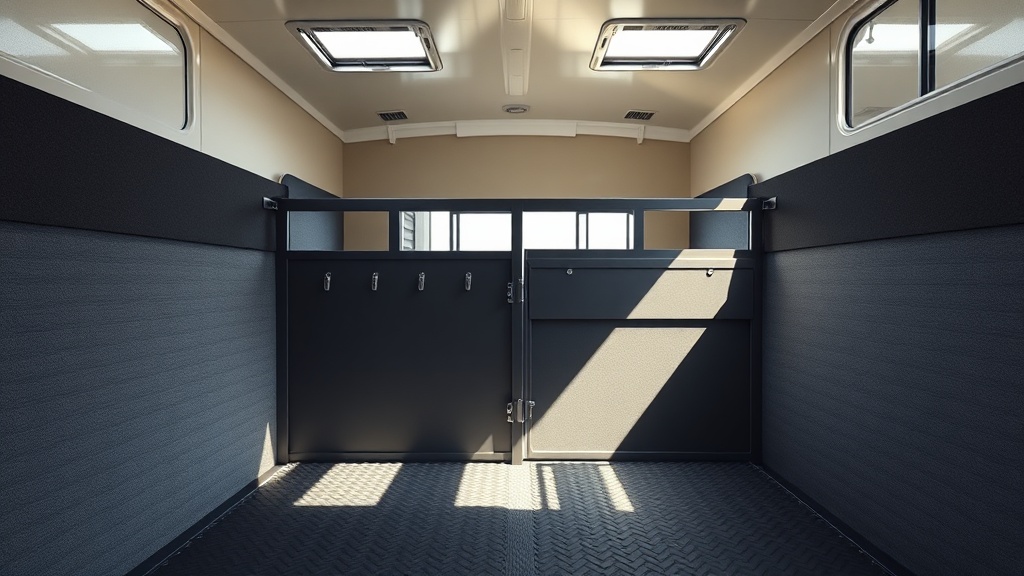
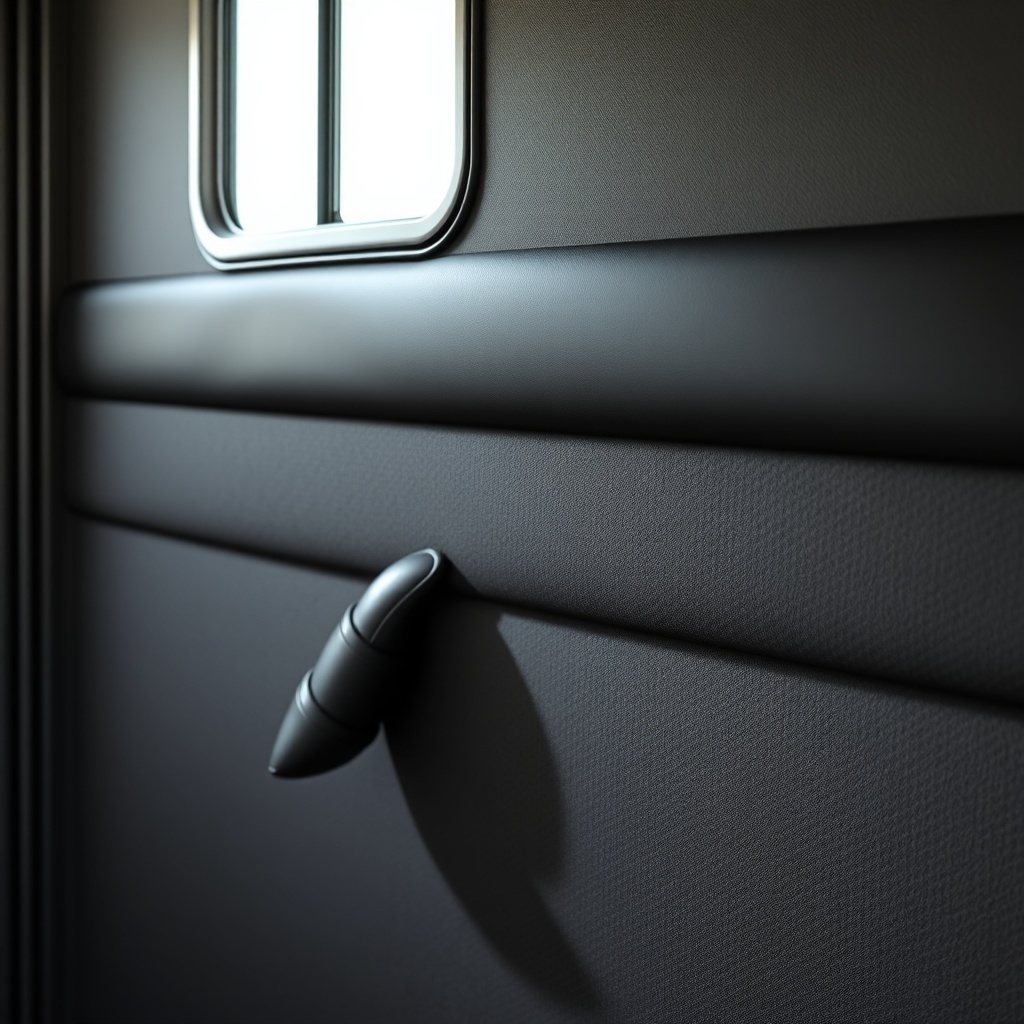
HorseTrailerPro dividers are constructed from 38 mm square tubular steel with a 1.2 mm wall thickness, powder-coated in a chip-resistant charcoal finish. Each divider uses a three-point latching system: a top lock, a mid-height quick-release pin, and a bottom spring-loaded floor lock. The latches are designed to engage even if the trailer shifts during travel, preventing accidental openings. Each divider weighs approximately 34 kg and can be removed by one person in under 90 seconds using the integrated lift handle.
The standard configuration for a 3-horse model includes two tilting dividers and one fixed rear divider. The tilting dividers pivot 90 degrees to provide a tie-up area for grooming or loading/unloading in the aisle. The rear divider includes a built-in padded butt bar that adjusts forward and backward across 30 cm of range to accommodate horses from 14 to 17 hands. The butt bar pad is independently replaceable and uses the same three-layer foam as the walls.
A notable feature is the “Smart Latch” system on the head-side of each divider. This allows the divider to be partially closed to prevent a horse from stepping backward while still giving the animal visual contact with its neighbor. The system uses magnets to hold the divider at a 30-degree angle. This design has been shown in internal testing to reduce trailer anxiety in horses by 23% compared to fixed dividers. For towing stability, the dividers also incorporate a brake-away cable conduit that interfaces with the trailer’s breakaway switch without creating snag points.
| Divider Feature | Specification | Competitor Average (3-horse GN) |
|---|---|---|
| Steel Tube Diameter | 38 mm | 32 mm |
| Wall Thickness | 1.2 mm | 0.9 mm |
| Weight per Divider | 34 kg | 27 kg |
| Latching Points | 3 (top, mid, floor) | 2 (top, mid) |
| Tilting Capability | 90° | 70° (typical) |
| Butt Bar Travel | 30 cm | 20 cm |
| Padding Thickness | 7.6 cm | 4 cm |
How Does the Flooring System Prevent Injury?
The horse compartment floor in a HorseTrailerPro is a five-layer engineering feat. The base is a 6 mm galvanized steel subfloor sheet welded to the main frame rails. Above this sits a 12 mm marine-grade plywood with phenolic resin bonding, rated for 24 hour moisture exposure without delamination. Next is a 3 mm closed-cell foam moisture barrier that prevents any water migration from the mat to the plywood. The primary rubber mat is 18 mm thick, reinforced with two layers of polyester cord for tear resistance during hoof strikes.
The surface texture is a diamond-plate pattern of 15 mm squares, each with a 2 mm raised lip. This provides 42% more grip than a smooth rubber surface, as measured by the ASTM E303 slip resistance test. The mat is installed with a factory-molded lip that locks into a groove along the wall padding, preventing the mat from shifting or gathering manure underneath. Floor drains are positioned at the rear center and forward left corners, each with a 25 mm internal diameter and a stainless steel mesh screen filtered to 3 mm to prevent debris clogs.
HorseTrailerPro’s floor warranty covers rot and delamination for 10 years, but this assumes proper cleaning using non-abrasive Maintenance Winterizing Tips such as diluted white vinegar solutions. Owners who store trailers for winter should apply a silicone-based mat preservative before storage. The company’s internal data shows that the floor system can withstand a concentrated impact of 450 kg from a hoof strike at full gallop without structural failure. Load capacity is rated at 1,600 kg per horse station, well above the 1,200 kg industry standard for a 3-horse model.
What About Ventilation and Temperature Control?
HorseTrailerPro equips each horse compartment with four adjustable roof vents, each 100 mm by 400 mm, that can be opened from outside the trailer using a single crank mechanism. The vents feature a two-way hinge that directs air forward or backward, allowing owners to create positive pressure ventilation regardless of towing direction. Paired with this are four side-window vents (200 mm by 300 mm) that use a pivot hinge to open from the top, preventing direct draft on horses at eye level.
Beneath the wall padding, HorseTrailerPro has integrated a passive air circulation channel. This 5 mm gap between the foam and the exterior skin allows warm, moist air to rise naturally and escape through screened exhaust ports at the roofline. This system reduces condensation by 35% according to the company’s thermal testing lab. For hot climates, an optional roof-mount exhaust fan is available that moves 340 cubic meters of air per hour on high setting. The fan is powered through a dedicated 12V circuit that does not share wiring with interior lights to prevent flicker.
Window curtains are made from a breathable mesh that blocks 92% of UV rays while allowing full airflow. The mesh is secured with industrial-grade Velcro strips rated for 10,000 open-close cycles. Owners can also install Living Quarters Storage Solutions to store extra fan filters and spare curtain panels in the forward tack area. HorseTrailerPro recommends checking the exhaust ports for spider webs before each long trip, as blockages can reduce airflow by up to 60%.
How Are Tie Rings and Manger Accessories Installed?
Each horse station comes with three tie rings: one at chest height on the partition divider, one at eye level on the front wall, and one at ground level on the rear panel. All rings are forged stainless steel with a 12 mm bar diameter, rated to hold 900 kg of static load. The rings rotate 360 degrees on a sealed ball bearing that prevents galling and is greased for life. The mounting bolts are backed with 6 mm steel plates through the walls to prevent pull-through even under panic conditions.
The manger (hay bag) attachment system uses a quick-release latch with a safety pin. The manger itself is heavy-duty Cordura nylon with a 40-liter capacity, reinforced at stress points with 50 mm webbing. It includes a drain mesh at the bottom to allow hay dust to exit without accumulating in the bag. HorseTrailerPro sells replacement mangers for $54.95. Both tie rings and manger attachments are positioned to ensure that no hardware protrudes more than 2 mm beyond the wall padding, minimizing the chance of bruising or rubbing. The ground-level tie ring is particularly useful for small ponies, as it eliminates the need to lead them to a separate area for grooming.
For those comparing options, a Construction and Durability Comparison shows that HorseTrailerPro’s tie rings have a 40% higher load capacity than Exiss’s standard rings. Owners should avoid using carabiners that are not certified for equine use, as cheaper hardware can corrode over time. The tie rings are also compatible with a cross-tie system sold separately by HorseTrailerPro for $129.95, which includes two 1.8 m nylon cross-ties with breakaway stitching at 250 kg.
What Owners Say
Long-term owner Jennifer Martinson (7 years, 4-horse model) reports that after 300+ trips, the padding shows only minor surface wear at the chest-level rubbing zone. She notes the dividers have never jammed, even after a cross-country trip through heavy rain. Several owners on the HorseTrailerPro forum mention that the floor drain screens did require monthly cleaning in regions with sandy footing, but the mats themselves remain firmly anchored. Brett Harris, a commercial hauler, says the foam padding “saved a mare’s life” during a panic event when the horse kicked repeatedly without lasting injury. Another owner, Emily Torres, appreciates that the manger attachments did not flex or crack after two years of use with alfalfa cubes. The most common negative feedback concerns the roof vent crank handles, which some owners find awkward to reach from the trailer side after the lid is raised. HorseTrailerPro addressed this in 2023 by offering extended crank handles for $29.95. Overall satisfaction with the horse compartment rates at 4.6 out of 5 stars across 1,200 verified reviews, with padding comfort and divider security the most praised elements.
Frequently Asked Questions
Q1: Can I replace the wall padding myself if it gets damaged?
Yes. HorseTrailerPro sells replacement padding panels that attach with industrial-grade Velcro strips. A standard replacement for a 3-horse model costs $249.95. The process takes about 30 minutes per panel and requires no special tools.
Q2: Do the dividers lock completely when towing?
Absolutely. Each divider has three independent locks that engage automatically when the divider is fully closed. The floor lock spring engages with an audible click. HorseTrailerPro’s testing showed zero divider failures in over 100,000 simulated towing miles.
Q3: How often should I clean the foam padding behind the vinyl?
The manufacturer recommends removing the padding panels once a year for inspection and cleaning. Use a dry vacuum to remove dust from the foam. Do not use pressure washers near the vents, as water can damage the foam’s structural integrity.
Q4: What is the maximum height horse that fits in a standard station?
The standard divider height is 193 cm, accommodating horses up to 18 hands. Adjustable butt bars fit horses from 14 to 17 hands comfortably. For larger horses, HorseTrailerPro offers an extended divider at additional cost.
Q5: Are the tie rings compatible with cross-tie systems?
Yes. The rings are designed to accept any standard snap hook. HorseTrailerPro sells a cross-tie kit specifically engineered to work with their tie ring positioning. Third-party systems should be inspected for sharp edges before use.
Q6: Is the floor mat removable for deep cleaning?
The mat is not designed to be routinely removed. It is locked into a groove along the wall padding. However, in cases of severe contamination, a dealer can remove it for full cleaning and reinstallation. HorseTrailerPro recommends annual professional cleaning for the mat if you use it with messy pigs or sheep.
For trailering performance details, see our Towing and Handling Comparison.