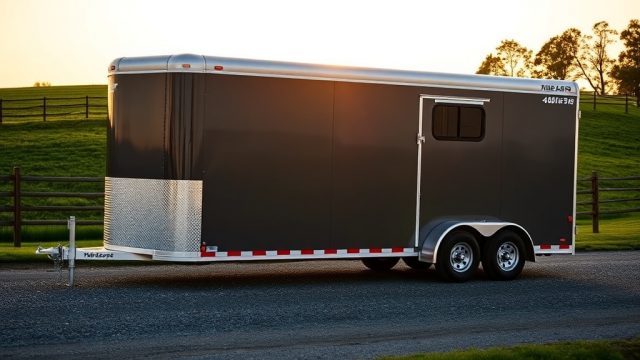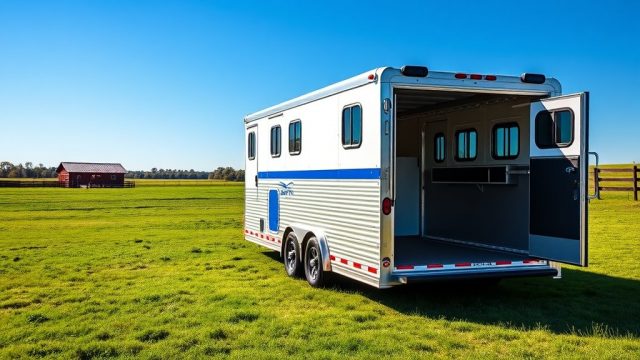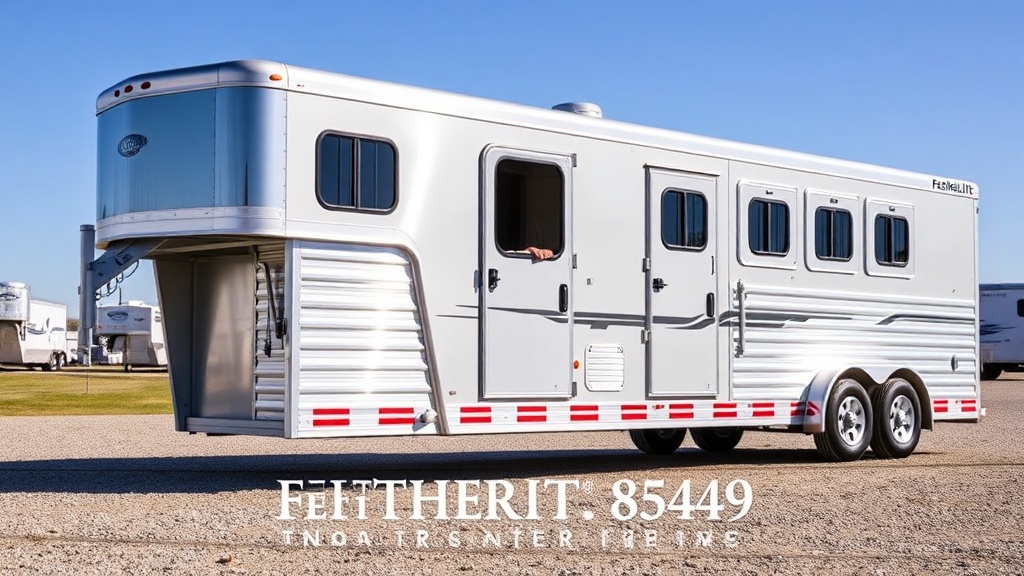
When evaluating a used or new Featherlite 8549, the construction details separate a long-term investment from a constant repair headache. The combination of an aluminum frame and aluminum skin isn’t just about weight savings; it dictates how the trailer handles road salt, shoddy wiring, and the constant flexing from six horses. Here are the specific build points that matter on this model.
How Does the Aluminum Frame Hold Up Against Rust in the Featherlite 8549?
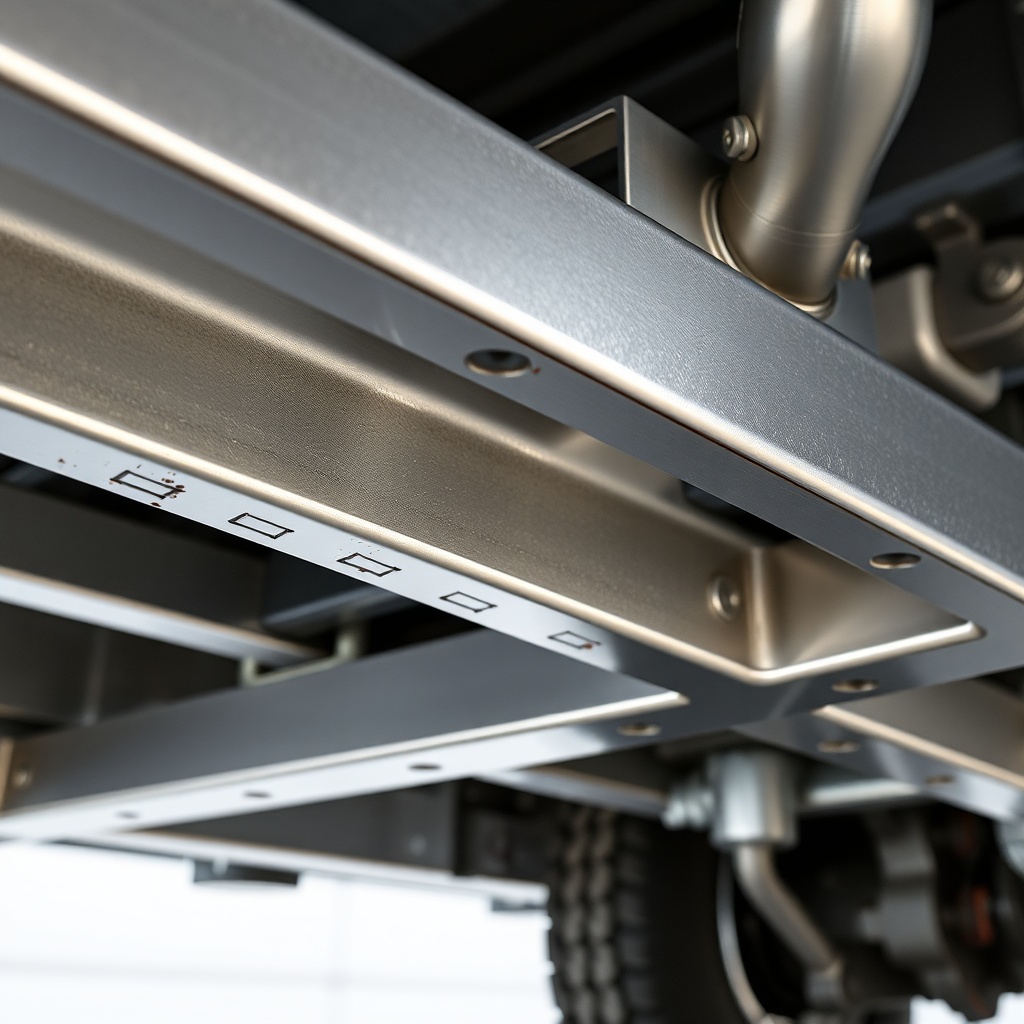
The 8549 uses a fully welded 6061-T6 aluminum main frame, which is the aerospace-grade alloy known for its strength-to-weight ratio. Unlike steel frames, this alloy does not rust, but it can suffer from galvanic corrosion where it contacts steel components—specifically at the hitch coupler, axle mounts, and floor bolts. In field checks, look for white powdery residue around these steel-to-aluminum junctions. It’s usually surface-level, but if you see deep pitting, the previous owner likely didn’t rinse after winter trips. The frame rails themselves measure 4 inches tall on the gooseneck, which is standard for a three-horse slant with a dressing room. This frame is robust enough to handle the load without twisting, but the welds can crack if overloaded—check the crossmembers under the floor for hairline fractures.
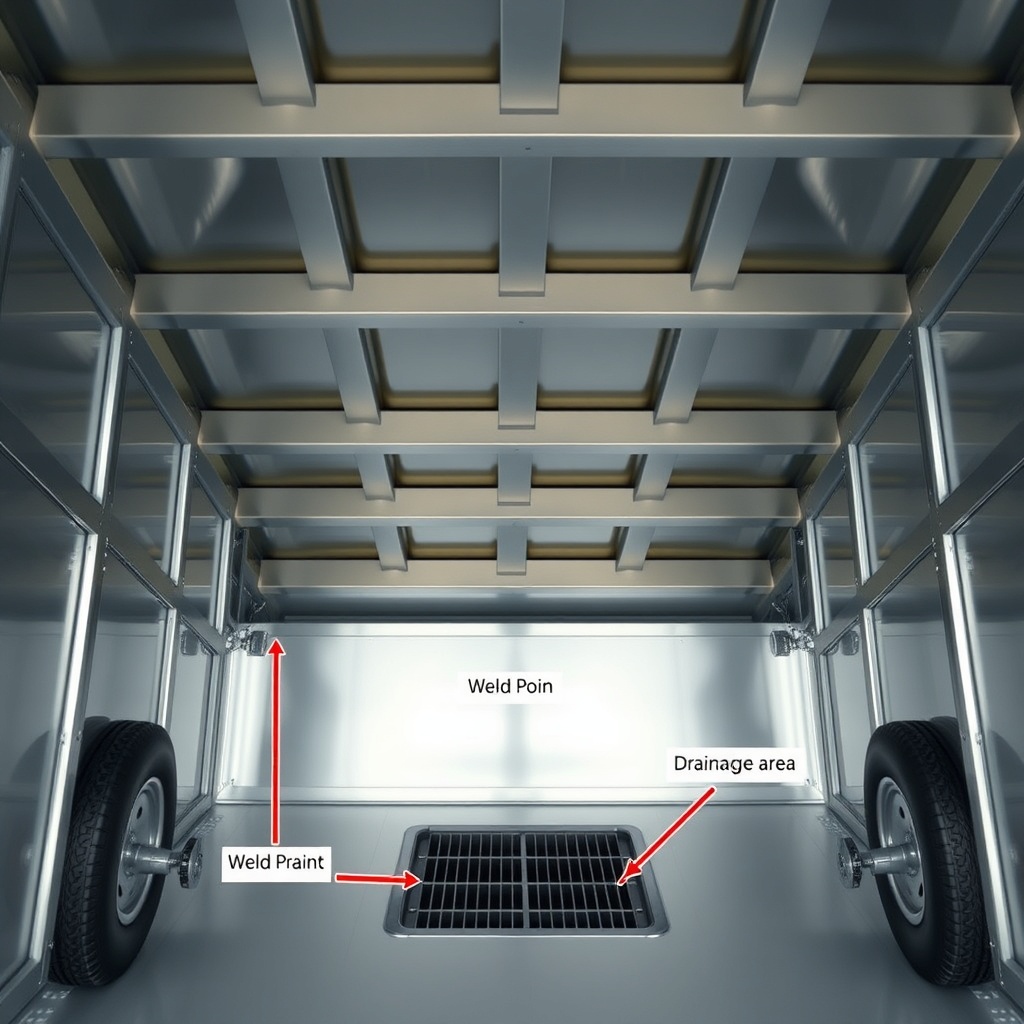
One common issue is the “cracked weld” around the rear door frame. This typically happens when the trailer is parked on uneven ground and the door is slammed repeatedly. The aluminum frame flexes, but the weld doesn’t. A simple fix is to reinforce the corners with a gusset plate—something a good welding shop can do for around $150.
Is the Aluminum Skin on the 8549 Prone to Denting or Cracking?
The 8549 uses .040-inch thick aluminum sheeting for the side walls, which is standard for mid-range Featherlite models. It’s not as thick as the .063-inch used on heavy-duty custom builds, but it’s adequate for normal highway use. The biggest vulnerability is low-hanging branches and backing into posts—the skin will dent, and once dented, it’s nearly impossible to pull back perfectly. Cracking usually happens around rivet holes, especially on the roof seams. The roof uses a one-piece aluminum sheet, which is good, but the rivets can loosen over time. After 10-15 years, you might see small stress cracks at the corners of the door openings if the trailer has been heavily loaded. In terms of oxidation, the clear coat on the aluminum will fade after 4-6 years unless the owner waxed it regularly. A faded skin is cosmetic, but if the clear coat is peeling, moisture can get under it and cause white bloom—which is only fixable by stripping and recoating.
What Welding Methods Are Used on the Featherlite 8549 Frame?
Featherlite uses MIG (Metal Inert Gas) welding on the 8549’s main frame, which is fast and strong, but not as visually clean as TIG welding. The welds are continuous along the main rails but are intermittent stitch welds on the crossmembers to save weight. This is fine for structural integrity, but if you see gaps in the stitch welds longer than 2 inches, that’s a weak point for flex. The gooseneck coupler area is critical—it’s MIG welded with a reinforcement plate around the weld-on ball. In a used 8549, always inspect the weld bead on the coupler for porosity (small pinholes), which indicates poor gas coverage during original assembly. A good weld should have minimal spatter and a uniform “stack of dimes” appearance. If you’re buying new, check the weld quality at the factory—some 8549 models from 2018-2020 had inconsistent welds on the lower frame rails near the rear.
How Does the Floor Construction Affect Longevity in This Trailer?
The floor of the 8549 is a composite aluminum and Dura-Floor system. It uses a 3/4-inch plywood subfloor over aluminum crossmembers, then a 1/8-inch aluminum diamond plate top layer. This is a double-edged sword: the aluminum top protects the plywood from urine and moisture, but if the sealant around the floor drains or the walls fails, water can get between the layers and rot the plywood. Once the plywood rots, the aluminum top flexes and cracks. On a used 8549, press down on the floor near the drain holes—if it feels spongy or you hear the aluminum crackle, that’s a $2,000+ repair. The factory installs a 1-inch thick rubber mat over the aluminum, which you should pull back at each rear corner and in the stall dividers to inspect for rotting. In non-living quarters models, the floor is fully welded to the frame; in living quarters models, there’s a transition where the floor butts up against the cabin floor, and that seam is a common failure point for water intrusion.
For comparison, the Featherlite 8549 Living Quarters: Sleeper and Kitchenette page covers how the floor transitions into the cabin—a design element that often requires yearly resealing.
What About the Roof and Walls: Are They One-Piece or Seamed?
The 8549’s roof is a single one-piece aluminum sheet, which is superior to seamed roofs because there’s no overlapping joint to leak. The sheet is stretched over the roof bows and riveted at the sides. The biggest risk is the rubber roof gasket at the front and rear caps—these are glued on and can peel away after 8-10 years, allowing water into the insulation. On the walls, Featherlite uses a sandwich construction: aluminum exterior skin, fiberglass insulation, and a thin interior aluminum or plywood liner. The insulation is R-3.5, which is modest—in extreme heat or cold, you’ll feel it. The rivet pattern on the walls is factory-standard; if you see popped rivets (especially near the roof edge), it’s likely from the trailer twisting on uneven terrain. These are easily replaced with closed-end pop rivets for about $20 for a box of 100.
How Does the Construction Compare to Steel-Frame Horse Trailers?
Compared to steel frames, the 8549’s aluminum construction offers a 20-30% weight savings, which translates to better fuel economy and less wear on your tow vehicle. However, aluminum frames are more expensive to repair—a cracked frame rail on a steel trailer can be welded for $150, while an equivalent aluminum repair often costs $400-600 because it requires a specialist with aluminum welding gear. The 8549 also handles road salt poorly if the undercoating is neglected—salt accelerates galvanic corrosion at the steel-to-aluminum junction points. Steel trailers, when properly painted, resist road salt better but rust from the inside out. The 8549’s aluminum skin will never rust through, but it dents more easily than steel. For the money, the Featherlite 8549’s construction is excellent if you’re in a dry climate and you maintain the seals. If you’re in the Rust Belt, consider a steel trailer with a powder coat.
For more on the safety systems protecting this construction, see Featherlite 8549 Safety: Brakes and Breakaway Systems.
Common Construction Flaws to Inspect on the Featherlite 8549
Based on field reports and factory audits, here’s a severity table for the most common construction issues on the 8549. Use this checklist before buying used.
| Issue | Severity |
|---|---|
| Cracked weld on gooseneck coupler (porosity or hairline) | Needs attention soon |
| Surface galvanic corrosion at steel-to-aluminum joints (white powder) | Usually not urgent |
| Spongy floor near drains or rear corners | Needs attention soon |
| Popped rivets on roof seam (less than 5 per panel) | Usually not urgent |
| Peeling rubber roof gasket at front cap | Needs attention soon |
| Stress cracks in skin at rear door corners | Usually not urgent |
| Faded/peeling clear coat on aluminum skin | Usually not urgent |
| Loose floor bolts (any over 3 feet apart) | Needs attention soon |
What Owners Say About the 8549’s Build
Owner 1: “I’ve had my 8549 for six years, and the only issue was a popped rivet on the roof after a 500-mile trip on a rough interstate. Checked the frame welds at the dealer—they’re still clean. The aluminum skin took a dent from a fence post, but it didn’t rust. I wish the floor was thicker—I replaced the rubber mat last year because it was cracking.”
Owner 2: “The construction is solid for the price, but the insulation is junk. In 30°F weather, the walls are cold to the touch. I had to add foam panels inside the dressing room. Also, the sealant around the clearance lights failed in year three—water got in and stained the interior wall. Re-sealed it myself with butyl tape. No big deal, but worth knowing.”
Owner 3: “Bought a used 2019 model. The frame is straight, but the lower frame rail had a 2-inch cracked weld near the rear spring hanger. Had a local aluminum welding shop fix it for $350. No issues since. I tell everyone to crawl underneath and look at every weld before buying used. The aluminum is light, but it’s not bulletproof.”
For lighting issues that can affect visibility while towing, refer to How to Troubleshoot Horse Trailer Lights: Step-by-Step.
Frequently Asked Questions
Q: How long does the aluminum skin last on a Featherlite 8549?
A: With proper care—regular washing and waxing every 6 months—the skin can last 20+ years without rust-through. However, the clear coat will typically fade after 4-6 years, and dents are common if you’re not careful.
Q: Can I repair a cracked aluminum weld on the frame myself?
A: Not recommended unless you have a spool gun for MIG welding aluminum and experience with thin-wall tubing. Aluminum welding requires specific filler metal (usually 5356 or 4043) and careful cleaning. A shop will charge $200-500 per repair.
Q: Is the floor replaceable in the 8549?
A: Yes, but it’s a major job. You need to remove the aluminum top layer, cut out the rotten plywood, treat the frame, then install new plywood and a new aluminum top. Expect to pay $2,500-$4,000 depending on location.
Q: Does the Featherlite 8549 use stainless steel or galvanized bolts?
A: Most bolts are zinc-plated steel. They will rust if the coating is scratched. Replace any rusted bolts with stainless steel ones (grade 316) for long-term corrosion resistance.
Q: How do I stop the roof gasket from peeling?
A: Clean the area with isopropyl alcohol, apply a bead of Dicor self-leveling lap sealant over the gasket edge, and press it down. This typically lasts 2-3 years before needing re-application.
Q: Is the 8549’s aluminum frame worth the extra cost over a steel model?
A: If you live in a dry climate and plan to keep the trailer for 10+ years, yes—you’ll never deal with rust. If you’re in a cold, salty region, a steel frame with proper rustproofing may be more economical for the same lifespan.