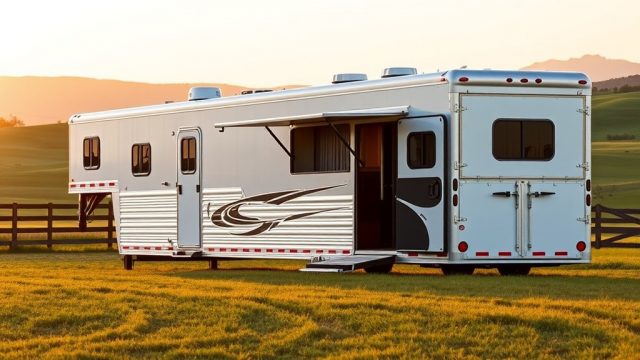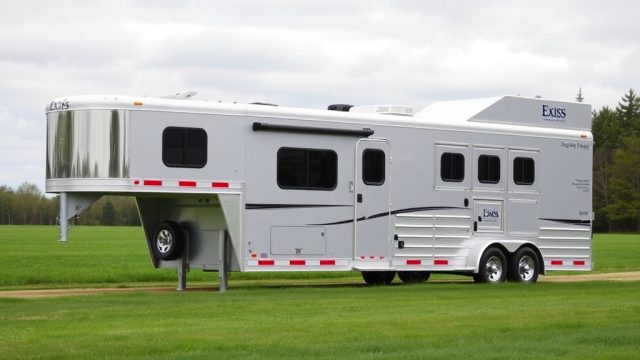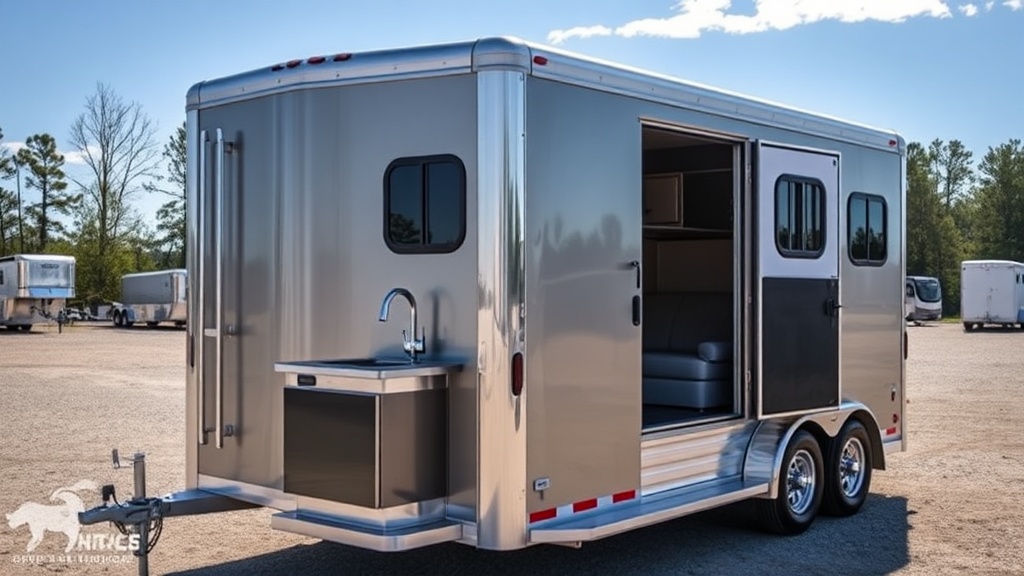
Featherlite 8549 Living Quarters: Sleeper and Kitchenette
For horse owners who spend weekends or weeks on the road, the Featherlite 8549 offers a practical balance of towing capacity and liveability. This article zeroes in on the sleeper and kitchenette configuration, separating useful features from decorative fluff. We’ll cover real-world layout, storage, and maintenance points specific to this model’s living quarters.
How Does the Sleeper Setup Work for Two Adults?
Standard on the 8549 is a rear-facing sofa that converts into a 60-inch-wide by 74-inch-long bed. The conversion is straightforward: pull a metal handle under the seat cushion, slide the backrest forward, and the foam mattress pad lays flat. Owners report the foam is firm enough for a good night’s sleep but not plush—expect typical RV-grade comfort. The overhead cabinet directly above the sofa is 12 inches deep, which limits headroom when sitting upright. Taller users (over 5’10”) may find the bed length tight for stretching out fully.
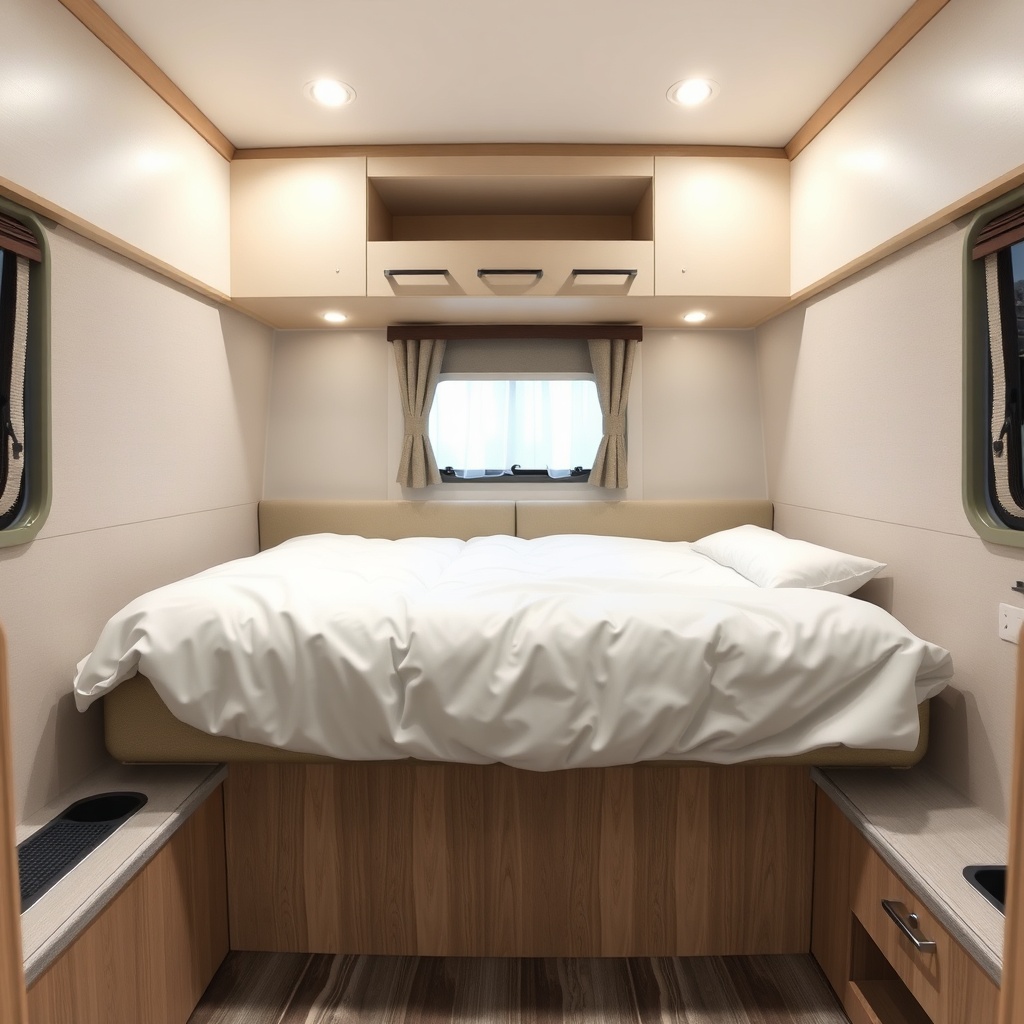
A second sleeping option is the dinette drop-down. It uses a standard 30-by-72-inch folding mattress that stores in a mesh bag under the sofa. Setup takes about four minutes: flip the table top, pull the pins, and lower the table legs. The dinette bed sits higher than the floor—about 14 inches—and works best for a single adult or two small children. Both beds use the same 4-inch-thick foam; owners who swapped in a 6-inch memory foam topper report improved comfort without sacrificing stowage.
Kitchenette Layout: Is It Practical for Cooking?
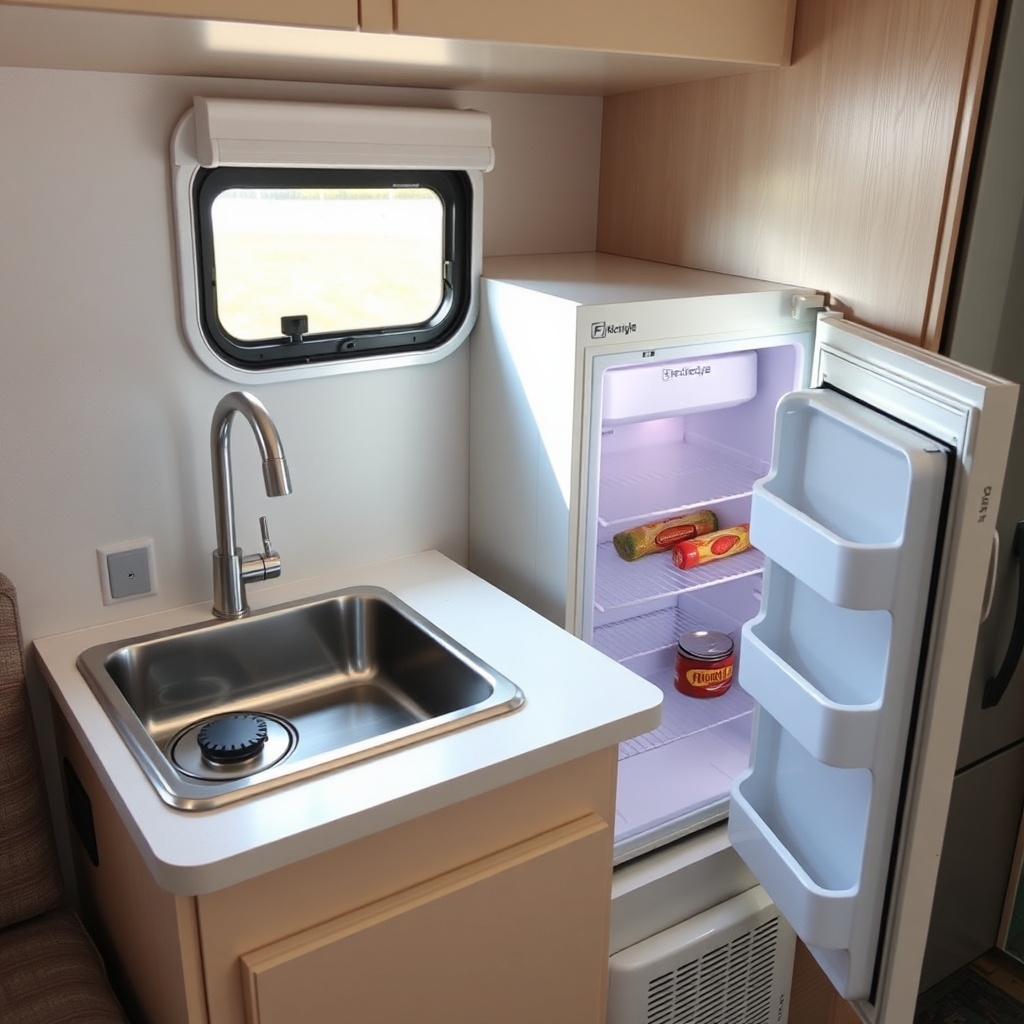
The kitchenette in the 8549 is a compact L-shaped counter that combines a two-burner propane cooktop, a single-basin stainless steel sink with a pull-out faucet, and a 3.2-cubic-foot refrigerator under the counter. Propane is supplied via a 20-pound tank mounted on the trailer’s A-frame, with a regulator accessible through a small exterior door. The cooktop’s burner output is 6,500 BTUs each—sufficient for boiling water or simmering stew, but the flame can gutter if the trailer is not level.
Counter space is the tightest spot. The usable area is 18 inches by 24 inches total, which includes the sink cover (a polycarbonate cutting board). For comparison, a full-size cutting board for a home kitchen is 18 by 24 inches anyway, so you’ll be chopping right next to the sink. Owners often add a folding table extension that clips onto the counter’s front edge. The refrigerator is a three-way (120V, 12V, propane) model; on 12V mode, it draws about 4.5 amps, which can drain a typical group-27 deep-cycle battery in 8-10 hours if the refrigerator is the only load.
| Issue | Severity (Usually Not Urgent) | Severity (Needs Attention Soon) |
|---|---|---|
| Propane cooktop flame guttering on unlevel ground | Can be mitigated with leveling jacks; not a gas leak | Check regulator connection if flame is yellow or sooty |
| Refrigerator battery drain on 12V mode | Normal for group-27 battery; carry a spare or solar panel | If battery voltage drops below 11.8V, risk of controller damage |
| Sink drain pipe loosening under vibration | Tighten by hand monthly; no leaks in first year | If grey water smell appears, check P-trap seal and drain cap |
| Folding mattress storage bag wear | Reinforce stitching with nylon thread before use | Bag splitting means mattress exposed to dirt |
| Overhead cabinet door hinges loosening | Apply blue Loctite to screws; tighten once annually | Door could swing open during transit and damage counter |
How Much Storage Space Is Actually Usable?
The 8549 provides 28 total cubic feet of interior storage across nine cabinets, three drawers, and two overhead cubbies. But usable space is less—about 20 cubic feet—because of the sloping roof line and shallow cabinet depths. The two overhead cabinets over the cab area are only 8 inches deep, enough for blankets or lightweight horse supplies, but not heavy cookware. The largest single space is the under-sofa compartment, which is 24 inches wide by 18 inches deep and 12 inches tall—perfect for a 5-gallon bucket or a folded lawn chair.
One common complaint is the lack of a dedicated hanging wardrobe. The 8549 has a small closet (18 by 14 by 30 inches) with a single shelf and a hanging rod rated for 15 pounds. For longer trips, owners often install a tension rod in the shower area or use collapsible storage cubes. The kitchenette pantry is a 12-inch-wide pull-out shelf next to the fridge, holding three standard cereal boxes side by side. When towing, we recommend securing canned goods in a lidded bin inside that pantry to prevent rattling.
Are the Materials and Finishes Durable for Horse Trail Use?
Featherlite uses a vinyl-wrapped plywood core for cabinet doors and a textured laminate countertop. In the 8549, the cabinet faces are 1/2-inch plywood with a thin melamine coating. While this resists minor scratches, it can chip if a heavy cast-iron pan is dropped. The flooring is a sheet vinyl over 1/2-inch plywood underlayment, which holds up to spilled water and horse hair better than laminate but can separate at seams if moisture sits for days.
The interior walls are a padded fabric panel glued directly to the aluminum frame. Over time, glue bonds can weaken in high-humidity climates, causing the fabric to sag near the ceiling. Owners in the Midwest report this after about five years; owners in the Southwest see it less frequently. The sofa cushions use a 1.8-pound-per-cubic-foot foam, which compresses after two to three seasons and is not reversible (no zipper to flip). Replacing the cushions costs about $120 per piece from an RV upholstery shop. For more on the overall construction of this trailer, see Featherlite 8549 Construction: Aluminum Frame and Skin.
What Are the Electrical and Plumbing Realities?
The living quarters run off a single 12V power system with a 30-amp shore power inlet. The standard battery is a group-27 deep-cycle, which provides about 85 amp-hours. Real-world usage: running the overhead LED lights (five fixtures at 1.5 amps each total) for four hours, plus the refrigerator on 12V for 10 hours, will consume roughly 50 amp-hours. That leaves minimal reserve for a furnace fan (another 7 amps) on a cold night. A battery monitor is strongly recommended.
The fresh water tank holds 20 gallons, the grey tank is 15, and the black tank (toilet) is 8. For comparison, a typical shower uses 2 to 3 gallons per minute, meaning a three-minute shower uses 6 to 9 gallons. With two people, you need to conserve water or carry extra in jugs. The water pump is a 1.8-gallon-per-minute diaphragm model mounted under the kitchen sink. Owners report the pump can be noisy—it resonates through the aluminum frame—but it primes well. To prevent pump failure, avoid running it dry; keep at least 2 gallons in the fresh tank.
Lighting, Climate Control, and Comfort Add‑Ons
Standard lighting includes two 12V LED puck lights in the kitchen and two in the living area, plus a ceiling-mounted 12V fluorescent fixture in the sleeping area. The LEDs produce a cool white (4000K) light, which some find harsh. A simple swap to 2700K bulbs costs about $8 each. The furnace is a 20,000 BTU Suburban propane unit, which can raise the interior temperature 40°F above outside temperature in about 15 minutes. A standard hang-up curtain at the cab can reduce heat loss into the front area, saving propane.
Air conditioning is not standard on the 8549 but is available as a factory option (rooftop 13,500 BTU unit). Aftermarket units can be installed, but that requires cutting a 14-by-14-inch roof opening. Owners who camp in hot climates often use a 120V portable unit in the cargo area, but the living quarters lack the dedicated circuit for a high-amp draw. For a guide to keeping all lights functioning when they start flickering, check How to Troubleshoot Horse Trailer Lights: Step-by-Step.
What Owners Say About Living in the 8549
“The sleeper sofa is fine for one or two nights, but after that, I’d rather sleep in the horse area on a cot. The foam is just too firm for me” — Sandra, Kentucky (2 years of ownership). Sandra prefers the dinette bed because it’s closer to the floor and feels more stable.
“I love the kitchen layout because I can cook dinner while my husband reads the map. But I wish the sink was deeper—it barely holds a dinner plate. We added a dish rack that folds over the counter.” — Tom, California (1 year of ownership). Tom also installed a 12V USB outlet by the sofa for charging phones.
“The biggest thing is battery management. I killed two group-27 batteries in the first year because I didn’t understand the fridge draw. Now I carry a portable solar panel and a 20Ah lithium jump pack for emergencies.” — Marcy, Texas (3 years of ownership). Marcy notes the trailer’s solar prep wiring can handle up to 200 watts of panel.
Most owners agree the 8549 is best for short (2-4 day) trips, not full-time living. For longer stays, an inverter generator (2,000 watts is plenty) is essential to keep the refrigerator running without shore power. For safety while charging batteries from the truck, review Featherlite 8549 Safety: Brakes and Breakaway Systems.
Frequently Asked Questions
- Can the sleeper sofa accommodate tall individuals?
The bed is 74 inches long, which fits someone 6 feet tall comfortably. People over 6’2″ may need to sleep diagonally or use the dinette bed. - Is the kitchenette propane stovetop safe to use while driving?
No. Propane should be turned off at the tank during travel to prevent gas leaks in a crash. Only use the stovetop when the trailer is parked and level. - How much does a full tank of propane last for cooking?
A 20-pound tank provides about 18 hours of cooking time on one burner (1 hour per pound). If you cook daily, expect 10-14 days of moderate use. - Can I add a roof air conditioner to an existing 8549?
Yes, but it requires cutting a 14×14-inch hole and reinforcing the roof structure. Featherlite factory option includes a pre-wired power supply. Aftermarket install costs $1,200 to $1,800. - What is the maximum weight of cargo you can carry in the living quarters?
The factory payload for the 8549 (GVWR minus empty weight) is about 3,200 pounds. The living quarters area itself should not exceed 500 pounds including occupants. Keep heavy items low to maintain stability. - How do I winterize the water system in the 8549?
Drain the fresh water and grey tanks, open all low-point drains, and pump RV anti-freeze through the system using the water pump. The toilet requires adding antifreeze to the bowl and flushing it into the black tank.