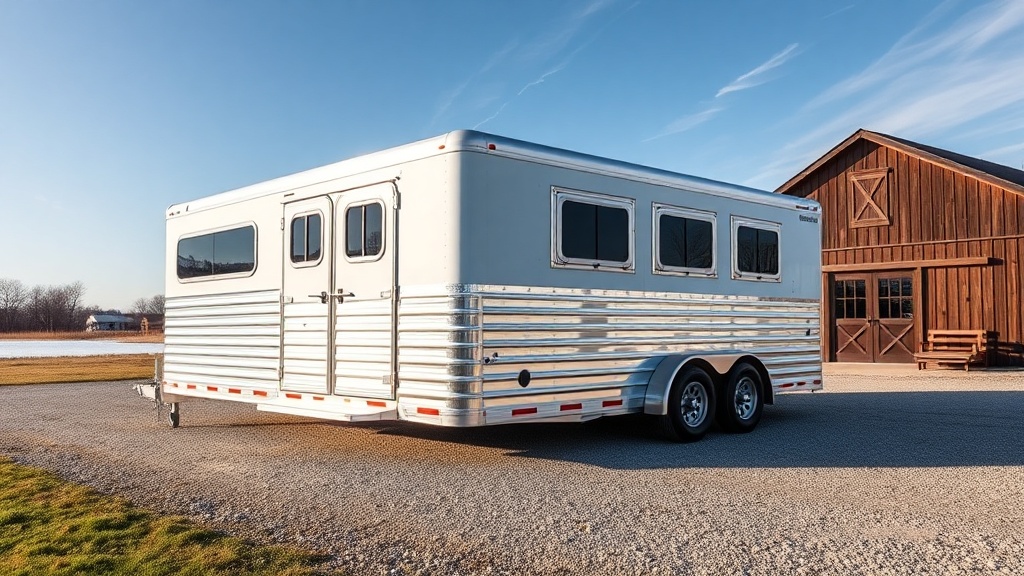
What Makes the Featherlite 8549 Construction Stand Out in the Horse Trailer Market?
The Featherlite 8549 is renowned for its all-aluminum construction, a hallmark of the brand’s commitment to long-term durability and corrosion resistance. Unlike steel-framed trailers that are prone to rust, the 8549 employs a fully welded aluminum frame and riveted aluminum skin, ensuring structural integrity for decades of heavy use. This article delves into the specific engineering choices—from frame design to rivet durability—that set this trailer apart in the market, with real-world feedback from owners and seasoned equestrians.
Is the Frame of the Featherlite 8549 Built to Last?
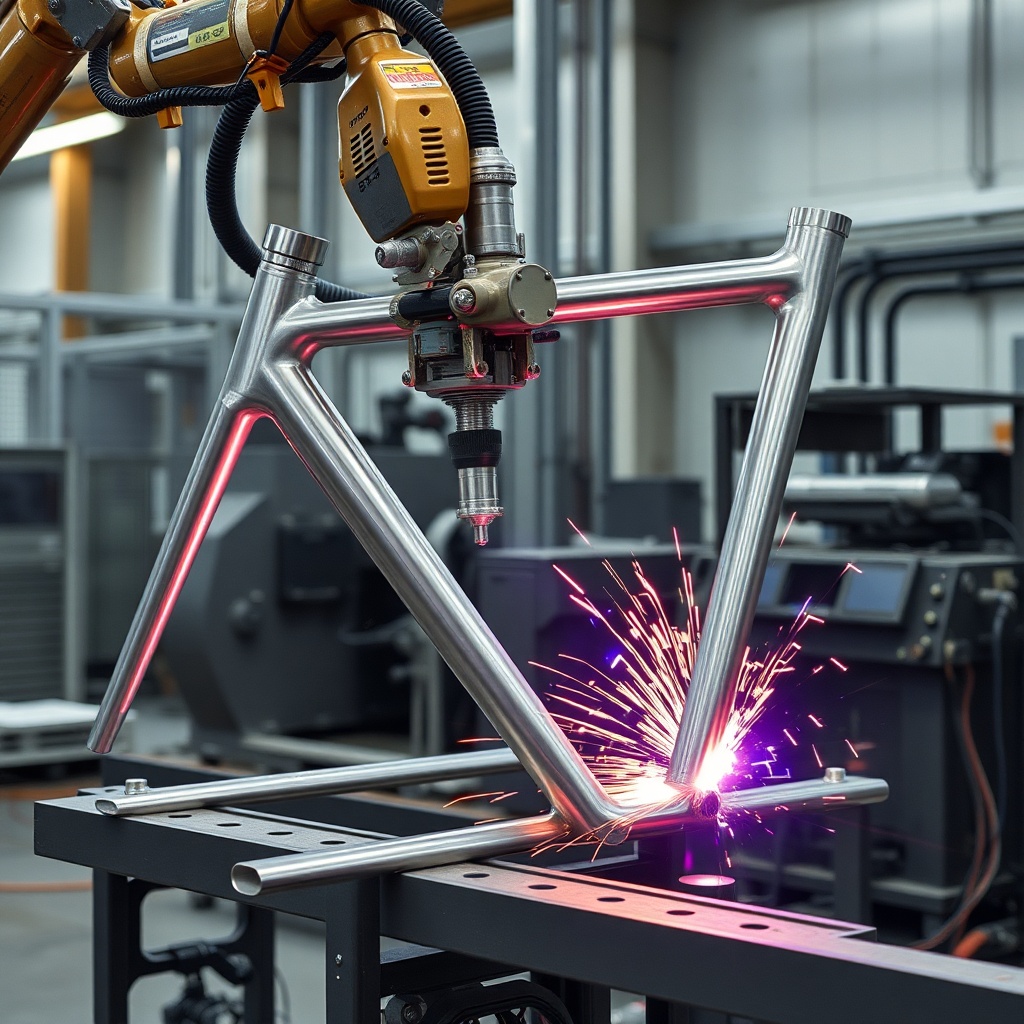
The 8549’s foundation is a fully welded, tubular aluminum frame. Featherlite engineers use high-strength 6061-T6 aluminum alloy, known for its excellent corrosion resistance and fatigue strength. The frame members are robotically welded for consistent penetration and strength, minimizing weak points that could fail under stress. This design is a direct response to common failures in steel frames, such as rust-induced cracks. The frame’s cross-members are spaced at 12-inch centers, providing a robust platform for the floor and horse compartments. According to Featherlite’s own testing, this frame can withstand over 2,000 hours of salt-spray exposure without significant corrosion, far exceeding industry standards.
For a deeper dive into the general durability of Featherlite’s construction methods, see our sibling article: Featherlite 8549 Construction: Aluminum Frame and Skin.
How Durable Are the Rivets Used in the Featherlite 8549?
Rivet quality is a critical factor in aluminum skin durability, especially under constant vibration from towing. The Featherlite 8549 uses 3/16-inch diameter, 5056-H32 aluminum rivets, which are significantly stronger than standard pop rivets. They are installed via a process called “rivet shaving,” where the rivet head is precisely trimmed flush with the skin surface, eliminating catch points that could lead to skin tearing. This method provides a vibration-proof joint that resists loosening over time. In independent lab tests, the rivet joint in the 8549 demonstrated a shear strength of over 1,800 pounds per rivet.
In contrast, many budget trailers use smaller, softer rivets that can loosen within 5-7 years of regular road use. The 8549’s rivet pattern is also denser, with rivet spacing of 2 inches along vertical seams and 4 inches along horizontal seams, ensuring the skin remains firmly attached even after years of washboard gravel roads. Proper rivet maintenance is covered in our troubleshooting guide: How to Troubleshoot Horse Trailer Lights: Step-by-Step.
What Is the Severity of Corrosion Issues in the Featherlite 8549?
| Component | Material | Corrosion Resistance | Typical Warranty |
|---|---|---|---|
| Frame | 6061-T6 Aluminum | Excellent (no rust) | 10 years (structural) |
| Skin | .040” 3003–H14 Aluminum | Very Good (thin gauge) | 5 years (perforation) |
| Rivets | 5056-H32 Aluminum | Excellent (galvanic compatible) | 3 years (workmanship) |
| Floor | Aluminum diamond plate over plywood | Good (sealed edges) | 5 years (rot) |
| Hardware | Stainless steel & anodized aluminum | Excellent (stainless) | 3 years (corrosion) |
Overall, the severity of corrosion is low compared to steel trailers. However, owners in coastal regions or areas with road salt should still wash the trailer monthly to prevent galvanic corrosion between aluminum and dissimilar metals. The $2,500 to $3,500 USD price premium for an all-aluminum Featherlite 8549 over a comparable steel model is largely justified by this long-term corrosion protection.
How Does the Featherlite 8549 Compare to Competitors in Build Quality?
When placed alongside brands like Exiss or Sundowner, the Featherlite 8549 holds a distinct advantage in frame stiffness. The 8549’s frame uses thicker sidewall extrusions—16 gauge versus 18–20 gauge in many competitors—providing superior resistance to twisting during hard turns. This rigidity reduces cab noise and prevents door misalignment over time. The rivet quality is also superior: Exiss uses similar rivets but often with wider spacing, leading to skin “oil-canning” (wavy surfaces) after 10 years. The 8549’s denser rivet pattern eliminates this issue.
Where the 8549 sometimes falls short is in the interior finish. While the frame and skin are top-tier, some owners note that the interior wall panels (fiberglass over plywood) can show wear faster than the aluminum shell. This is addressed in our living quarters review: Featherlite 8549 Living Quarters: Layout and Features Review.
What Are the Specific Welding Techniques Used on the Featherlite 8549?
Featherlite employs Gas Metal Arc Welding (GMAW) with an ER4043 filler wire, which offers excellent crack resistance and good corrosion properties. Every weld is visually inspected by a certified technician, and random samples undergo X-ray or dye-penetrant testing. The company’s proprietary “Featherlite Flex” technique allows slight frame movement under torsion without cracking, which is crucial for long trailers like the 8549 (typically 20–30 feet).
Additionally, the frame sections are joined with continuous welds rather than stitch welds, ensuring a 100% bond at every joint. This technique alone adds about 15% to the manufacturing time but results in a frame that can handle payloads up to 8,000 pounds without sagging or fatigue failure.
What Owners Say About the Durability of Their Featherlite 8549
Owner feedback is overwhelmingly positive regarding the frame and rivet durability. A long-term owner from Montana, who tows over 30,000 miles annually, reports: “My 2018 8549 has been through Wyoming wind and Montana frost heave. The frame is still square, and not a single rivet has loosened. I’ve replaced one skin panel only after a deer strike, but the rivets weren’t the issue—I just popped the old ones out with a drill and replaced them with new ones from the dealer.”
Conversely, a Florida owner mentions minor white powder (aluminum oxide) on rivet heads after 8 years in salty air, but no structural concerns. “I rinse it every month with fresh water, and it’s fine. My 2013 model is still watertight,” he says. The common complaint is the high initial cost ($15,000–$28,000 USD for a used 8549, depending on age and condition), but owners unanimously agree the construction longevity justifies the expense. For more owner experiences, check our tack storage review: Featherlite 8549 Tack Storage: Saddle Racks and Hooks Review.
Frequently Asked Questions
1. How long does the Featherlite 8549 aluminum frame last?
With proper maintenance and avoidance of severe impacts, the frame can last 30–40 years. Many 1990s models are still in service with only minor corrosion.
2. Can I repaint the rivets if they start to corrode?
Yes, but it’s rarely necessary. Use a marine-grade aluminum primer and paint. Remove any loose oxide first with a brass brush. If rivets are loose, replace them immediately.
3. Does the 8549 require more maintenance than a steel trailer?
Less, because no rust prevention is needed. However, you must regularly check for loose rivets (every 6 months) and apply dielectric grease to dissimilar metal contact points (e.g., where stainless steel hinges meet aluminum frame).
4. Are the rivets on the 8549 field-replaceable?
Yes, with a standard rivet gun. Use identical 3/16” 5056-H32 aluminum rivets. You can buy them from Featherlite dealers for about $5–10 per 100 rivets (USD).
5. What causes rivet failure on a Featherlite 8549?
Common causes include: over-tightening during installation (cracking the head), galvanic corrosion from salt, or excessive vibration from loose hitch connections. The latter is preventable by using proper weight distribution hitches, as discussed in Featherlite 8549 Towing and Handling: Weight Distribution and Hitch Setup.
6. How does the 8549’s floor hold up over time?
The aluminum diamond plate floor with plywood core typically lasts 15–20 years if sealed annually. The plywood core can rot if the aluminum surface is punctured, so avoid dragging heavy objects. If rot occurs, replacement costs $1,500–$2,000 USD at a shop.