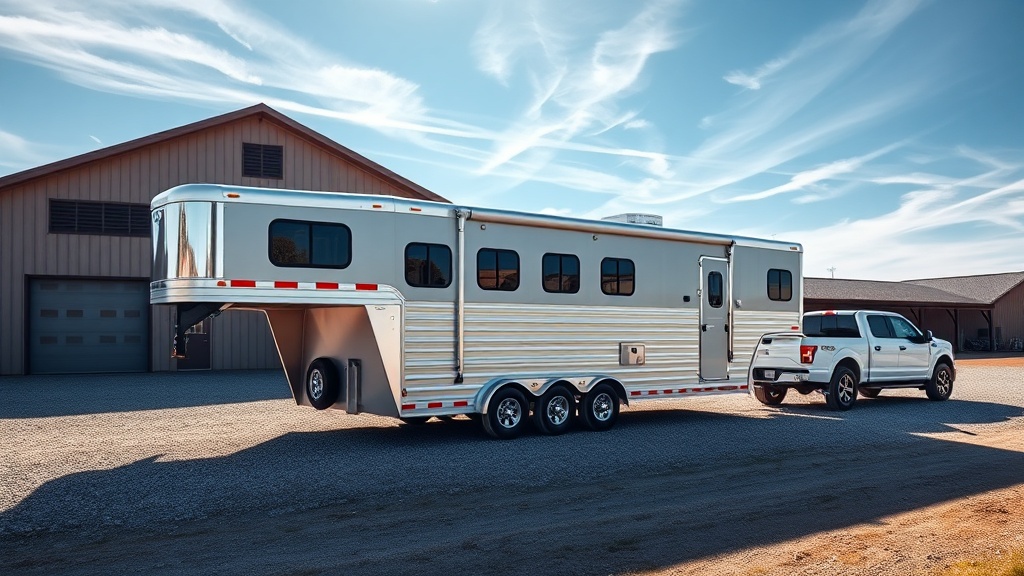
Featherlite 8549 Towing and Handling: Weight Distribution and Hitch Setup
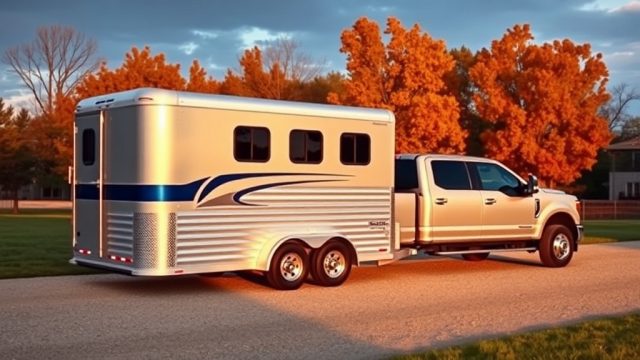
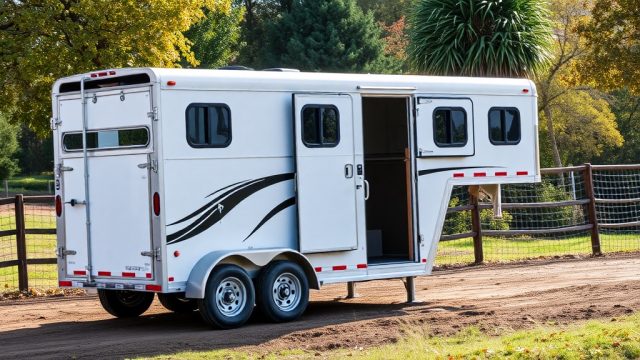
The Featherlite 8549 is a lightweight aluminum gooseneck trailer designed primarily for two-horse living quarters configurations, but its towing dynamics require careful attention to weight distribution and hitch setup. Proper setup can make the difference between a stable, predictable tow and a white-knuckle experience, especially when loaded with horses and gear. This article examines the critical aspects of hitch selection, weight distribution, and real-world handling characteristics for the 8549.
What is the Proper Hitch Setup for the Featherlite 8549?
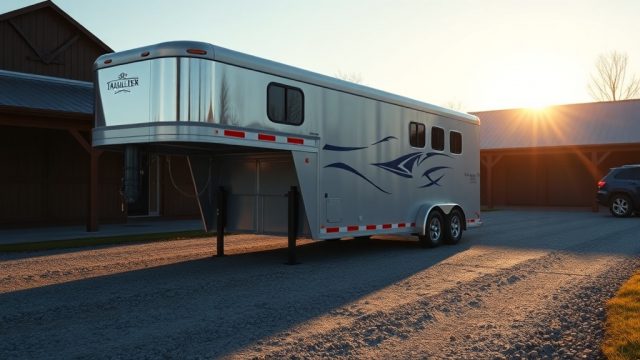
The Featherlite 8549 is a gooseneck trailer, which means it uses a ball-and-coupler system mounted in the truck bed rather than a bumper hitch. The standard hitch setup requires a 2-5/16-inch ball with a 30,000-pound rating, mounted on a gooseneck ball plate that is properly installed in your truck’s bed. The trailer’s gooseneck coupler is a fixed-height design, so the ball height must be matched precisely to ensure the trailer sits level when attached.
For optimal towing, the coupler should be positioned so that the trailer floor is level fore-to-aft when the truck is at its towing height. Most F-250/350 and Ram 2500/3500 trucks require the ball to sit between 16 and 18 inches above the truck bed floor. Featherlite recommends using a rail-mounted or turnover ball system from B&W or PullRite for best results. If you use a fixed ball in the bed, ensure the mounting plate is flush to prevent flexing during heavy loads.
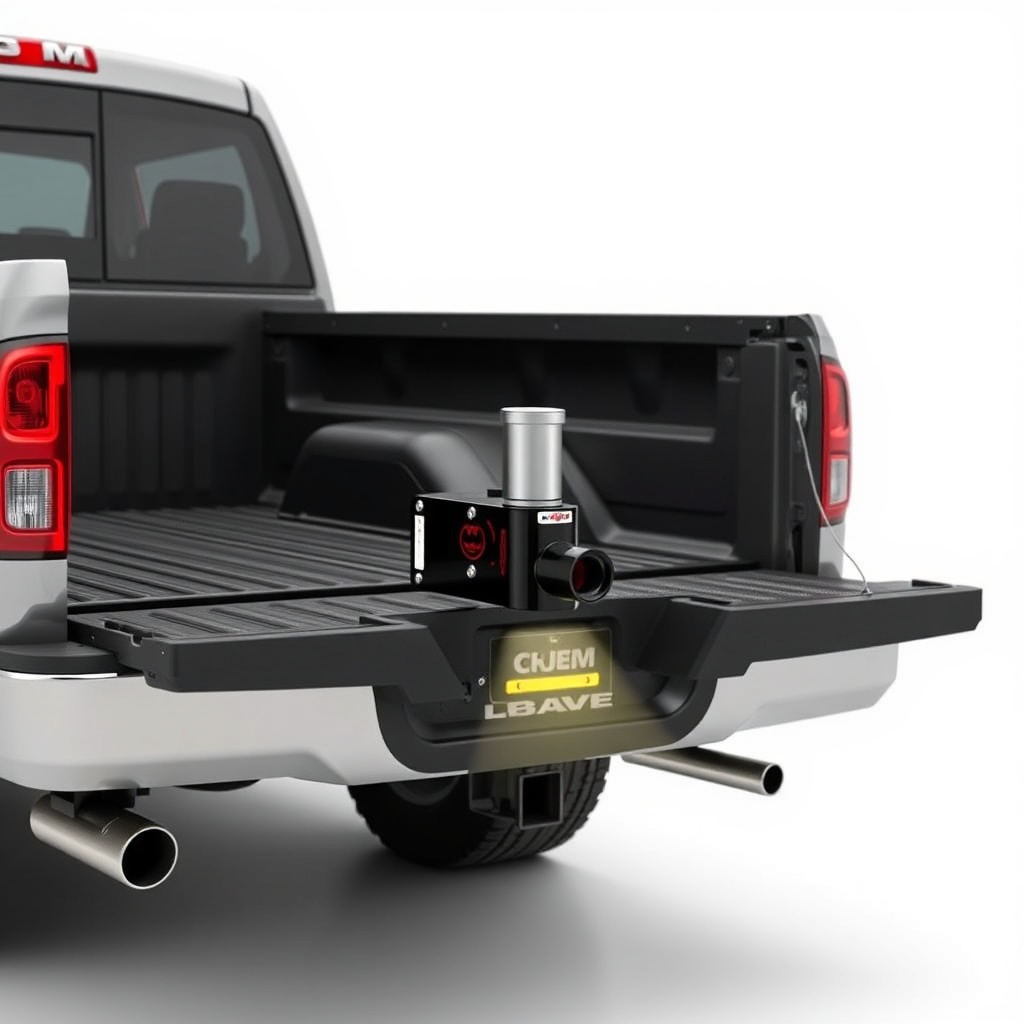
A critical detail: the Featherlite 8549 gooseneck height is fixed at the factory, and it may vary slightly depending on the model year. Before purchasing, measure from the bed floor to the center of the ball coupler on the trailer. Then adjust your ball height accordingly. Many owners install an adjustable ball mount to accommodate different truck heights, but for the 8549, a fixed-height system is often fine if the truck is not lifted or lowered. For more details on the trailer’s structure, see Featherlite 8549 Construction: Aluminum Frame and Skin.
How Does Weight Distribution Affect Handling on the Featherlite 8549?
Proper weight distribution is arguably the most important factor in safe towing of any gooseneck trailer, and the Featherlite 8549 is no exception. The trailer has a gross vehicle weight rating (GVWR) of 12,000 pounds, with a typical empty weight around 4,500 to 5,000 pounds depending on living quarters options. The tongue weight—which, for a gooseneck, is actually the pin weight—should be between 20% and 25% of the total loaded weight. For a fully loaded 10,500-pound trailer, that means the pin weight should be 2,100 to 2,625 pounds.
Pin weight is not something you can measure with a standard bathroom scale. A specialized gooseneck tongue weight scale, or a commercial truck scale, is necessary. If pin weight is too low, the trailer will sway dangerously. If too high, the truck’s rear suspension will be overloaded, causing poor steering and potential loss of traction. The 8549’s living quarters, which include a sleeper and kitchenette, are typically located at the front just behind the gooseneck, so loading gear and water tanks directly affects pin weight.

A common mistake is overloading the front living area while leaving the rear empty. This shifts too much weight onto the pin and can cause the truck’s rear axle to exceed its weight limit. Conversely, loading all hay and gear in the rear tack area can create a tail-heavy condition that promotes sway. A balanced load is key: store heavy items (water tanks, saddles, feed) over the axles or just forward of them, with lighter items (clothing, bedding) in the living quarters. For more on interior storage, read Featherlite 8549 Tack Storage: Saddle Racks and Hooks Review.
| Parameter | Recommended Value | Notes |
|---|---|---|
| GVWR | 12,000 lbs | Total trailer, horses, gear, and water |
| Empty Weight (typical) | 4,500–5,000 lbs | Varies by living quarters package |
| Pin Weight (loaded) | 2,100–2,625 lbs | 20–25% of total weight |
| Truck Payload Required | ≥ 3,000 lbs | Includes pin weight, passengers, and cargo |
| Horse Capacity | 2 horses | Average horse weight 1,000–1,200 lbs each |
| Fresh Water Tank | 20–30 gallons | Weighs approx. 170–250 lbs when full |
What Are the Towing Characteristics of the Featherlite 8549?
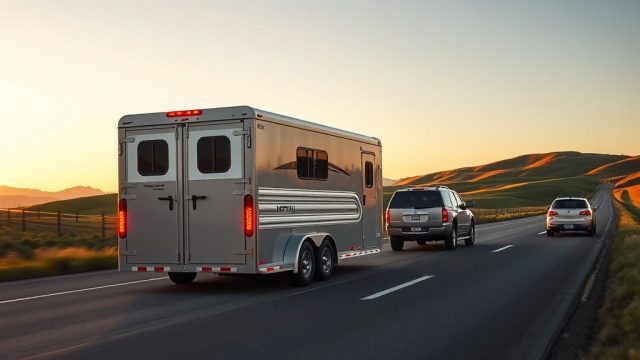
Owners describe the Featherlite 8549 as an exceptionally stable trailer when properly hitched. The all-aluminum frame and skin keep the overall weight low, which reduces the drag on the truck compared to steel trailers. The gooseneck design inherently places the weight directly over the truck’s rear axle, improving traction and reducing the likelihood of fishtailing. On the highway at 65 mph, the trailer tracks straight and requires minimal steering correction.
However, the lightweight construction does have a downside: the 8549 is more susceptible to crosswinds than a heavier steel trailer. In strong gusts, drivers report a slight push from the side, but it is manageable if the trailer is not overloaded. The trailer’s low center of gravity, thanks to the aluminum construction, helps keep it planted. Braking is another area of note—the 8549 comes standard with electric brakes on all four wheels, and they provide excellent stopping power when adjusted correctly. For more on braking, see Featherlite 8549 Safety: Brakes and Breakaway Systems.
A word on tow vehicles: the 8549 requires at least a 3/4-ton truck with a minimum payload of 3,000 pounds and a towing capacity of 12,000 pounds or more. Many owners use F-350 or Ram 3500 dually trucks for maximum stability, but a properly equipped F-250 or Ram 2500 can handle it if the payload is adequate. Never exceed the truck’s gross combined weight rating (GCWR).
How to Adjust the Featherlite 8549 for Weight Distribution?
Unlike bumper-pull trailers that use weight-distribution hitches with spring bars, gooseneck trailers like the 8549 rely solely on the natural leverage of the hitch over the axle. There is no aftermarket weight distribution system for goosenecks because the design already distributes weight effectively. However, you can adjust the distribution by shifting cargo within the trailer. Here’s a step-by-step approach:
- Check the level: Park the truck and trailer on level ground. Measure from the ground to the bottom of the trailer frame at the front and rear. They should be equal. If the front is lower, pin weight is too high. If the rear sags, pin weight is too low.
- Adjust cargo: Move heavy items from the living quarters (front) to just behind the gooseneck or over the axles. If the trailer sags at the rear, move items forward.
- Check truck suspension: With the trailer attached, measure the truck’s rear wheel well height from ground to fender. Compare to the unloaded height. A sag of more than 1.5 inches suggests the truck’s springs are insufficient—consider air bags or a heavier truck.
- Use a scale: Visit a public CAT scale to measure actual pin weight. Drop the trailer on the scale, unhitch, and weigh the truck alone. Subtract the truck weight from the combined weight to get pin weight.
For more details on what to store where, refer to Featherlite 8549 Living Quarters: Sleeper and Kitchenette.
What Are Common Towing Issues and How to Troubleshoot?
Even with proper setup, owners sometimes encounter issues. The most common problem with the Featherlite 8549 is excessive sway at highway speeds. This is almost always caused by incorrect weight distribution—either pin weight too low (under 20%) or load imbalance. Check your pin weight first. If that is correct, inspect tire pressure (recommended 50–65 psi for the trailer’s 16-inch wheels). Under-inflated tires can cause wandering.
Another issue is brake lock-up during stops. The 8549 uses electric brakes controlled by a controller in the truck. If the gain setting is too high, the brakes will lock suddenly. Start with a gain setting of 6.0 on a typical proportional controller and adjust up or down based on feel. The trailer should stop smoothly without the truck feeling pushed or pulled. If you experience electrical brake failures, check the wiring—How to Troubleshoot Horse Trailer Lights: Step-by-Step offers guidance for diagnosing common electrical problems.
Vibration in the steering wheel at 55–60 mph may indicate a tire balance issue on the trailer or a worn wheel bearing. Grease the bearings annually and have the tires balanced. If the vibration persists, check the hitch ball for wear—a loose fit between ball and coupler can create a resonant shudder.
What Owners Say
Real-world feedback from Featherlite 8549 owners consistently highlights stability as the primary advantage. “I towed my 8549 with a 2019 Ford F-250 diesel through the Rocky Mountains, and it never swayed once,” reports one owner on a trailer forum. “The lightweight frame means my truck doesn’t struggle on steep grades.” Another owner notes, “The living quarters are a game-changer for long trips, but you have to watch your pin weight. I added air bags to my Ram 2500 to level out the ride.”
Negative comments center on wind sensitivity: “In a crosswind on the plains, it pushes around more than my old steel trailer,” says a Texas owner. “I installed a sway bar on the truck, and it helped, but you can’t eliminate it completely.” Overall, the consensus is that the 8549 tows beautifully when properly loaded, but it demands attention to detail—no “set it and forget it” approach works with this trailer.
Frequently Asked Questions
Q: What is the maximum total towing weight for the Featherlite 8549?
A: The GVWR is 12,000 pounds. The empty weight is approximately 4,500–5,000 pounds, so you can load about 7,000–7,500 pounds of horses, gear, and water. Never exceed the GVWR or the truck’s GCWR.
Q: Can I tow the Featherlite 8549 with a half-ton truck?
A: No. A half-ton truck (e.g., F-150, Ram 1500) lacks sufficient payload capacity (typically under 2,000 lbs) to handle the pin weight plus passengers and cargo. A 3/4-ton or 1-ton truck is required.
Q: How often should I check the hitch ball for wear?
A: Every season or before any long trip. The 2-5/16-inch ball should be free of pitting, rust, or scoring. If the coupler clunks or rattles over bumps, replace the ball immediately.
Q: Does the Featherlite 8549 come with a breakaway system?
A: Yes, it includes a breakaway switch with a battery in the trailer nose. Test it monthly by pulling the pin—the brakes should lock. Replace the battery if it tests low.
Q: What tire pressure should I use for the 8549?
A: The factory tires are typically 16-inch load range E rated at 50–65 psi. Check the sidewall for the maximum cold pressure. For fully loaded towing, inflate to the maximum listed. On the highway, check pressure every 200 miles.
Q: How do I adjust the electric brake controller for the 8549?
A: Start with a gain of 6.0 on a proportional controller. Test at 20 mph on a flat road by applying the manual override. The brakes should engage firmly without locking. Increase or decrease by 0.5 increments until smooth, controlled stops are achieved.