Introduction: Why Electrical Issues Matter in the HorseTrailerPro
Electrical problems are among the most common yet frustrating issues owners face with the HorseTrailerPro, from dead batteries in the breakaway system to flickering interior lights that spook horses. These failures can strand a trailer on the roadside or compromise safety during loading and unloading. In this troubleshooting guide, we walk through the six most frequent electrical faults reported by owners, including severity ratings, DIY fixes, and when to call a professional. For related insights on overall structural stability, see our review on HorseTrailerPro Towing Handling: Weight Distribution and Stability.
Why Won’t My HorseTrailerPro Interior Lights Turn On?
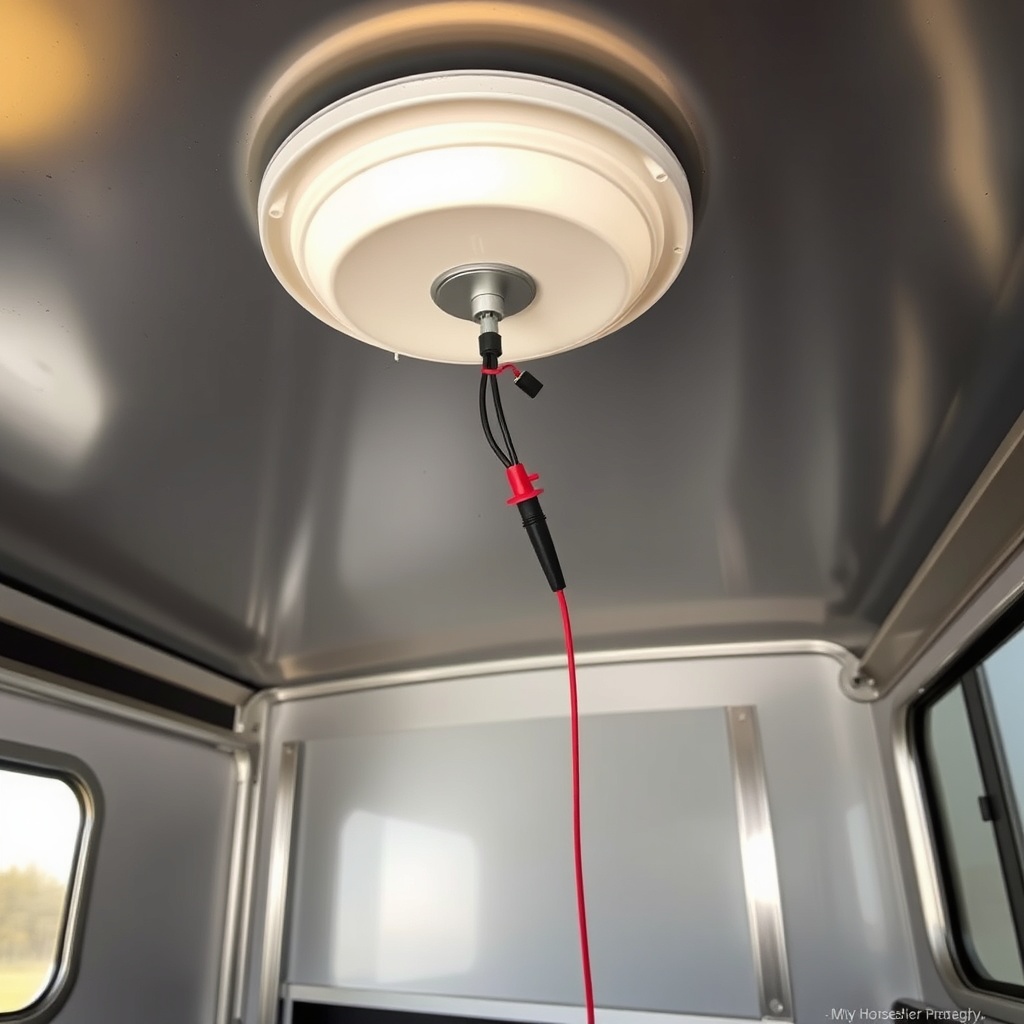
The most common culprit is a blown fuse in the main electrical panel, typically located near the hitch or under the driver-side storage compartment. Fuses for the HorseTrailerPro interior circuits are 15-amp mini blade types. If the light switch is illuminated but no fixture lights up, the issue may be a corroded ground wire. The trailer’s aluminum frame can develop oxidation at ground connection points, especially in humid climates. Check the ground strap bolted to the frame near the battery box; tighten it to 8-10 Nm and clean the contact area with a wire brush.
If the problem persists, test each light fixture with a multimeter set to 12V DC. Remove the lens and probe the power wire (often brown) and ground (black or white). A reading below 11.5V indicates a voltage drop from the battery or converter. For a full guide on floor and electrical bay maintenance, read HorseTrailerPro Maintenance: Floor Checks and Corrosion Prevention.
Severity rating: Low – interior lights are not critical for road safety but affect horse comfort, especially on long trips at night.
What Causes the HorseTrailerPro Breakaway Battery to Drain Overnight?
A parasitic drain is the leading cause of a dead breakaway battery in the HorseTrailerPro. The breakaway system is designed to activate the trailer brakes if it separates from the tow vehicle. However, a short in the wiring harness, often at the connector between the trailer and truck, can continuously draw current. Use a clamp meter on the positive battery cable—any reading over 0.05 amps when the trailer is disconnected and all switches off indicates a draw.
Common sources include a stuck or miswired electric brake controller override switch, a failed breakaway switch (the pull pin may be corroded and not fully disengaging), or a shorted 7-pin connector. Inspect the connector for bent pins or moisture. Clean with electrical contact cleaner and apply dielectric grease. If the battery is more than three years old, replacement is advisable. The HorseTrailerPro uses a group U1 battery (12V, 18-20 Ah); a quality replacement costs between £40 and £60 in the UK or $50-75 USD.
Severity rating: High – a dead breakaway battery means trailer brakes will not activate in a separation event, which is illegal in most regions and extremely dangerous.
How to Fix Blinking or Dim Running Lights on the HorseTrailerPro
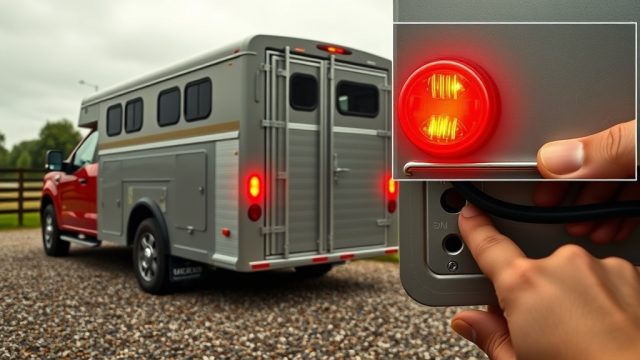
Blinking or dim running lights often point to a poor ground connection at the trailer’s rear light assemblies. Each tail light on the HorseTrailerPro has a dedicated ground wire that attaches to the aluminum frame. Over time, vibration and moisture cause these screws to loosen or corrode. Remove the lens (two Phillips screws), locate the ground wire (typically white), and test continuity between the wire and a clean section of frame. If resistance is above 1 ohm, clean the contact point and replace the ring terminal if damaged.
Another frequent cause is an undersized or damaged wire between the 7-pin connector and the lights. The factory wiring uses 16 AWG for running lights; aftermarket modifications sometimes use thinner wire, increasing voltage drop. Use a voltage drop test: with the tow vehicle’s lights on, measure voltage at the connector (pin for running lights, usually brown) and then at the tail light. A drop of more than 0.5V indicates a problem. For design considerations on electrical routing, see HorseTrailerPro Construction Durability: Aluminum Frame and Composite Panels.
Severity rating: Medium – dim lights reduce visibility for other drivers and may fail a roadside inspection, but the trailer can still be towed cautiously to a repair shop.
Why Does My HorseTrailerPro Electric Brake Controller Show a Fault Code?
Modern brake controllers, such as the OEM Curt Spectrum or Hopkins Agility, display fault codes when they detect an open circuit or short in the trailer braking system. The most common code on the HorseTrailerPro is “no brake signal” or “open circuit” – this usually means a broken wire at the axle magnet connection. Each wheel has a brake magnet that draws 3-4 amps; a break in the wire anywhere from the junction box to the magnet gives that code. Access the brake wires by removing the wheel and drum; look for chafing where the wire passes through the backing plate.
Sometimes the fault is in the 7-pin connector itself. A bent pin for the brake controller (blue wire) can cause intermittent connection. Inspect and straighten pins with needle-nose pliers. If the controller shows an “overload” code, one brake magnet may be shorted internally; measure resistance across each magnet – a good magnet reads 3-4 ohms. A reading near 0 ohms indicates a short circuit. Replacements cost about £30-50 per magnet. For more on brake system safety, see HorseTrailerPro Safety Features: Emergency Windows and Brakes.
Severity rating: High – faulty brakes compromise stopping distance and can overheat the hub, leading to bearing failure or fire on long descents.
What Causes the HorseTrailerPro Battery Converter to Fail?
The converter (or charger) in the HorseTrailerPro transforms 120V AC shore power to 12V DC for charging the battery and powering lights and fans. When it fails, the battery is drained by the trailer’s parasitic loads (such as the CO2 alarm or interior fan) overnight. Symptoms include: the battery does not charge when plugged into shore power, a burning smell from the converter box, or a red LED indicator on the converter panel. The factory unit is a Parallax 6300 series (30 amp output) that can be upgraded to a more efficient PowerMax PM3.
First, check the shore power cord and GFCI outlet – a tripped GFCI will starve the converter. Reset the outlet and test with a known working device. Next, inspect the converter’s cooling fan; if it is seized from dust, the unit will overheat and shut down. Clean fan blades with compressed air. If the converter is completely dead, replacement cost runs from £120-200 for a compatible unit plus labor if you don’t DIY. Always disconnect the battery before working on the converter. For additional electrical system care, see HorseTrailerPro Horse Compartment: Ventilation and Tie Rings Review.
Severity rating: Medium to High – a dead converter means no battery charging on shore power; the battery will slowly drain, affecting breakaway system and interior amenities during overnight stops.
Why Is My HorseTrailerPro Turn Signal Malfunctioning After Rain?
Water intrusion into the tail light assemblies is the number one cause of turn signal failure in wet weather on the HorseTrailerPro. The factory uses a rubber gasket between the lens and housing, but these gaskets degrade after 2-3 years, especially if the trailer is stored outdoors. Remove the lens and check for moisture or rust inside. Dry the assembly thoroughly, clean the gasket contact surfaces, and apply a thin bead of silicone sealant before reinstalling. Replace the bulb or LED module if the metal contacts are green or white (corrosion).
Also, check the 7-pin connector: rainwater can run down the tow vehicle’s harness and pool in the connector, causing short circuits between the turn signal and brake light wires. Use a rubber boot over the connector when not in use. If the problem is intermittent, the wiring inside the trailer frame may have chafed against a sharp edge. Testing can be done by running a known-good jumper wire from the tow vehicle directly to the tail light; if it works, the internal wiring is damaged. For related storage and care, see HorseTrailerPro Tack Storage: Saddle Racks and Hooks Review.
Severity rating: Medium – turn signal malfunction is illegal and hazardous, but often a simple fix with basic tools and sealant.
Electrical Issue Severity and Approximate Repair Costs
The following table summarizes the most common HorseTrailerPro electrical issues, their severity, basic DIY cost, and professional repair estimates (UK pound and US dollar equivalents). Always factor in towing risk before attempting road-side fixes.
| Issue | Severity | DIY Materials Cost (GBP) | DIY Materials Cost (USD) | Pro Repair Estimate (GBP) | Pro Repair Estimate (USD) |
|---|---|---|---|---|---|
| Interior light fuse blown or ground corrosion | Low | £2–5 (fuses, wire brush) | $3–7 | £40–75 | $50–90 |
| Breakaway battery parasitic drain | High | £40–60 (new battery) | $50–75 | £80–150 (diagnosis + parts) | $100–200 |
| Dim/blinking running lights (ground issue) | Medium | £5–10 (cleaner, terminals) | $7–15 | £50–90 | $65–120 |
| Brake controller fault code (open wire or shorted magnet) | High | £30–50 (magnet, wire) | $40–65 | £120–200 | $150–260 |
| Converter failure | Medium-High | £120–200 (replacement unit) | $140–250 | £200–350 | $250–450 |
| Turn signal malfunction after rain (water intrusion) | Medium | £5–15 (sealant, bulb) | $7–20 | £50–80 | $65–100 |
What Owners Say About HorseTrailerPro Electrical Durability
Many HorseTrailerPro owners praise the overall build quality but note that the electrical system requires regular attention, particularly the grounds and connectors. One owner from Texas, who tows weekly to competitions, wrote: “I’ve owned my HorseTrailerPro for four years. The interior lights and breakaway system work fine, but the running light grounds need cleaning every season. Once I replaced the factory ground screws with stainless steel and added dielectric grease, the problem stopped.” Another owner in the UK reported that the converter failed at the three-year mark, but the manufacturer’s warranty covered the part, and a local shop installed it for £90 in labor. Several owners mention that the tail light gaskets shrink in cold weather, letting in moisture; applying a silicone sealant as a preventive measure is a common tip. Overall, the consensus is that while the electrical system is not the trailer’s weak point, it demands proactive maintenance to avoid roadside trouble. For more owner perspectives on compartment design, see HorseTrailerPro Horse Compartment: Ventilation and Tie Rings Review.
Frequently Asked Questions (FAQ)
1. How do I reset the HorseTrailerPro breakaway system after accidentally pulling the pin?
Insert the breakaway pin fully back into its switch. The battery will automatically reconnect, and the brakes will release. If the brakes remain engaged, tap the brake controller manual override button once to clear the signal. Ensure the battery voltage is above 12.4V.
2. Can I use an automotive battery charger on my HorseTrailerPro battery?
Yes, but only a charger designed for absorbed glass mat (AGM) or flooded lead-acid batteries, as the HorseTrailerPro typically uses an AGM battery. Do not use a high-amp “fast charge” setting (over 10 amps) as it may damage the battery or the converter. Use a smart charger that reduces to float mode.
3. What is the correct fuse rating for the HorseTrailerPro battery charger circuit?
The battery charger (converter) circuit is protected by a 30-amp fuse, usually located in the main fuse panel near the converter. Some models have a 20-amp fuse for the battery itself. Check your owner’s manual for exact location. Never replace a fuse with one of higher amperage.
4. Why does my HorseTrailerPro interior fan run continuously even with the switch off?
This usually indicates a shorted fan switch or control board. Unplug the fan from its harness; if it stops, replace the switch. If it continues, the fan motor’s internal thermal switch may be stuck. Replacement fans cost approximately £25-40 for the OEM model.
5. How often should I inspect the electrical connections on my HorseTrailerPro?
At least twice per year—once before heavy towing season (spring) and once in autumn. Additionally, inspect after any long trip where the trailer encountered heavy rain or vibration. Check all 7-pin connector pins, ground screws, and battery terminals for corrosion or tightness.
6. What does the red warning light on the HorseTrailerPro converter indicate?
A steady red light means the converter is in “bulk charge” mode and is delivering full current to the battery. A flashing red light indicates a fault—either a short circuit in the battery, reverse polarity, or over-temperature. Immediately disconnect shore power and check battery connections. If the light stays solid, the charger is working normally.