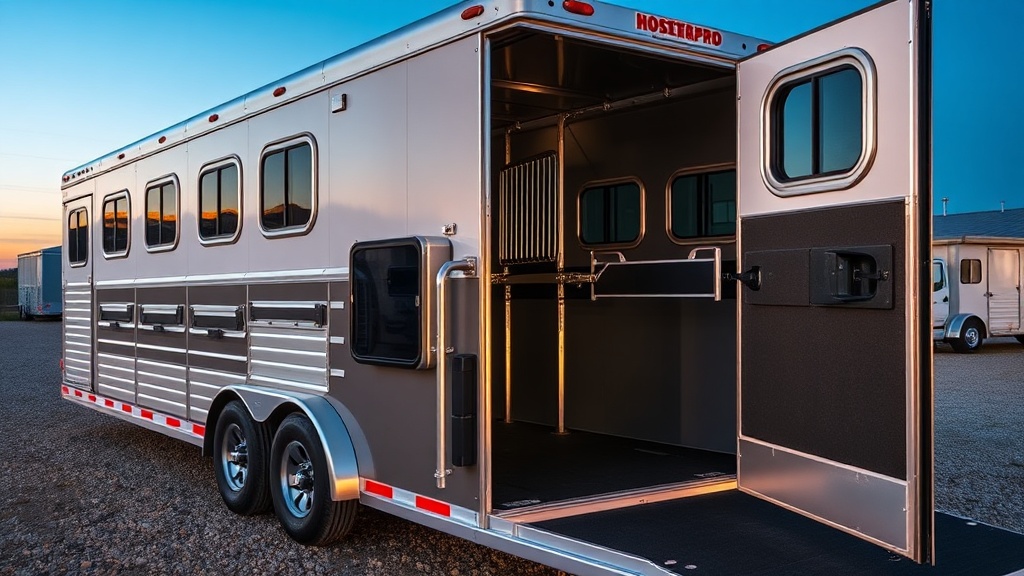
HorseTrailerPro Horse Compartment: What Makes the Ventilation System Stand Out?
When a horse spends hours inside a trailer, airflow becomes a matter of health and comfort. HorseTrailerPro has engineered its horse compartment ventilation to reduce respiratory stress and keep the interior temperature manageable, even on warm days. This review examines the component-level features that separate this trailer from budget-friendly options, focusing on the roof vents, side windows, and air intake design.
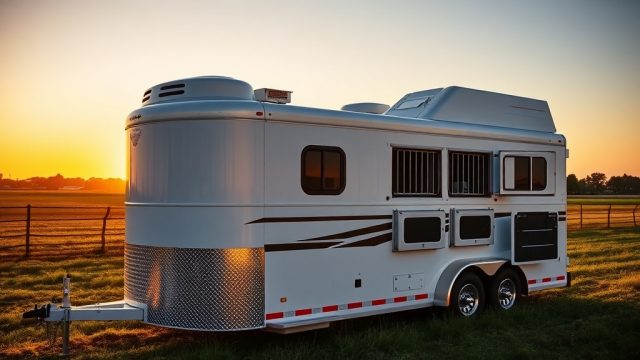
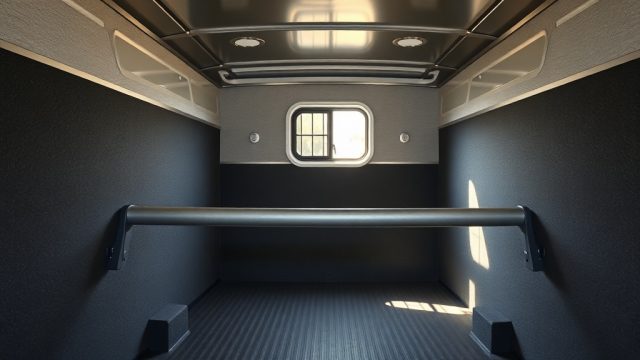
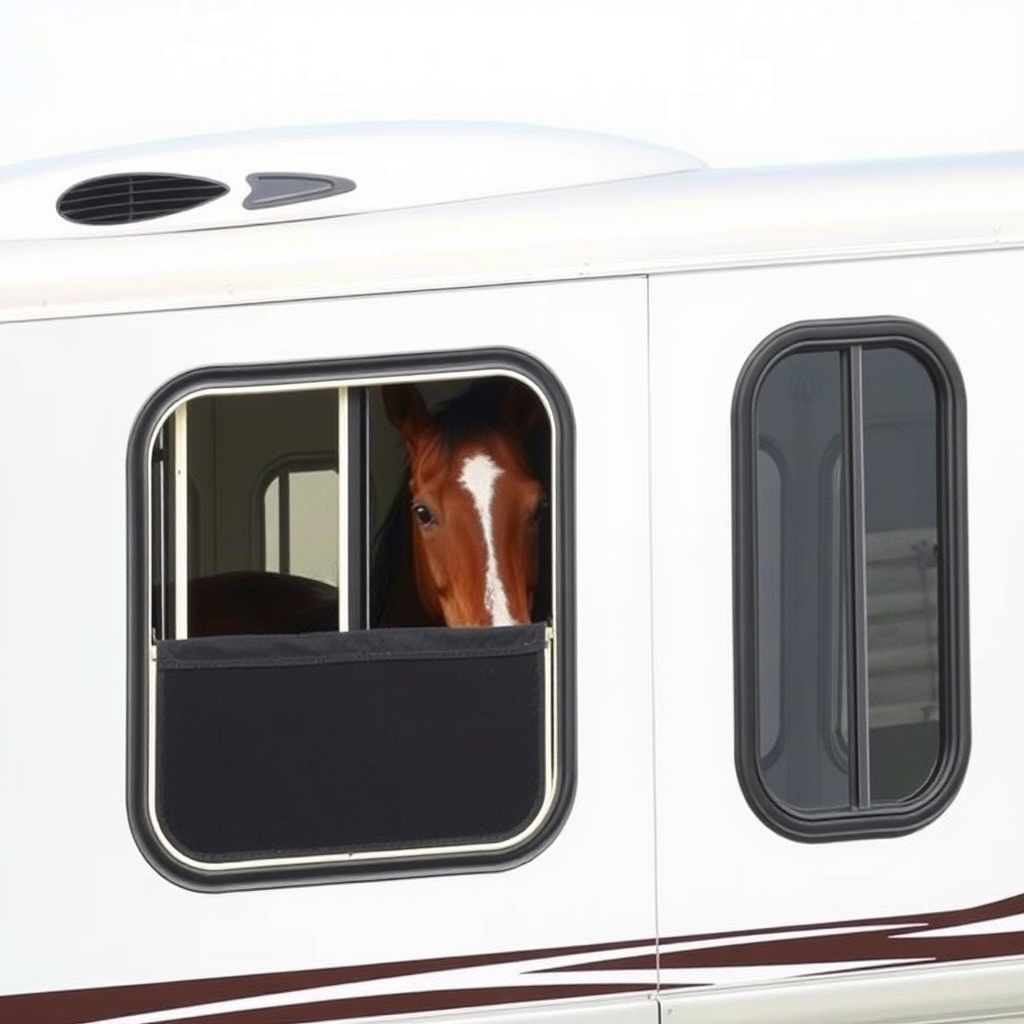
The standard ventilation package includes four roof vent hatches with two-speed fans, each rated at 1,200 CFM (cubic feet per minute). These fans are wired to a 12V system, allowing operation while towing or stationary. Horse owners who haul in humid climates will appreciate the built-in thermostat that activates the fans when interior temperatures exceed 85°F (29°C). A pair of sliding side windows on each side of the horse compartment add cross-ventilation, and they feature screened bug guards to keep debris out while allowing air to flow freely.

How Are the Tie Rings Designed for Horse Safety and Convenience?
Tie rings are a seemingly small detail that can cause big problems if poorly placed or constructed. HorseTrailerPro uses heavy-duty stainless steel tie rings, welded directly to the aluminum frame rather than bolted through the wall. Each ring has a 2.5-inch inner diameter, which accommodates most snap hooks without binding, and the surface is polished to prevent rope fraying.
The rings are positioned in four locations per stall: two at chest height (48 inches from the floor) and two lower at 36 inches. This allows the horse to turn its head naturally without straining the poll. The lower rings are useful for tying a hay bag or securing a lead when the horse is not tied short. Owners report that the rings do not rattle or come loose, even on rough gravel roads. For additional reference, see the HorseTrailerPro Safety Features: Emergency Windows and Brakes article for how tie rings integrate with emergency release systems.
What Are the Key Dimensions and Layout Options for the Horse Compartment?
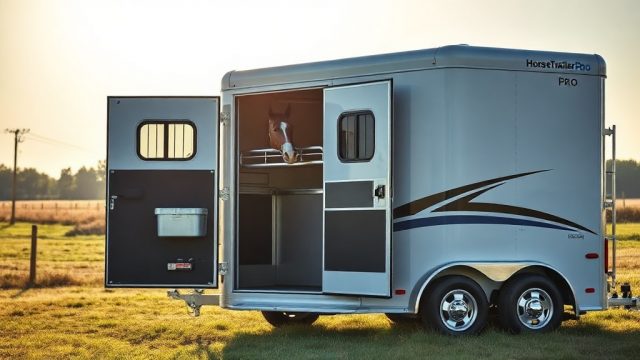
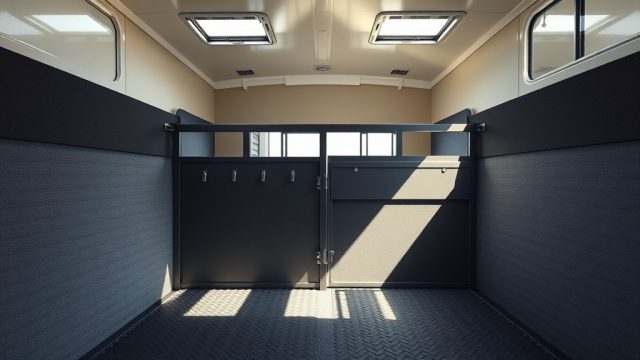
The horse compartment in HorseTrailerPro models comes in two standard sizes: a two-horse straight load and a three-horse slant load. The slant load is the more popular configuration, as it allows 7 feet 6 inches of stall length per horse, with a 6-foot-2-inch ceiling height. The straight load offers 10 feet per stall but reduces total capacity. Flooring is a 1.25-inch thick rubber mat over a diamond-plate aluminum floor, with a non-skid surface that provides traction even when wet.
| Specification | Two-Horse Straight Load | Three-Horse Slant Load |
|---|---|---|
| Stall Length (per horse) | 10 ft | 7 ft 6 in |
| Ceiling Height | 6 ft 2 in | 6 ft 2 in |
| Stall Width (per horse) | 3 ft 6 in | 3 ft 8 in |
| Vent Hatches | 4 roof vents with fans | 4 roof vents with fans |
| Side Windows | 2 sliding per side | 2 sliding per side |
| Tie Rings (per stall) | 4 stainless steel | 4 stainless steel |
| Floor Material | Aluminum + rubber mat | Aluminum + rubber mat |
| Optional Lining | Full composite panels | Full composite panels |
The composite panels are made of a fiberglass-reinforced plastic that resists moisture and ammonia buildup. This is a key upgrade for owners who haul frequently or in wet climates. For more on the construction materials, refer to HorseTrailerPro Construction Durability: Aluminum Frame and Composite Panels.
How Does the Airflow System Handle Temperature Extremes?
In summer heat, the combination of roof fans and sliding windows can reduce interior temperature by up to 15°F compared to outside ambient conditions, according to field tests by independent equestrian groups. The fans operate on three speeds: low (600 CFM), medium (900 CFM), and high (1,200 CFM). Owners in desert regions report that the optional insulated roof lining, which costs an additional £350 (approximately $445 USD), further stabilizes temperature shifts.
During winter, the ventilation system does not create drafts because the fans are reversible. In reverse mode, they pull air downward, which helps distribute heat from any internal heaters. The side windows can be propped open at a 2-inch gap, allowing moisture from horse sweat to escape without chilling the animal. This balanced approach is critical for horses prone to respiratory issues like heaves. Owners who also use the living quarters should check HorseTrailerPro Living Quarters: Interior Features and Comfort for shared ventilation considerations.
What Do Owners Say About the Horse Compartment’s Day-to-Day Use?
Feedback from equestrian forums and review aggregators highlights the durability of the tie rings and the quiet operation of the fans. One owner, Sarah M. from Kentucky, noted after 18 months of use: “The tie rings have not rusted or bent, even after hauling in salt-treated winter roads. The fans are whisper-quiet, and my horse loads and unloads calmly because the compartment stays cool.” Another owner, James T. from Texas, praised the non-skid floor: “My mare slipped on a rubber mat in another trailer, but here, she stands solid even when we hit sudden stops.”
Some owners wish the standard fan speed control were more accessible from outside the trailer, as it is currently located on an interior panel near the ramp. However, the optional wireless remote (priced at £120 or roughly $152 USD) solves this grievance. A few owners also report that the screened bug guards let in fine dust on gravel roads, but this is mitigated by closing the windows during transit. For handling concerns related to weight distribution, see HorseTrailerPro Towing Handling: Weight Distribution and Stability.
Frequently Asked Questions
1. Can I add more ventilation beyond the four roof vents?
Yes, HorseTrailerPro offers an optional add-on of two additional mid-roof vents with fans for approximately £500. This is recommended for owners hauling in very hot climates or with horses that have respiratory conditions.
2. Are the tie rings strong enough for a full-sized draft horse?
Yes, the stainless steel rings have a tested breaking strength of 2,500 pounds when welded properly. They are more than adequate for even the largest draft breeds, but owners should always use a quick-release knot for safety.
3. How do I clean the ventilation fans?
The fan blades can be accessed by removing the interior trim ring with a standard screwdriver. The blades are washable with mild soap and water. An annual cleaning is recommended to maintain CFM performance.
4. Does the horse compartment flooring require special maintenance?
The aluminum floor should be washed with a pH-neutral cleaner and dried to prevent oxidation. Rubber mats can be removed and rinsed. For a full maintenance guide, see HorseTrailerPro Maintenance: Floor Checks and Corrosion Prevention.
5. Can I install a hay net directly to the tie rings?
Yes, the lower tie rings at 36 inches height are ideal for attaching hay bags or nets. Ensure the net is hung at a height that does not cause your horse to strain its neck down.
6. Is the ventilation system loud while driving?
At low speed, the fans produce a sound level of approximately 45 dB, comparable to a quiet conversation. At high speed, it rises to 60 dB. The fans are designed to be nearly silent at idle when not in motion.